
ArcelorMittal Long Products Canada is closing its wire drawing mill in Hamilton by the end of June, a move impacting 153 jobs and highlighting broader challenges facing Canada’s steel sector amidst trade tensions and increased imports. The closure signifies a significant blow to long-time workers and families with deep ties to the facility, underscoring the vulnerability of local industries to global economic shifts and protectionist trade measures.
Contents
Key Takeaways:
- ArcelorMittal is closing its Hamilton wire drawing mill due to economic pressures, imports, and market conditions.
- The closure results in the loss of 153 jobs, affecting workers with decades of history at the plant.
- Union representatives cite recent U.S. tariffs and long-standing issues with cheap foreign steel imports as key factors.
- The closure is seen as a symptom of wider struggles in the Canadian steel industry.
- Union negotiations are underway to determine severance and potential limited relocation options for affected employees.
Why the Hamilton Mill is Closing
ArcelorMittal, a subsidiary of the global steel giant, announced the decision to consolidate its operations, focusing on its Montreal site. The company cited “ongoing economic challenges, increased steel imports in Canada and market conditions” as the primary drivers behind the closure.
This specific facility, known historically as Stelwire, has been a fixture in Hamilton for decades, producing wire for various uses from nails to concrete reinforcement. However, it has faced declining production and a shrinking workforce over the years.
The Role of Tariffs and Trade Dynamics
While ArcelorMittal points to general market conditions, union leadership frames the closure more pointedly. The United Steelworkers local president described recent U.S. tariffs on steel imports, including a 50 percent tariff imposed just days before the announcement, as the “nail in the coffin” for the already struggling mill.
Beyond tariffs, the union also criticizes what they view as inadequate government action over the years to protect the Canadian steel industry from the influx of cheap steel from countries accused of “dumping” practices – selling steel below market value. This long-standing issue, combined with current trade disputes, has created an increasingly difficult environment for domestic producers.
The Human Impact: 153 Jobs Lost
The most immediate and profound impact of the closure is on the 153 workers who will lose their jobs. Many employees have spent their entire careers at the Hamilton mill, often following in the footsteps of family members. This continuity creates a strong sense of community within the plant workforce.
For workers like Arron Harris, a 32-year-old operator with 11 years at the mill, the closure means uncertainty about the future. His father and uncle are also long-term employees affected by the shutdown. This family connection is common among the workforce, making the job losses particularly difficult. The union highlights that many of these workers support families who depend on these disappearing positions.
The age of the workforce varies, with younger employees like Harris facing the challenge of starting over in a difficult job market, while older workers confront potential difficulties nearing retirement.
What Happens Next for Affected Workers
The union is set to begin negotiations with ArcelorMittal on a closure agreement. These discussions will cover crucial aspects like severance packages for the laid-off workers.
Possibilities for some employees may include relocation options, potentially to ArcelorMittal’s Montreal facility. The union contract also includes language around “preferential hiring” within the broader ArcelorMittal corporate structure, which includes operations like Dofasco in Hamilton, although this does not guarantee a job.
These negotiations are critical in mitigating the financial and personal hardship faced by the workforce as the mill prepares to cease operations permanently by the end of June.
Broader Implications for Canadian Steel
The ArcelorMittal Hamilton closure is symptomatic of the broader struggles currently facing the Canadian steel industry. The combination of international trade pressures, volatility in raw material costs, and fluctuating market demand creates a challenging operating environment for domestic producers.
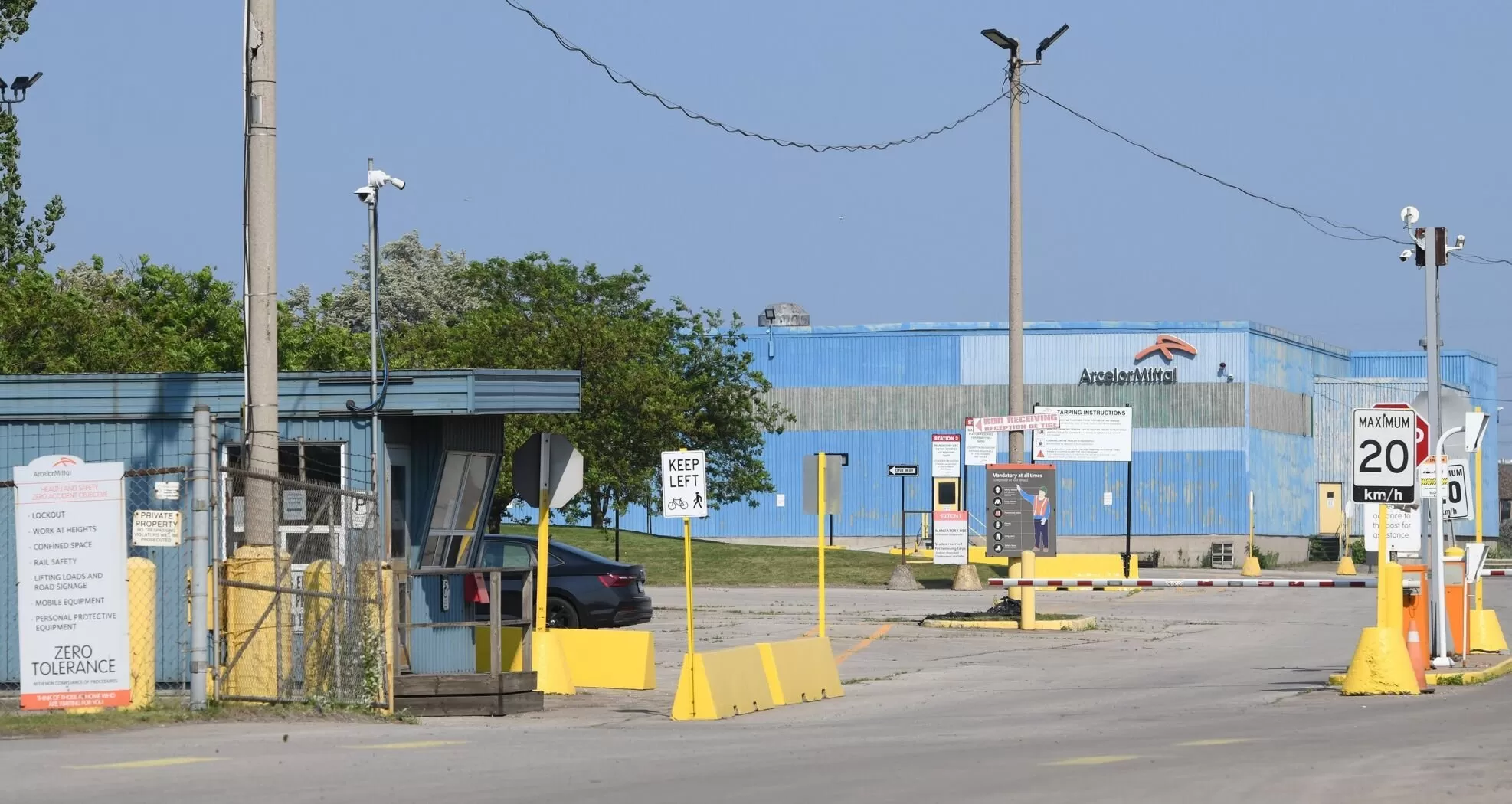 Exterior view of ArcelorMittal Long Products wire drawing mill in Hamilton, Canada, facing closure and impacting 153 steel workers.
Workers like Arron Harris are considering their options, noting that the decision to stay in the steel sector is difficult given the current climate. The industry’s health has significant ripple effects on manufacturing, construction, and other sectors that rely on steel products. Government policies aimed at protecting the industry and supporting affected workers will be closely watched as the situation develops.
Conclusion
The closure of the ArcelorMittal wire drawing mill in Hamilton marks the end of an era for a facility with deep roots in the community and a skilled workforce. Driven by a confluence of global economic pressures, trade policies, and market dynamics, the shutdown highlights the fragility of industrial jobs in the face of international competition. As negotiations proceed, the focus remains on supporting the 153 workers and their families navigating this significant transition, while the event itself serves as a stark reminder of the challenges confronting the Canadian steel industry as a whole.