Chaparral Cars, renowned for their unconventional engineering that pushed the boundaries of racing in the 1960s and ’70s, is resurfacing in concept form. The Chaparral Centurion design study is not a nostalgic look back, but a bold statement exploring the future possibilities of performance vehicle design, staying true to the brand’s disruptive spirit.
Contents
Key Takeaways:
- The Centurion concept reimagines Chaparral’s legacy of innovation for the modern era.
- Its design prioritizes extreme aerodynamics and driver connection over traditional comforts or road practicality.
- The concept is a design exercise, signaling a potential return to challenging automotive norms.
Chaparral’s Legacy of Disruption
In an era where racing was often constrained by established rules, Chaparral, led by Jim Hall, famously broke the mold. Their cars incorporated pioneering technologies like active aerodynamics, groundbreaking ground effects (vacuum fans), and semi-automatic transmissions, giving them significant advantages that often led to their designs being banned or restricted by governing bodies like the FIA. This history established Chaparral as a symbol of relentless innovation and functional design pushing the very limits of what was thought possible on a racetrack.
The Centurion Concept: A Forward-Looking Design
The new Centurion concept, envisioned by designer Jobin Sunil, channels this historical DNA but is resolutely focused on the future. It sheds the typical expectations of a modern car, aiming for a raw, purpose-built machine that embodies the “functional chaos” Chaparral was known for, but with a futuristic aesthetic. The silhouette is dramatically low, blending the aggressive stance of modern LMP1 prototypes with the sharp, faceted surfaces of stealth aircraft. Exposed carbon fiber and aerodynamic elements are integrated directly into the form, highlighting its function-first philosophy.
 Low-slung aerodynamic Chaparral Centurion concept car
The front fascia appears designed to consume the air ahead, hinting at powerful airflow management. While carrying the spirit of past Chaparral ground effects cars like the “sucker car” 2J through its low profile and exaggerated skirts, the Centurion evolves this with a modern, single-seater layout and an unapologetically aggressive posture. It leans more towards the extreme end of hypercar design than a traditional closed-wheel prototype racer.
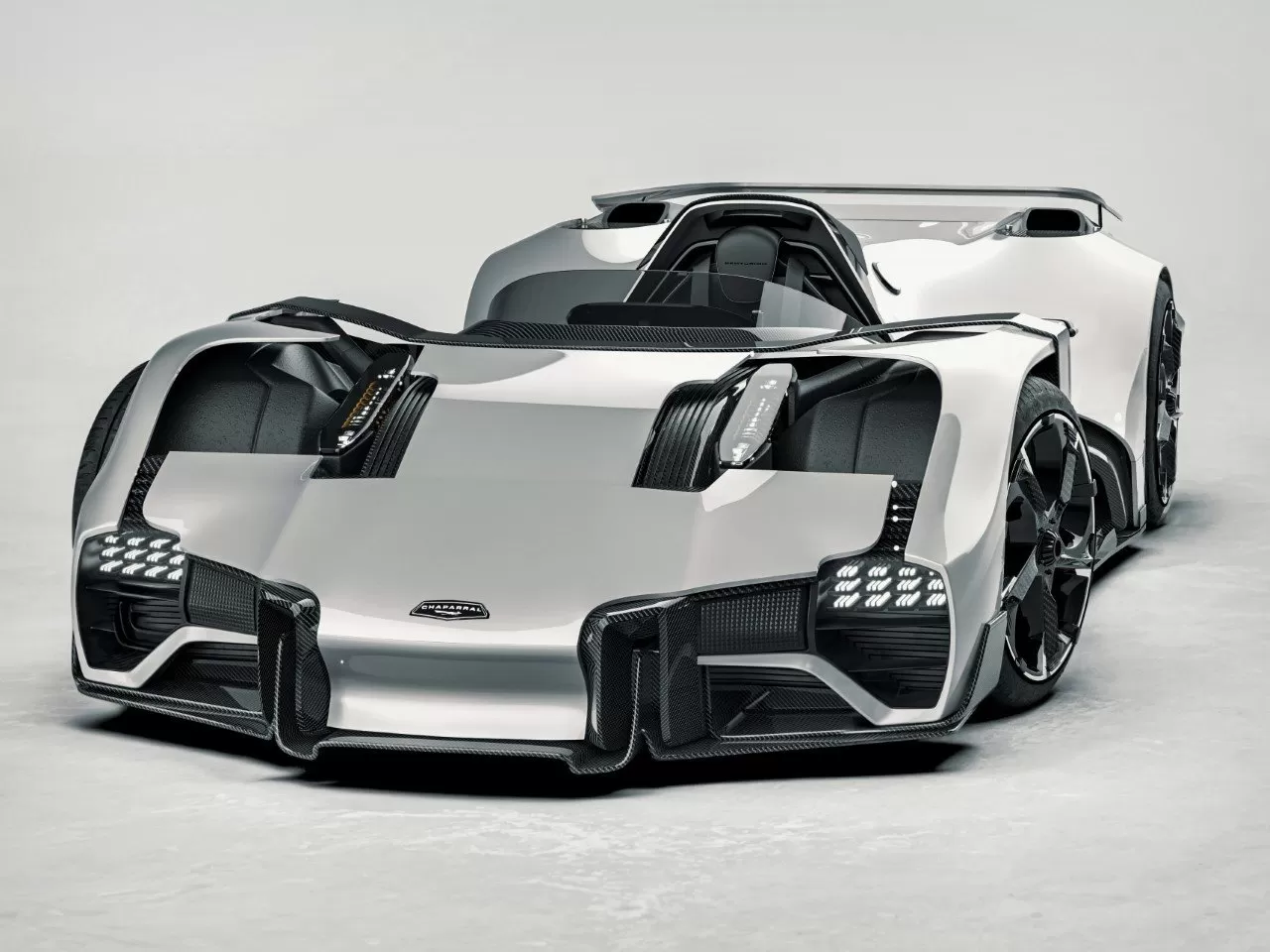 Dynamic front view of single-seater Chaparral Centurion concept
Key Design Features and Their Purpose
Aerodynamics are central to the Centurion’s identity. Features like exposed suspension components, turbine-inspired wheels, and integrated ductwork aren’t merely stylistic; they are fundamental to its performance intent. The design strikes a balance between raw functionality and dramatic visual presence. Layered lighting elements, fenders that evoke jet aircraft, and a strikingly thin full-width rear lightbar mounted above an oversized diffuser underscore this duality. The rear section, in particular, feels like a modern, brutalist interpretation of endurance racing design cues, emphasizing downforce and stability.
 Rear view showing massive diffuser and lightbar on Chaparral Centurion concept
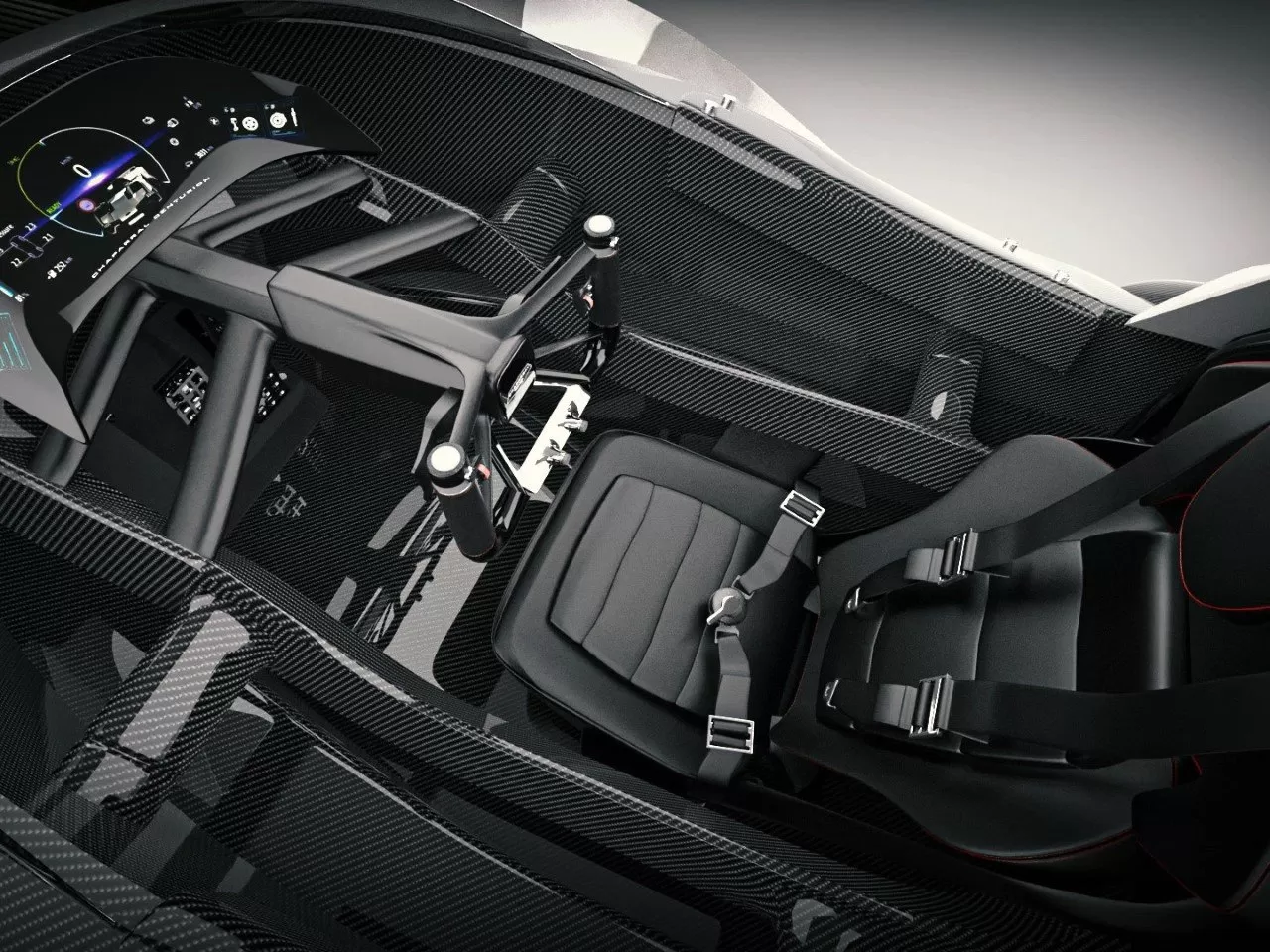
Despite its radical appearance, the design is underpinned by a sense of intentionality. Every exaggerated form serves a purpose. The prominent wheel arches and exposed suspension arms are designed for optimal airflow and downforce. The sprawling rear diffuser creates significant ground effect. The interior is starkly minimalist, with the driver’s seat integrated directly into the monocoque chassis, reducing weight and enhancing connection. There is no wasted space or unnecessary feature.
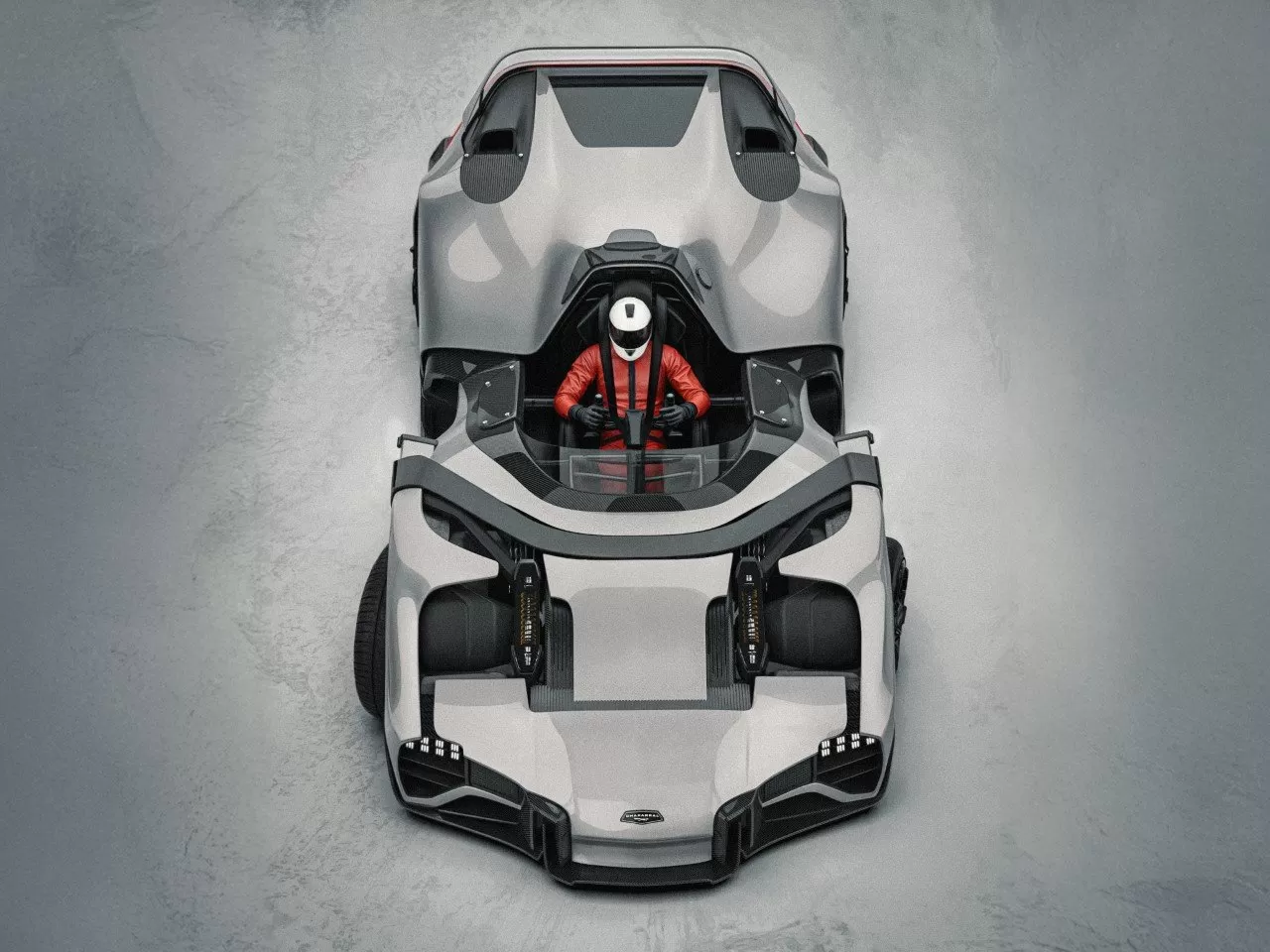 Close-up of Chaparral Centurion concept rear with detailed aero elements
The concept strips away conventional automotive amenities like a windshield, doors, or passenger seats, creating a highly focused machine centered solely on the driving experience and performance potential. The rear view emphasizes tension and engineering, dominated by the continuous taillight and large dual venturi tunnels designed for extreme aerodynamic efficiency.
 Close-up detail of Chaparral Centurion concept's minimalist interior and footwell
What the Concept Signifies
The Centurion is presented as a pure design exercise, free from the constraints of production feasibility or racing regulations. There are no performance specifications provided, as that is not the concept’s purpose. Its value lies in exploring “what a Chaparral could be today” if allowed to prioritize radical design and performance without compromise. It’s a clear statement that the brand’s historical approach – challenging norms and pushing the boundaries of automotive possibility – remains relevant. The Centurion suggests that future performance vehicles could prioritize function and aerodynamic efficiency to an extreme degree, potentially influencing design language across the industry.
 Head-on low angle view of the aggressive Chaparral Centurion concept
Conclusion
The Chaparral Centurion concept stands as a powerful tribute to a legacy of disruptive innovation in automotive design. By focusing on extreme aerodynamics, a driver-centric, minimalist layout, and an uncompromising form-follows-function philosophy, it shows how the spirit of Chaparral could thrive in the future. While not a production car, it serves as a compelling vision for what radical performance design could look like when freed from conventional constraints, prompting a fresh look at the potential direction of high-performance vehicles.