
NVIDIA’s upcoming RTX PRO 6000 GPU is generating significant market interest, with high hopes for strong sales. However, a new report from TrendForce highlights substantial challenges that could temper shipment volumes. These hurdles include intense domestic competition in key markets like China and persistent constraints in memory chip supply.
Contents
Key Takeaways:
- Market buzz for RTX PRO 6000 is high.
- TrendForce points to cost-performance challenges from competitors (like Huawei Ascend 910c) and memory supply issues.
- These factors create uncertainty around actual shipment volumes.
High Expectations Meet Market Challenges
Initial market sentiment for the NVIDIA RTX PRO 6000, expected in the second half of 2025, points towards strong shipment potential driven by solid demand for AI-related hardware. Positioned as a mid-to-entry-level GPU, the RTX PRO 6000 targets critical applications such as AI inference, edge-based deep learning training, image processing, and simulation.
However, according to Avril Wu, Senior Vice President of Research at TrendForce, significant uncertainties cloud this optimistic outlook.
Market Headwinds Identified
The China Market Challenge
A primary concern is the custom low-power variant of the RTX PRO 6000 designed specifically for the Chinese market. TrendForce indicates this version has not yet generated substantial interest among Chinese buyers. A key competitor, the Huawei Ascend 910c, offers a more competitively priced alternative that is deemed sufficient for many typical use cases in the region.
The Huawei 910c is reportedly ramping up production volumes, poised to gradually replace older solutions and increase pressure on NVIDIA’s offerings in the Chinese market. This competitive dynamic presents a significant cost-performance challenge for the RTX PRO 6000 variant.
Memory Supply Constraints
Adding to the challenges are potential constraints in the supply of crucial components, specifically memory. NVIDIA employs a diversified memory procurement strategy across its product lines: SK hynix is the main supplier for high-end HBM used in top-tier AI GPUs, Micron primarily supplies LPDDR, and Samsung is a key provider of GDDR memory.
For the RTX PRO 6000, which is specified with 96 GB of GDDR7 memory, Samsung is currently the sole supplier. TrendForce warns that ongoing tight supply conditions for GDDR7 could directly impact the production and delivery capacity for the entire RTX PRO 6000 series.
NVIDIA’s Strategic Push
Despite these headwinds, NVIDIA is actively working to drive adoption. At Computex in May, the company showcased collaborations with various ODM and OEM partners to promote MGX AI server models featuring the RTX PRO 6000. These systems leverage PCIe Gen5 interfaces and are aimed at enterprise customers expanding their AI deployments from cloud environments to the edge.
NVIDIA is also expected to extend its modular MGX reference design strategy to the Chinese market, aiming to facilitate easier system building for its partners.
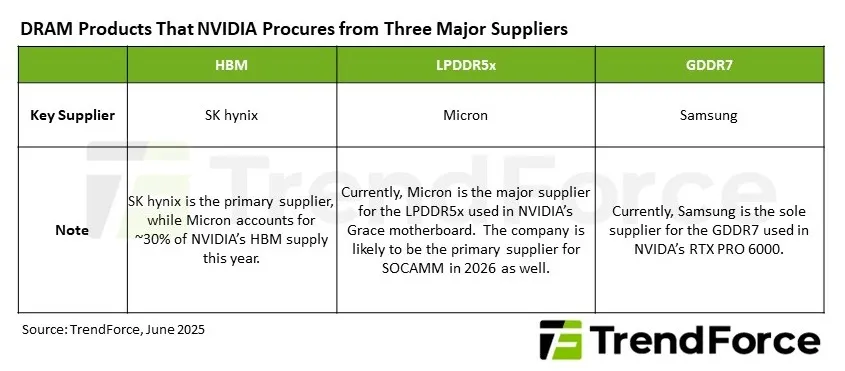 Illustration of AI servers or data center racks, representing GPU computing power like NVIDIA's RTX PRO 6000 systems
What This Means for Shipments
Considering the blend of market potential, competitive pressures from players like Huawei, and persistent supply chain issues, the actual shipment volumes for the NVIDIA RTX PRO 6000 in the coming quarters remain uncertain. Market watchers and potential buyers will need to closely monitor improvements in GDDR7 supply and the evolving competitive landscape, particularly within the crucial Chinese market, to gauge the chip’s ultimate success.