Some customers at Maxi grocery stores in Quebec are finding small, unexpected charity donations added to their bills without their consent. This issue has raised concerns among shoppers about transparency and consumer rights.
Contents
Key Takeaways:
- Customers report small, unauthorized charges for PC CHARITY appearing on receipts.
- Maxi’s parent company, Loblaw, attributes the issue to a temporary system problem and human error.
- Loblaw states the issue is fixed and offers refunds for unauthorized charges.
- Consumer advocates advise affected shoppers on seeking refunds and escalating complaints.
Unexpected Charges Raise Consumer Concerns
Several Maxi shoppers have reported noticing small charges on their receipts designated for “PC CHARITY.” These charges, often less than a dollar, are appearing even when the customer was not asked if they wished to donate.
Kirk Bennett, a shopper in Dorval, Que., was surprised to find a 62-cent charge for “PC CHARITY” on his receipt without being prompted. While acknowledging the small amount, Bennett emphasized the principle of being charged without consent. Other shoppers have reported similar experiences, with amounts varying. Complaints have also surfaced on social media platforms.
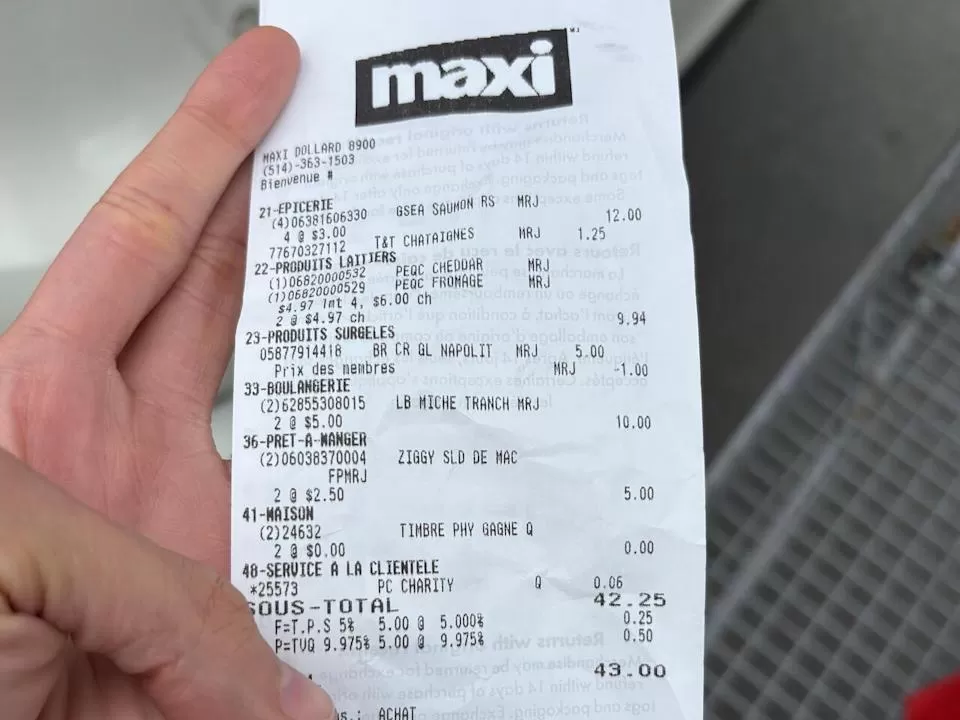 Close-up of a Maxi grocery store receipt showing an unauthorized PC CHARITY donation charge.
Loblaw’s Response: System Issue and Refunds Offered
Maxi’s parent company, Loblaw, has acknowledged the reports of unauthorized donations during their fundraising campaign for President’s Choice Children’s Charity. The company described these cases as “isolated incidents,” stating that their standard practice requires cashiers to ask customers before adding a donation.
In an emailed statement, Loblaw explained, “We learned early in the campaign there was a system issue and potential for human error, where some customers were automatically charged.” The company stated that they have “immediately fixed the issue, retrained our store teams and corrected the process.”
Loblaw has expressed regret for the inconvenience and advised customers who were charged without permission to contact their service team for a refund if one wasn’t automatically issued.
What Consumers Can Do
Consumer advocacy groups like Option consommateurs recommend that affected shoppers take action. Sylvie de Bellefeuille, a lawyer with the organization, stated that retailers cannot legally charge more than the advertised price unless this possibility is clearly communicated upfront.
De Bellefeuille advises customers who find an unauthorized charge to first speak with the grocery store manager to request a refund. If the issue is not resolved at the store level, the next step could be to contact the Office de la protection du consommateur, Quebec’s consumer protection authority responsible for enforcing these laws.
While taking a retailer to small claims court is an option for persistent issues, de Bellefeuille noted that it often depends on whether the amount and the situation warrant the effort. Consumers like Kirk Bennett are now paying closer attention to their receipts and considering their shopping options.
The Path Forward
This situation highlights the importance for consumers to carefully review their receipts. While Loblaw claims the issue is resolved, the reports serve as a reminder for both retailers to ensure billing accuracy and transparency, and for customers to be vigilant about the charges they incur. Continued monitoring of receipts and communication with retailers are key steps for consumers encountering such issues.