Shipping increasingly massive wind turbine blades is a major logistical challenge for the growing onshore wind energy market. A startup called Radia believes the solution lies in the sky: building the world’s largest airplane, purpose-built to carry these colossal components directly to wind farm sites.
Contents
This ambitious project, dubbed the WindRunner, aims to remove transportation bottlenecks that currently limit the size and deployment of onshore wind turbines, potentially accelerating the transition to renewable energy. If successful, the WindRunner could redefine heavy-lift aviation and enable larger, more efficient wind farms closer to where power is needed.
The Problem: Transporting Oversized Wind Turbine Blades
Wind power is a critical component of the global shift towards renewable energy. As technology advances, turbine blades are getting longer to capture more wind and increase efficiency. Modern onshore blades can stretch over 200 feet, with some reaching lengths exceeding 400 feet.
However, transporting these massive blades from factories to often remote wind farm locations presents enormous difficulties. Roads and bridges are frequently not designed to accommodate the length and weight of these components. Navigating tight turns, overpasses, and power lines becomes a logistical nightmare, severely restricting where larger turbines can be deployed onshore. This infrastructure challenge is a primary reason why some of the largest turbines are currently installed offshore, where components can be shipped by sea.
 Massive onshore wind turbine blade, highlighting logistics challenge
The energy industry recognizes this limitation. Manufacturers have developed powerful, offshore-sized turbines but face barriers bringing that capability onshore, where the potential market is vastly larger. Radia was founded to address this specific problem, focusing on an aerospace solution to an energy transportation challenge.
Radia’s Solution: The WindRunner Aircraft
Radia’s answer is the WindRunner, a proposed aircraft designed solely for transporting the largest wind turbine components. Conceived by aerospace engineer Mark Lundstrom, the WindRunner is envisioned as the world’s largest aircraft by length and cargo volume.
The aircraft is projected to be 356 feet long, significantly exceeding the length of a Boeing 747-800 (about 250 feet) and even the fabled Antonov An-225 (275 feet), which was destroyed in 2022. While other large aircraft like the Scaled Composites Stratolaunch boast larger wingspans, the WindRunner’s design prioritizes internal cargo volume to accommodate turbine blades up to 344 feet long, 24 feet tall, and 24 feet wide.
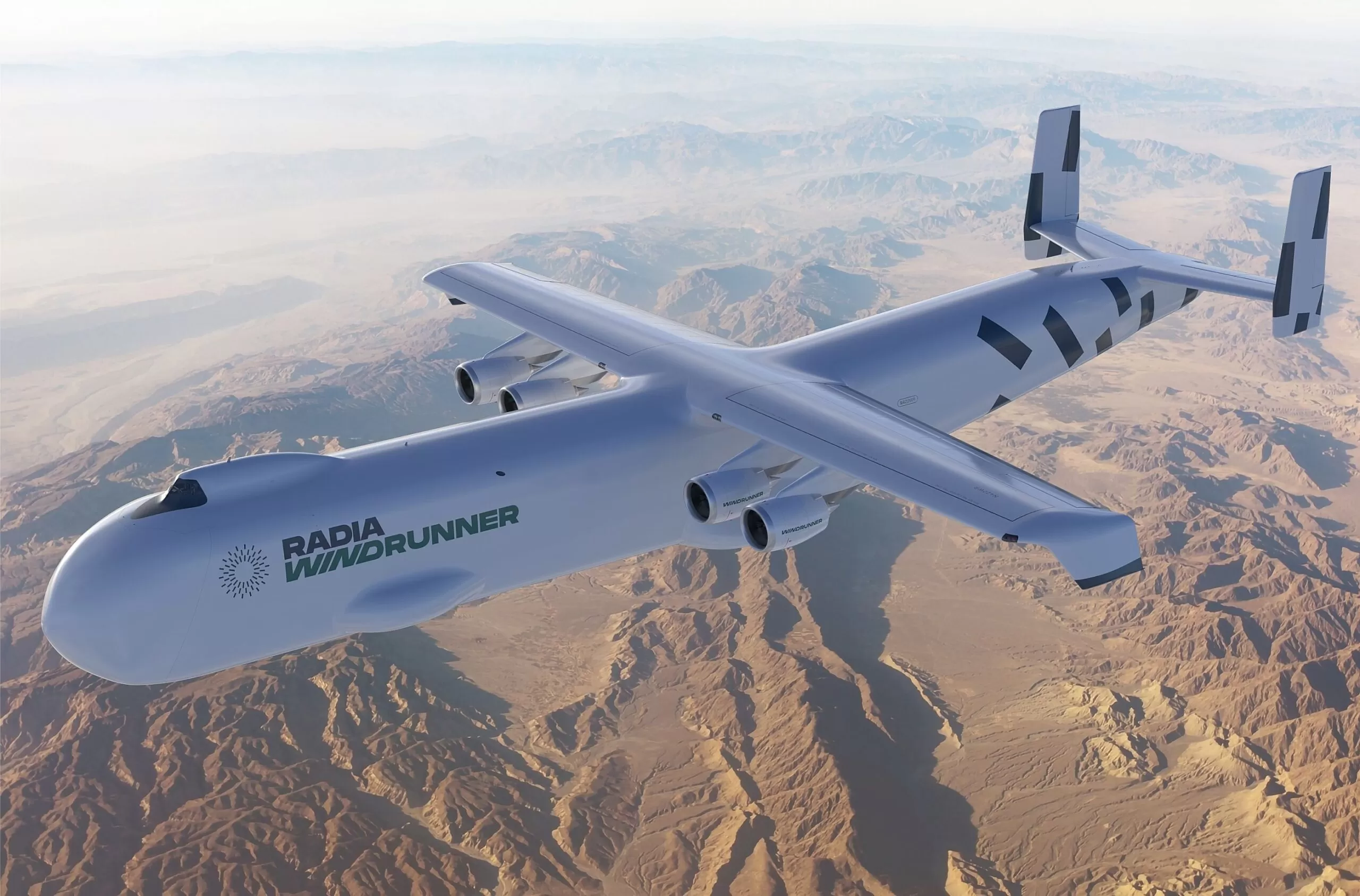 Render of the Radia WindRunner aircraft designed for transporting large wind turbine blades
One of the WindRunner’s key features is its ability to operate from short, semi-prepared airstrips, including those made of packed dirt or gravel. This capability would allow it to deliver blades and other large components directly to wind farm sites, bypassing road limitations and opening up vast new areas for large onshore turbine deployment.
Radia claims the WindRunner will have a cargo volume around 12 times that of a Boeing 747 freighter. While specific comparisons vary depending on the 747 model used for calculation, Radia projects a cargo volume of 272,000 cubic feet, a massive space tailored for oversized loads rather than dense, heavy cargo.
Market Context: Fueling GigaWind Development
The WindRunner project aligns with the projected growth of the wind energy industry. The U.S. Department of Energy forecasts significant expansion in wind capacity by 2050. Larger turbines mean fewer turbines are needed to achieve the same capacity, reducing the overall footprint of wind farms. This efficiency gain is driving the demand for transporting ever-larger components.
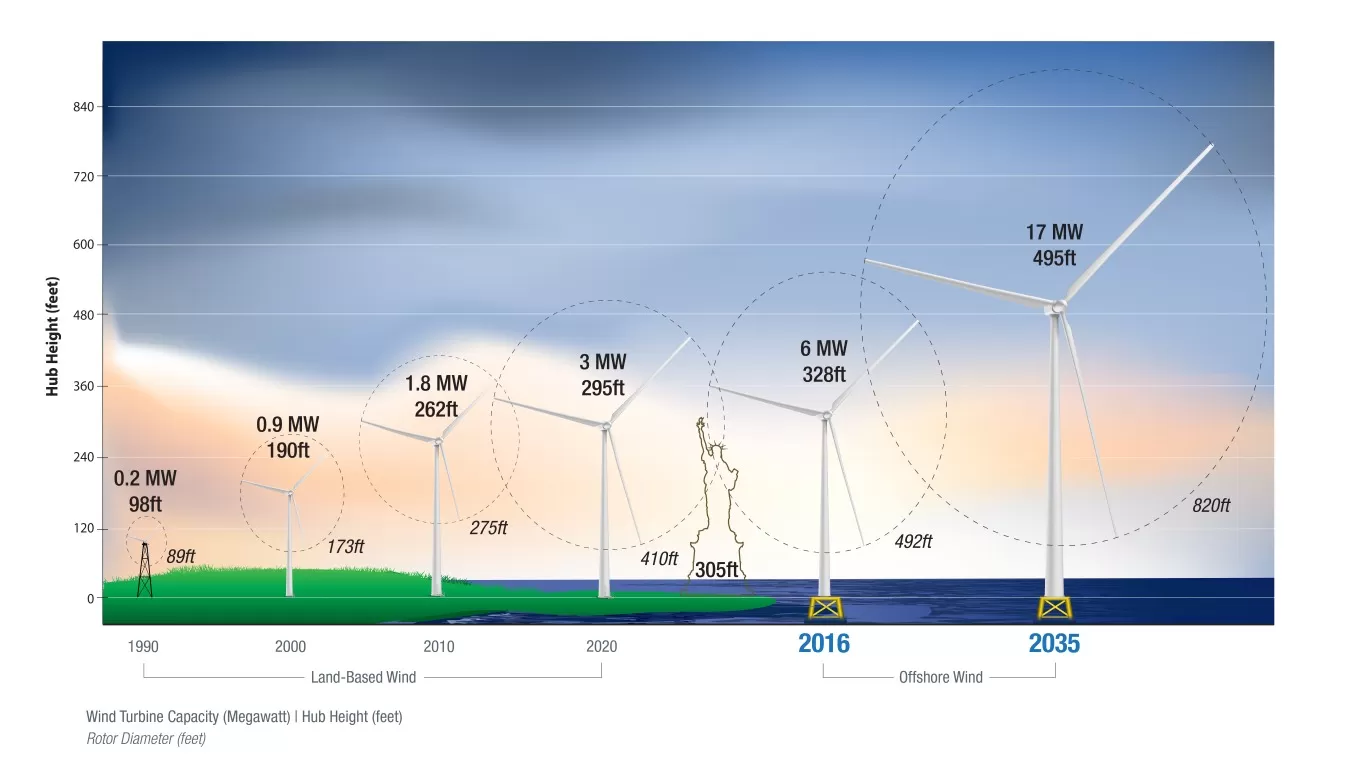 Chart showing projected growth in U.S. wind turbine hub height and capacity by 2050
Radia refers to the potential enabled by the WindRunner as “GigaWind,” a concept where the limitations of ground transportation are removed, allowing the deployment of the largest, most efficient turbines in more locations. This includes sites closer to population centers to reduce transmission costs or in areas suitable for hybrid wind/solar projects.
Radia’s business model is not to build turbines or blades itself, but to provide the unique transportation service that enables other companies to build these larger wind farms onshore. The demand for this service is anticipated to be substantial enough to support an entire fleet of WindRunner aircraft.
Technical Details and Comparisons
The WindRunner’s specifications highlight its unique purpose. While it boasts immense volume (272,000 cubic feet projected), its payload capacity is listed at 160,000 pounds. This is considerably less than a Boeing 747-800F (295,000 pounds) or the An-225 (550,000 pounds).
This relatively lower payload capacity is likely optimized for the weight of long, composite wind turbine blades, which are bulky but less dense than many other types of cargo. The design reflects a focus on volume for oversized items rather than sheer weight-carrying capability.
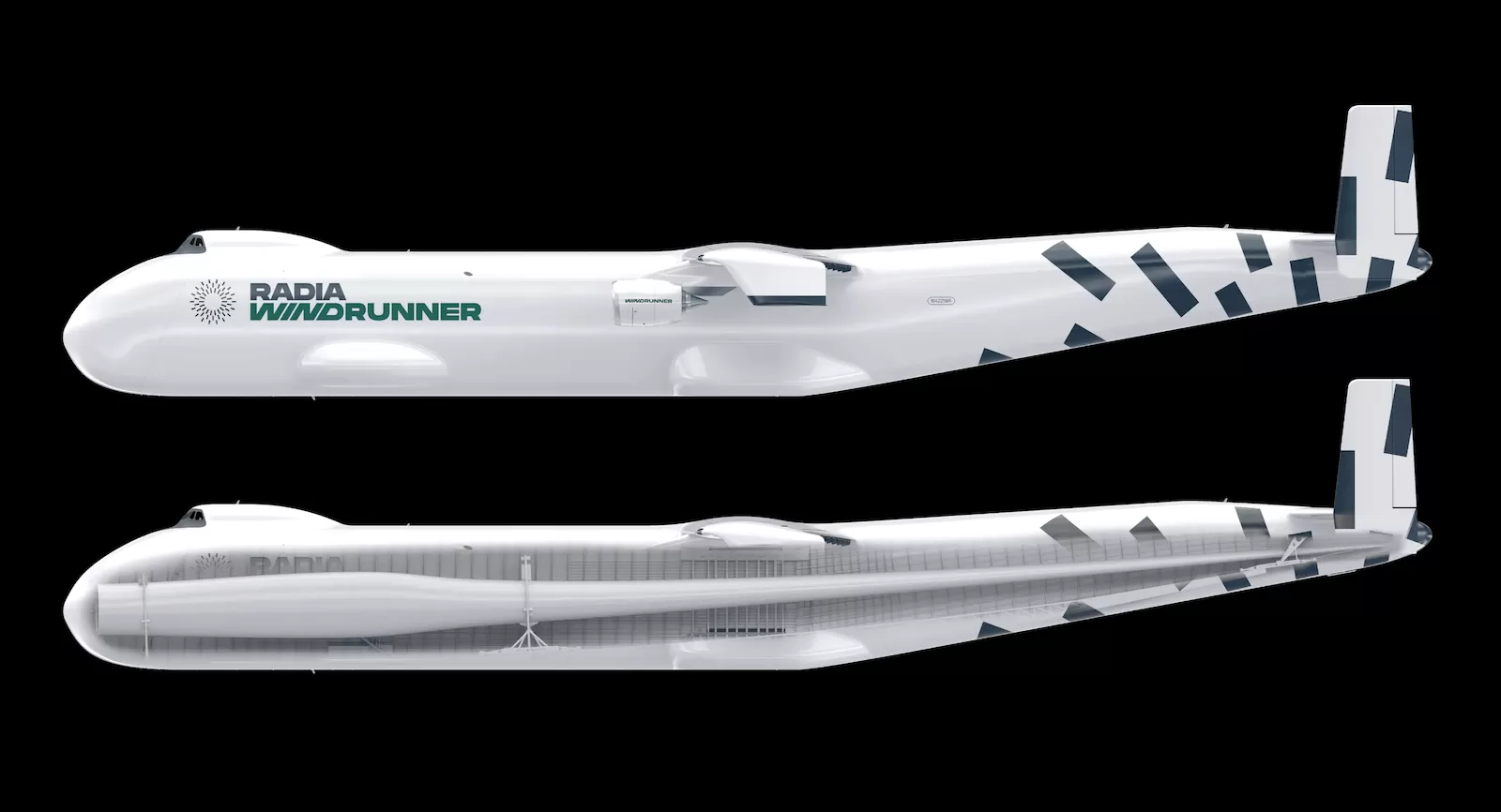 Cutaway rendering showing the vast internal cargo space of the WindRunner aircraft
The plane’s ability to take off from a 6,000-foot semi-prepared strip, despite its enormous size and projected cruise speed of Mach 0.6 at 41,000 feet, suggests a design prioritizing short-field performance and efficient high-altitude cruise for long-distance transport. Achieving takeoff from such a short, unpaved runway with a plane this large would be a significant engineering feat.
Comparing the WindRunner to existing giants provides perspective on its scale:
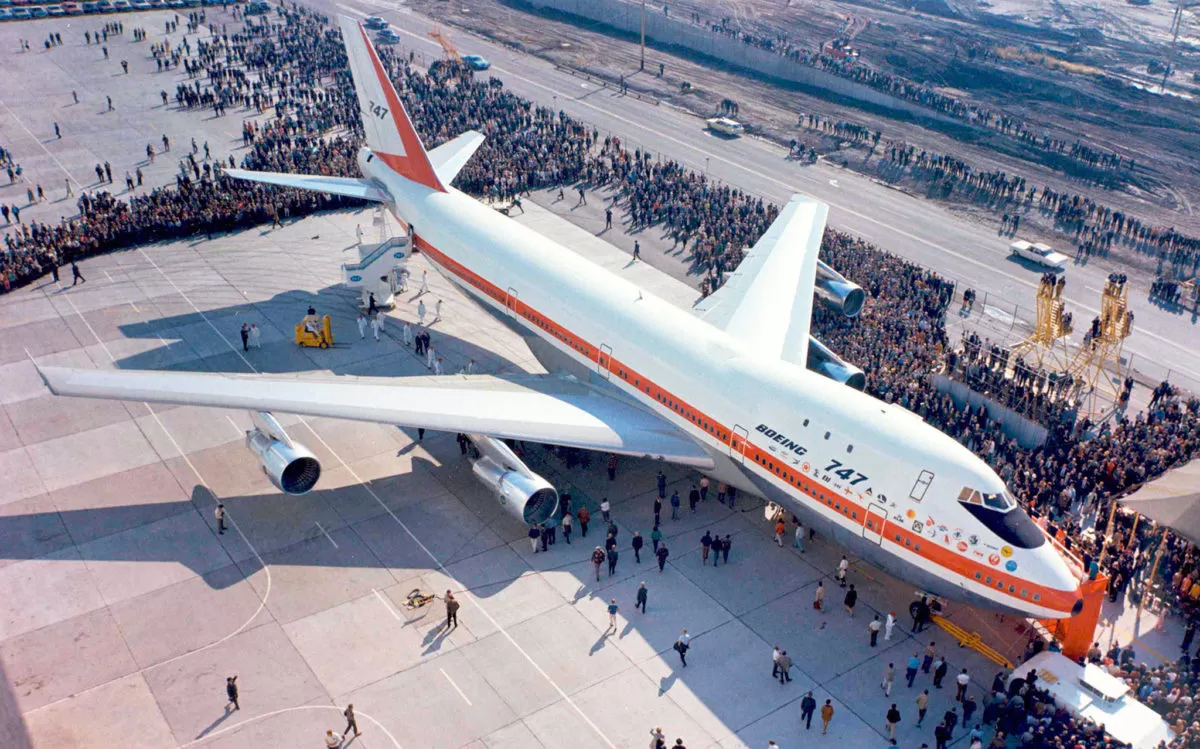
- Boeing 747: The iconic “Queen of the Skies” and a workhorse freighter. The WindRunner is significantly longer and boasts many times the cargo volume of even the largest 747 freighter models.
 Historic image of the first Boeing 747 jet aircraft
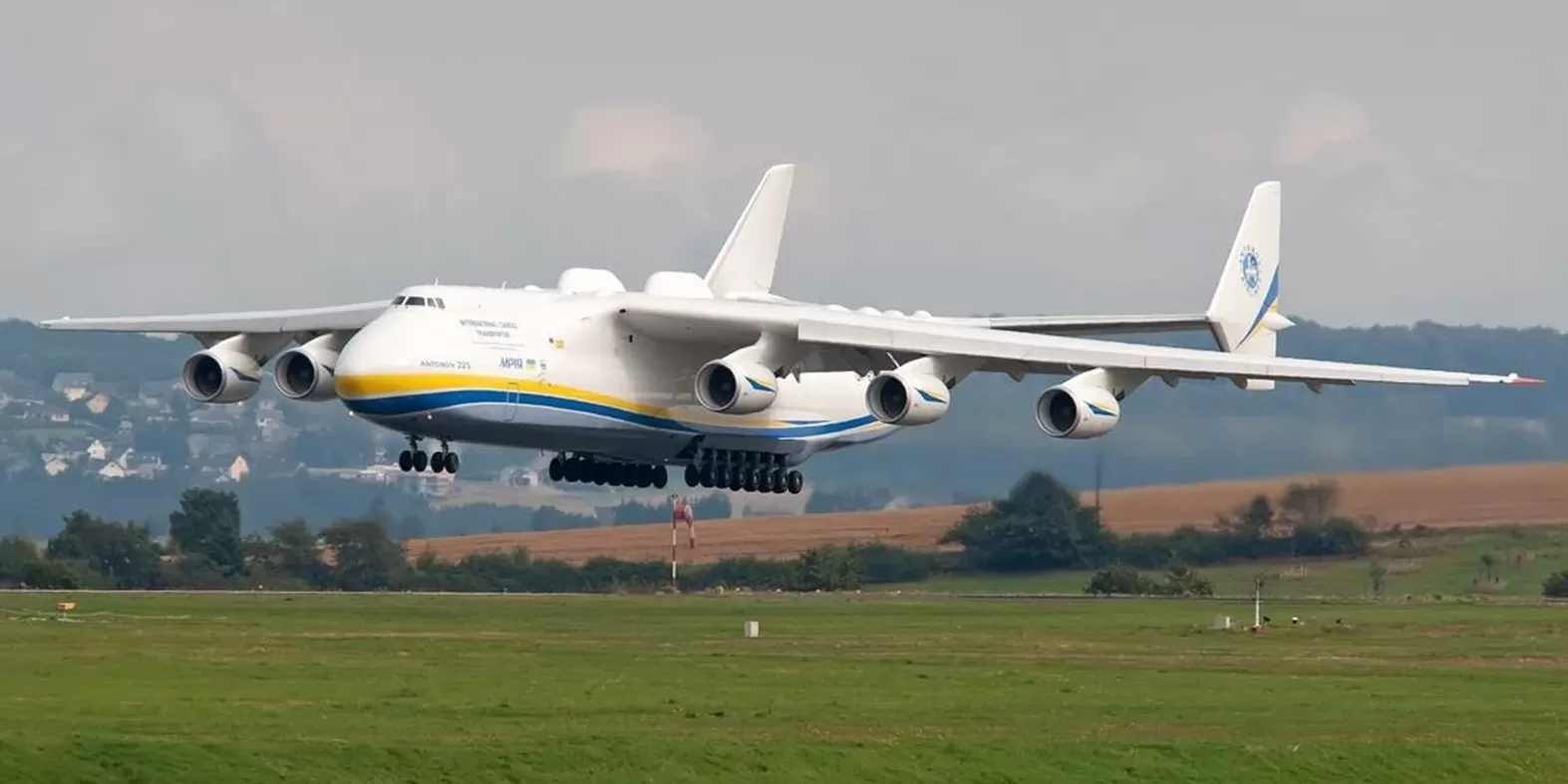
 - Antonov An-225: The world’s largest aircraft by weight-carrying capacity. While the WindRunner surpasses its length, the An-225 held the record for heaviest payload.
 The Antonov An-225 Mriya, formerly the world's largest airplane
 - Boeing Dreamlifter (747-400LCF): A highly modified 747 with an enlarged fuselage for transporting Boeing Dreamliner parts. It has a large volume (65,000 cubic feet), but the WindRunner aims for over four times that.
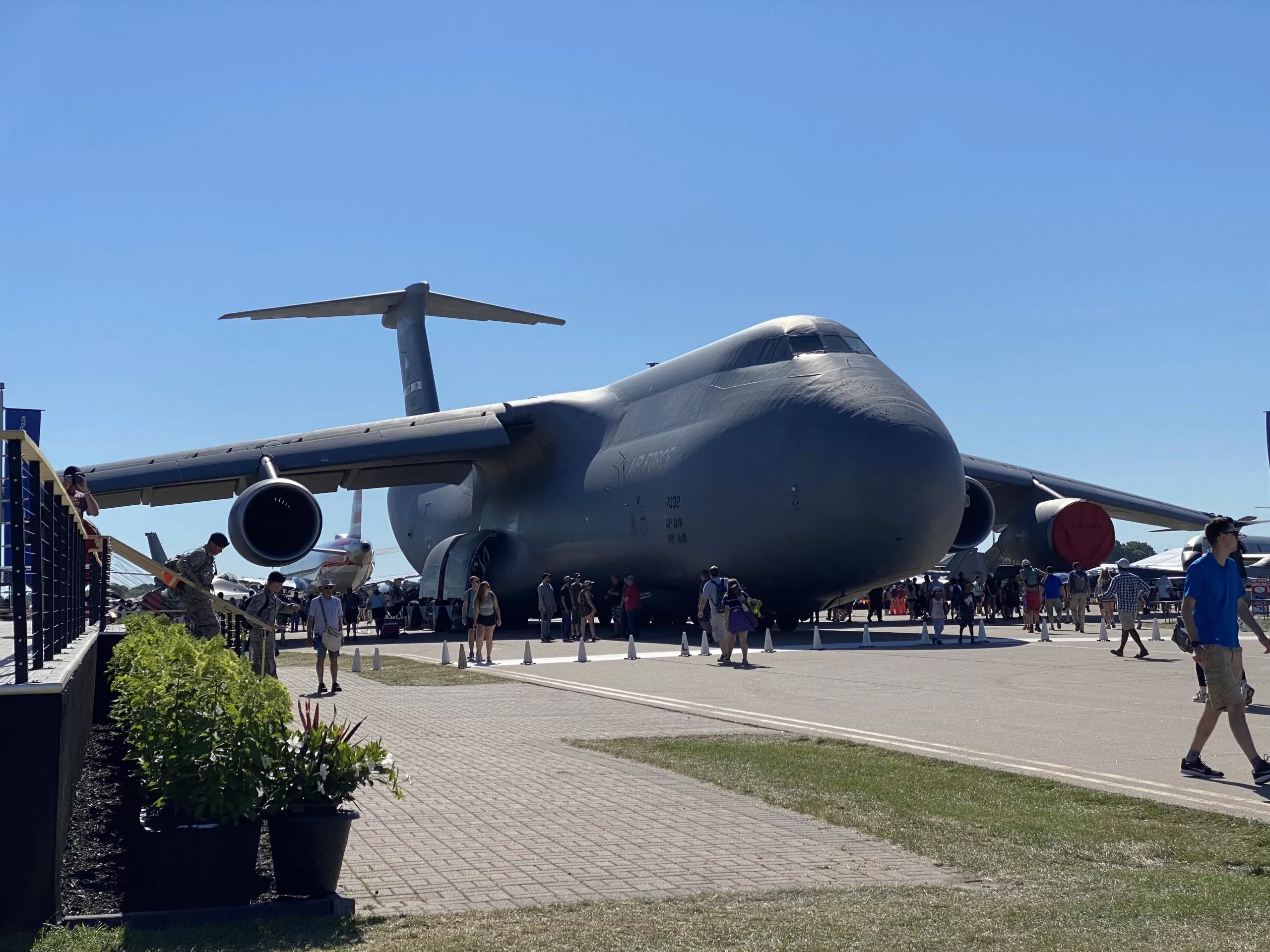
- Lockheed C-5 Galaxy: A large military transport aircraft with a cargo volume around 31,000 cubic feet. The WindRunner would dwarf its capacity.
 Interior view of a large military transport aircraft cargo bay (Lockheed C-5 Galaxy)
Radia states the WindRunner is designed using conventional methods and technologies, with the primary innovation being its unprecedented size for this specific cargo type.
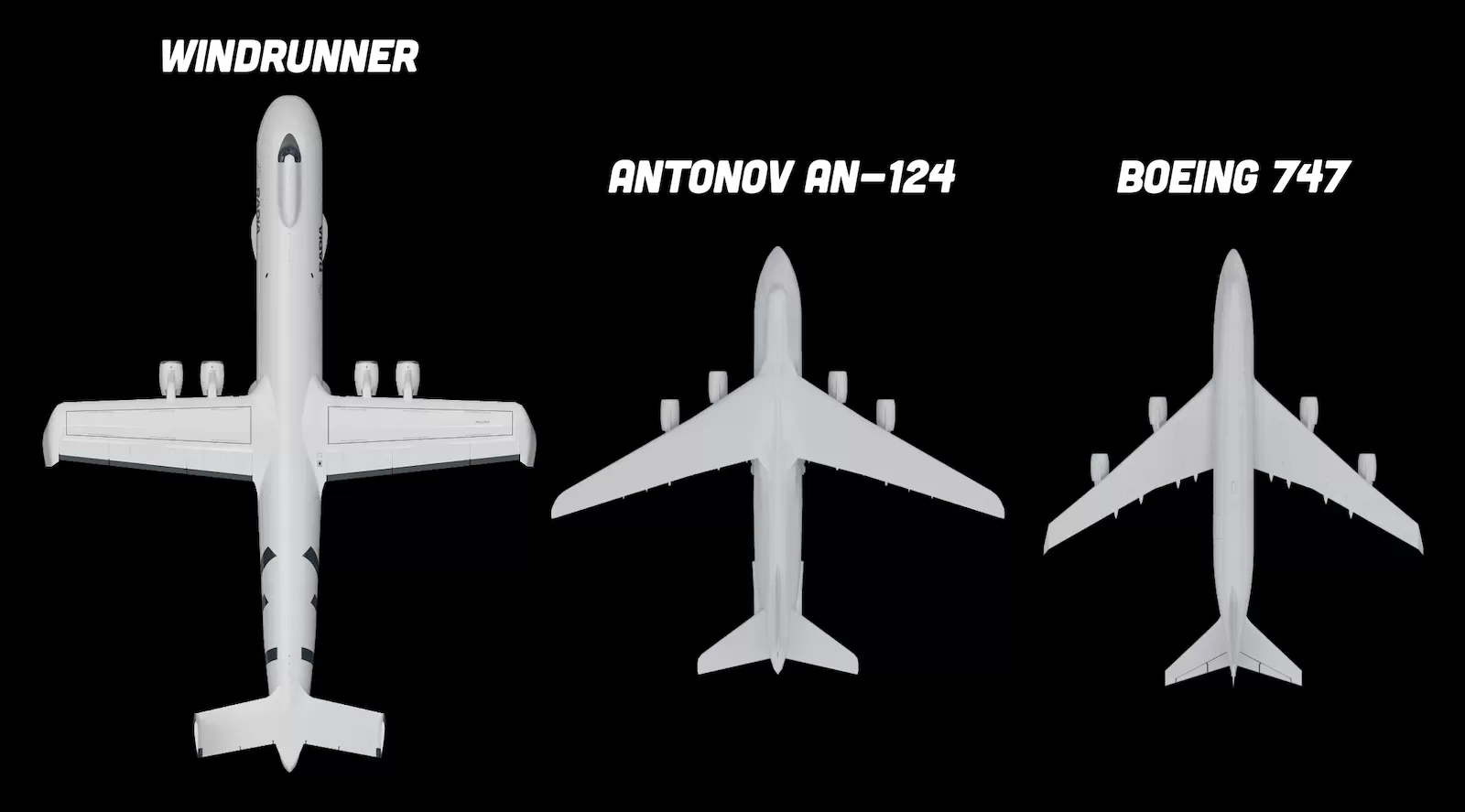 Size comparison graphic showing the WindRunner aircraft relative to Boeing 747 and Antonov An-225
Outlook and Next Steps
Radia plans to officially unveil the WindRunner concept at the Paris Air Show. The company aims to have at least one aircraft flying by the end of the decade. They are reportedly more than halfway through the necessary design, build, and certification process.
While building the world’s largest aircraft is an immense technical and financial undertaking, the potential payoff in unlocking new growth for the onshore wind energy market could be significant. Radia’s ability to attract investment and navigate the rigorous process of aircraft development and certification will be key to turning this ambitious concept into reality. The success of the WindRunner could fundamentally change the logistics of large-scale renewable energy projects.
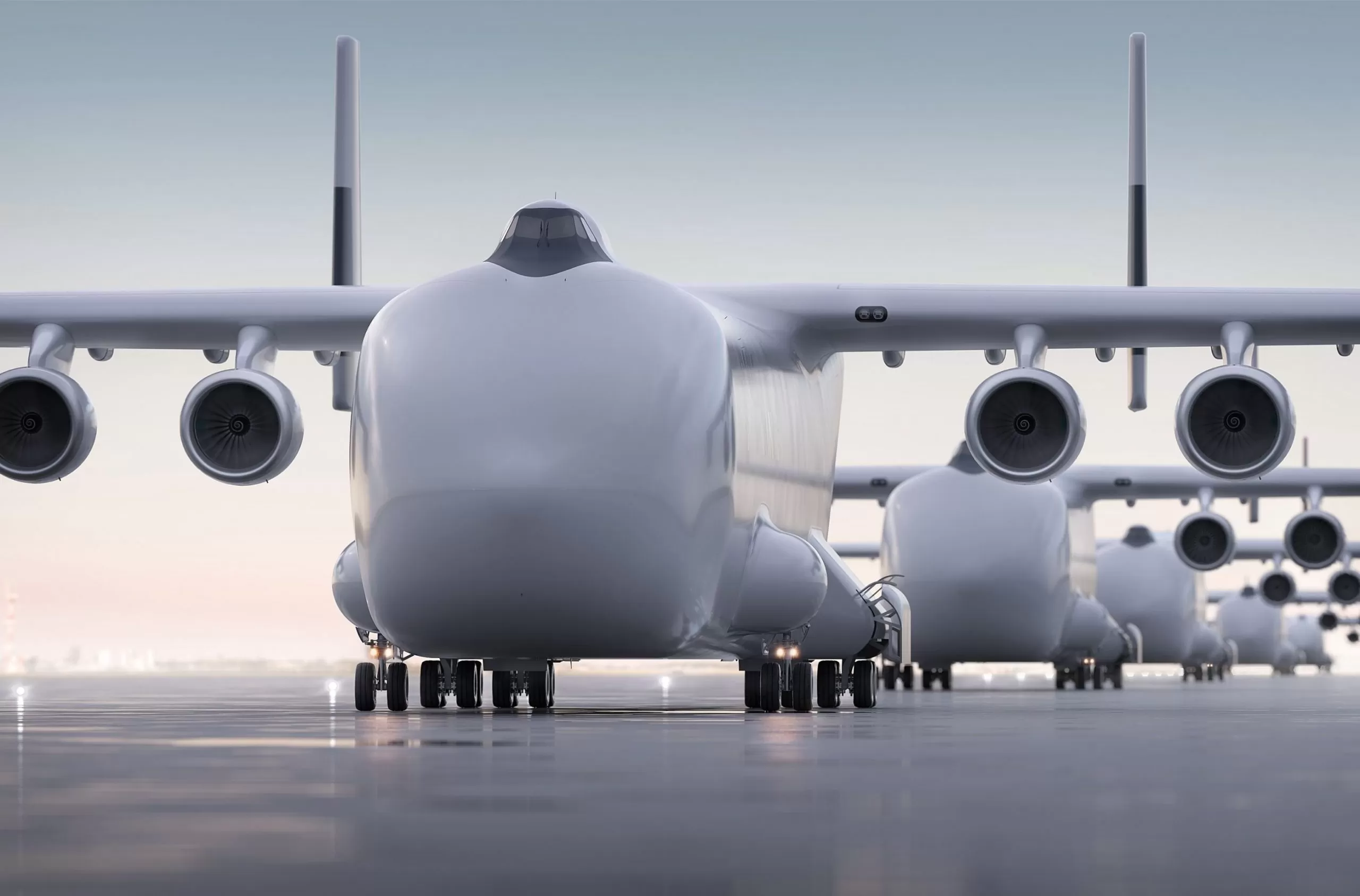 Conceptual render of a fleet of Radia WindRunner aircraft operating together
Keep an eye on developments from Radia and the aviation industry, as the WindRunner could be poised to become a crucial piece of infrastructure for the future of clean energy.
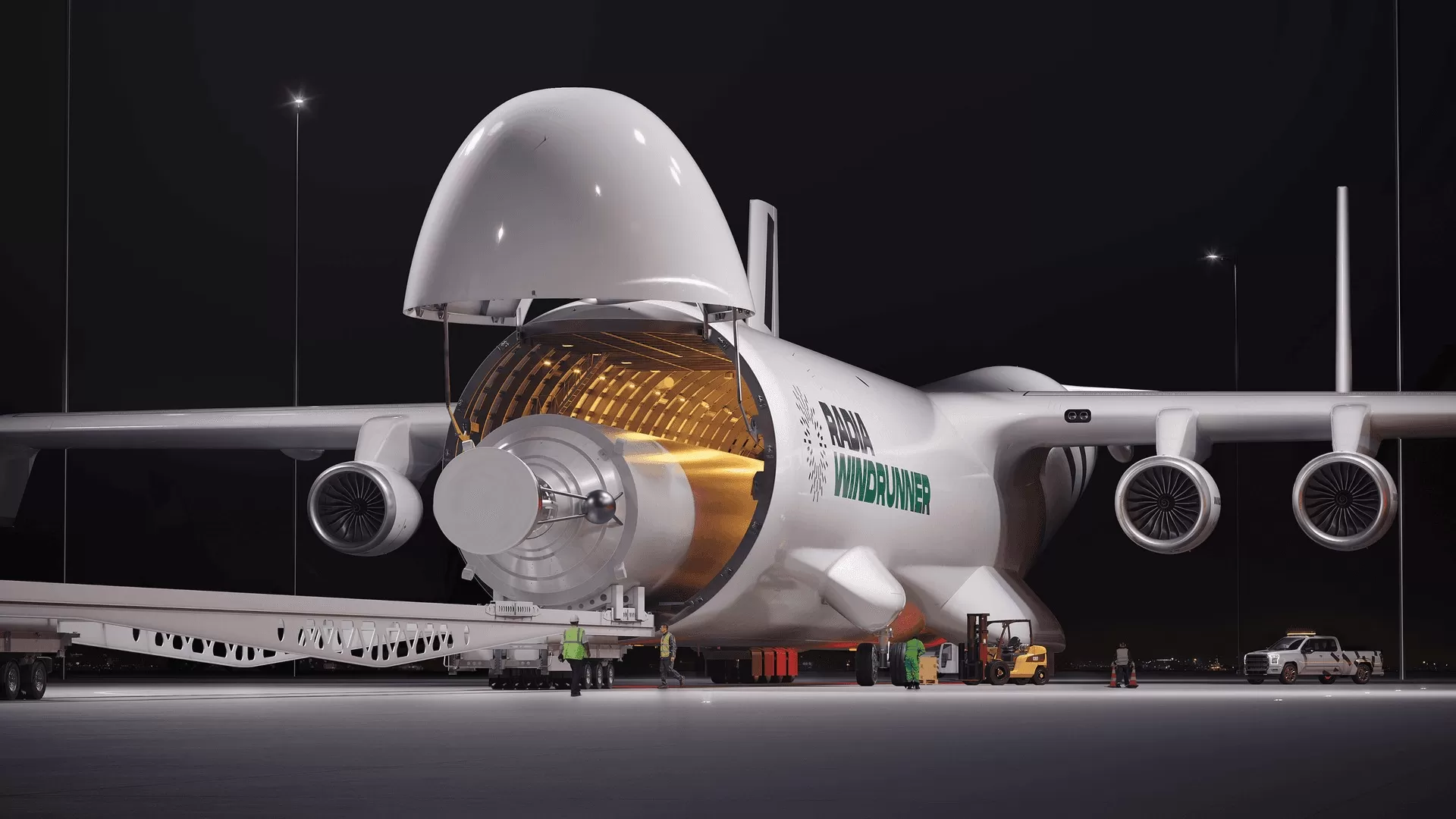 Render showing the WindRunner aircraft transporting a large wind turbine component
For more insights into the intersection of business, technology, and renewable energy, explore our related articles.