Tofino, BC, a world-renowned tourist destination, is facing a severe housing affordability crisis, making property and business ownership increasingly unattainable for local residents, particularly within the Nuu-chah-nulth First Nations communities. Skyrocketing real estate values and the complex landscape of short-term rentals (STRs) are driving significant challenges and tensions in the popular coastal town.
Contents
This report delves into the escalating cost of property, the struggle faced by local and Indigenous entrepreneurs, the town’s evolving stance on provincial STR regulations, and the broader sustainability issues, including water scarcity.
The High Cost of Paradise
Property prices in Tofino have reached levels that put ownership out of reach for most working residents. A 12,389 square-foot mixed-use property (commercial and residential) on a main street is listed at approximately $2.4 million. According to local Indigenous business owner Brian Quick, such prices are only affordable for those with “generational wealth,” making it difficult for others to break into the market.
Mayor Dan Law highlights the dramatic increase in residential values. Just two years ago, the median home value was listed at $1.6 million. He points out the financial reality: to afford a mortgage on a $1.6 million home, an annual income of around $350,000 is typically required, in addition to a 20% down payment. This level of income is simply not achievable for the vast majority of Tofino’s local population. Mayor Law states that “It is impossible for 90 per cent of Tofino households to own a home here. It is completely unsustainable. The town will fail if this carries on.”
A Local Business Navigates the Market Shift
The challenge of accessing property isn’t new, but the scale has changed dramatically. Ahousaht Tyee Ha’wilth Maquinna (Lewis George), one of the few Nuu-chah-nulth members who owns a short-term rental property in Tofino, opened his House of Himwitsa Lodge, Native Art Gallery, and Fish Store in 1994 with his wife Cathy. They were able to acquire the property through a crucial lifeline: the Nuu-chah-nulth Tribal Council sold it to them at cost.
Now, nearly 73, Chief Maquinna is ready to retire. His property, including the lodge, gallery, and store overlooking the Tofino Inlet, was recently listed for sale at $9.9 million. He expressed a desire for a First Nations company to take ownership, noting a potential link depending on protocols with fish farm company Cermaq Canada, which operates within Ahousaht traditional territory.
 House of Himwitsa lodge and art gallery overlooking Tofino Inlet, listed for sale amid the town's property value surge
The Short-Term Rental Showdown
In an attempt to address the housing crisis by encouraging long-term rentals, the BC Provincial Government introduced Bill 35, the STR Accommodation Act. A key component of this legislation is the “principal residence requirement,” restricting most short-term rentals to the host’s primary home plus one additional unit.
Tofino’s mayor and council initially voted in March 2024 to support Bill 35, a decision that received support from leaders like Tla-o-qui-aht’s Chief Councillor Elmer Frank.
However, this stance quickly faced opposition. Property owners relying on STR income mobilized, submitting a petition with 368 signatures and over 50 letters urging the council to opt out of the principal residence rule. None of the petition signatures appeared to be from Tla-o-qui-aht members, highlighting a potential divide in perspective. In late March, Tofino council reversed course, voting 4-3 to request an exemption from the provincial requirement.
Provincial Mandate vs. Local Pushback
Despite Tofino’s request to opt out, the province has stated that the exemption requires Cabinet approval and will not take effect immediately. According to a letter from Ravi Kahlon, Minister of Housing and Municipal Affairs, Tofino STR hosts must comply with the principal residence requirement and register with the province for the Summer 2025 season. The earliest an approved exemption could be effective is November 1, 2025.
This means key compliance deadlines are looming: STR platforms and hosts were required to remove unregistered listings by June 2, 2025, and cancel future bookings for unregistered listings by June 23, 2025. Failure to comply could result in investigations or penalties.
Chief Maquinna expressed skepticism about the level of compliance, suggesting that where “big money is around,” people may “turn a blind eye” to regulations, and council might do the same. The District of Tofino has reiterated that local hosts must comply with the provincial rules unless and until an exemption is formally approved.
Learn more about Tofino’s decision to opt out of BC’s short-term rental rules, despite being an early supporter.
Broader Sustainability Concerns
Adding to the pressure on Tofino is the increasing strain on its infrastructure, particularly water supply. Tofino’s water comes from creeks on Meares Island, part of unceded Tla-o-qui-aht First Nation territory. Following a significant drought in 2023, the District developed a Water Master Plan and Conservation Plan, leading to a “Limits to Growth Policy.”
Mayor Law indicates that further development may be limited until a new water source is secured. This environmental constraint adds another layer of complexity to managing growth and balancing tourism with local needs. Chief Maquinna and his wife have removed hot tubs from their rental suites as a conservation measure, acknowledging that visitors primarily come for the natural beauty rather than specific amenities like hot tubs.
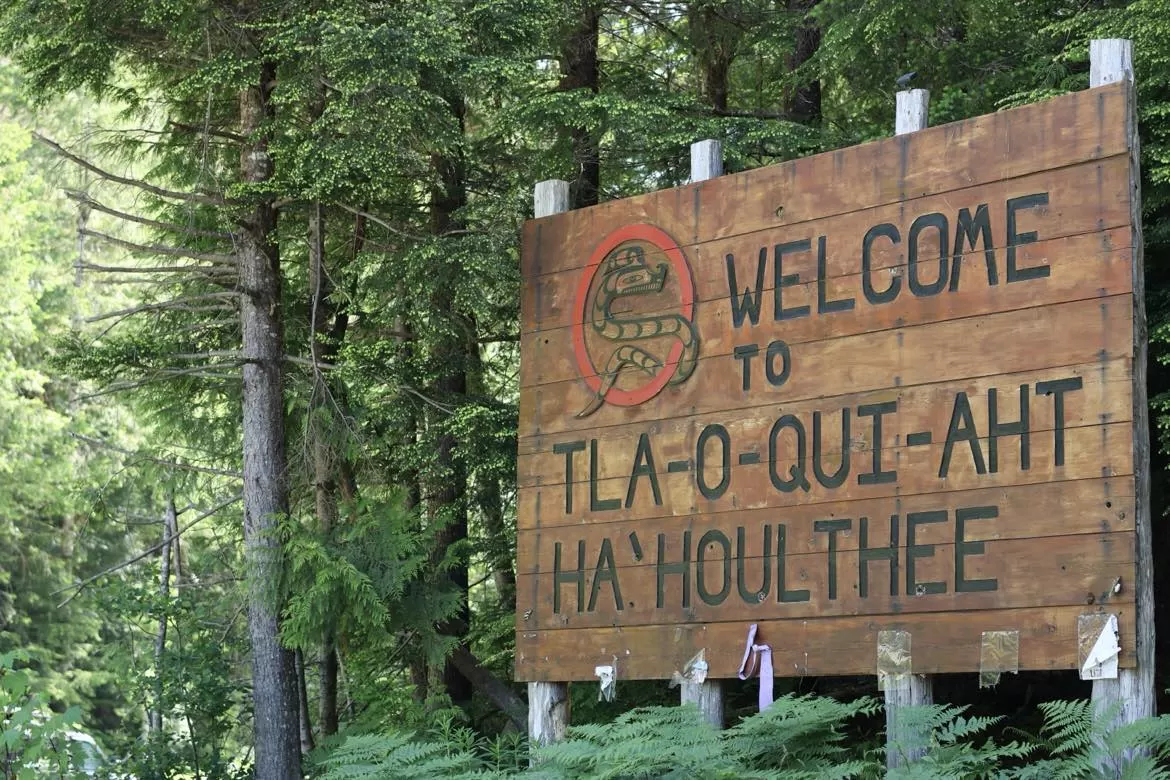 Welcome sign on Highway 4 marking the entrance to Tofino, located in the traditional territory of the Tla-o-qui-aht First Nations
What Lies Ahead
Tofino is at a critical juncture, wrestling with market forces driving property values sky-high and challenging residents’ ability to remain in the community. The tension between provincial housing mandates and local economic interests, particularly concerning short-term rentals, remains unresolved, with compliance required in the short term. Coupled with vital environmental limitations like water supply, the path forward for sustainable growth and maintaining a viable local community in Tofino is complex and uncertain. The outcome of the requested provincial exemption and the level of compliance with current STR regulations will significantly shape the town’s future landscape.