The increasing adoption of yield-bearing tokenized US Treasury products as collateral in leveraged crypto trading is forging new connections between traditional finance and decentralized markets. While offering potential benefits, this trend also introduces novel pathways for risk transmission, raising concerns about potential cascading effects within decentralized finance (DeFi) protocols. This convergence means understanding not just the potential yield but also the complex risks involved.
Contents
Key Takeaways:
- Tokenized US Treasurys are growing in popularity as on-chain assets, reaching nearly $7.4 billion in market cap.
- Leading crypto platforms are starting to accept these tokens as collateral for leveraged trading.
- While seemingly low-risk, these assets carry traditional financial risks (credit, interest rate, liquidity) compounded by crypto-specific and technological risks.
- Regulatory bodies and experts warn of potential volatility spillover and rapid deleveraging events.
- Market focus may shift towards other tokenized real-world assets like gold and real estate as investors seek diversification amid economic uncertainties.
What Are Tokenized US Treasurys?
Tokenization is the process of converting real-world assets, like government debt, into digital tokens on a blockchain. Tokenized US Treasurys represent digital claims to underlying government securities, similar in concept to shares in a money market fund that invests in short-term government debt. This makes traditional assets accessible and usable within the blockchain ecosystem. The market for these tokenized treasurys has seen significant growth, now valued at nearly $7.4 billion.
The Growing Trend: Using Treasurys as Crypto Collateral
Recently, major crypto exchanges like Deribit and Crypto.com have begun allowing users to post tokenized US Treasury funds as collateral for leveraged trading positions. They have integrated products like BlackRock’s BUIDL fund, a tokenized money market fund holding nearly $2.9 billion in value, issued on a blockchain platform. This allows crypto traders to use their holdings in these relatively stable, yield-bearing assets to back riskier leveraged bets in volatile crypto markets.
Understanding the Risks Involved
While US Treasurys are generally considered low-risk, tokenizing them and using them in the high-leverage world of crypto trading introduces several layers of complexity and risk.
Inherent Financial Risks
According to a June report from rating service Moody’s, even short-term liquidity funds, like those holding Treasurys, are not entirely riskless. They face traditional financial risks:
- Credit Risk: The risk that the issuer of the debt (the US government) could default, though this is historically very low for US Treasurys.
- Interest Rate Risk: The value of fixed-income securities can decline if interest rates rise.
- Liquidity Risk: The risk that the assets cannot be easily sold quickly without a significant loss in value.
Beyond these, Moody’s notes that tokenized funds have “additional risks that stem from the novel technology.”
Crypto-Specific Risks
Using tokenized Treasurys as collateral in leveraged trading exposes them to volatility and liquidation risks inherent in the crypto market. Leveraged trading relies on loan-to-value (LTV) ratios. If the market value of the posted collateral drops below a certain threshold, automated systems can trigger liquidation, selling the collateral to cover the loan. A rapid decline in the value of the tokenized Treasury or a sudden drop in the linked crypto asset could lead to forced selling of the underlying collateral.
Systemic Risk and Contagion
The US Treasury itself has highlighted the potential for tokenization to act as a “bridge to asset volatility.” In a recent presentation to the Treasury Borrowing Advisory Committee, the department noted that as the size of tokenized assets grows, volatility “could spill over into the broader financial markets.” The warning emphasized that “in times of stress, seamless ledgers can become a negative as deleveraging and fire sales can rapidly spread across assets,” suggesting a potential for contagion across interconnected markets.
 Overview of the growing market capitalization of tokenized US Treasurys, highlighting their adoption as digital assets on blockchain platforms.
Broader Economic and Geopolitical Risks
Tokenized treasurys are also susceptible to risks stemming from macroeconomic and geopolitical factors that can affect the value and stability of US government debt. These include:
- De-dollarization efforts by foreign countries
- US fiscal spending policies and rising national debt levels, which can impact perceived creditworthiness
- Global liquidity issues
- Interest rate decisions by central banks
- Geopolitical turmoil that affects global capital flows
Nick Jones, founder of Zumo, a crypto-as-a-service platform, stressed the need for caution. He told Cointelegraph that “Robust risk management, the anticipated increased regulatory oversight, and transparency will all be key to mitigating such variables as traditional finance and decentralized finance continue to converge.”
Beyond Treasurys: The Future of RWA Collateral
While tokenized Treasurys serve as a significant entry point for institutions into on-chain finance, evolving concerns about US fiscal stability and geopolitical tensions are prompting investors to look at a wider spectrum of tokenized real-world assets (RWAs).
For example, US Treasury yields spiked following discussions of US President Donald Trump’s trade tariffs, partly as bond investors reacted to proposed policies by selling US government debt. As author and economist Saifedean Ammous noted in an April 23 X post, bond yields are fundamentally tied to the government’s ability to pay its debts; as creditworthiness concerns rise, yields tend to increase, reflecting higher borrowing costs or lower bond prices.
Growing worries about inflation, geopolitical events, and the US government’s creditworthiness have increased demand for alternative, relatively stable tokenized RWAs such as gold, real estate, and energy-backed commodities.
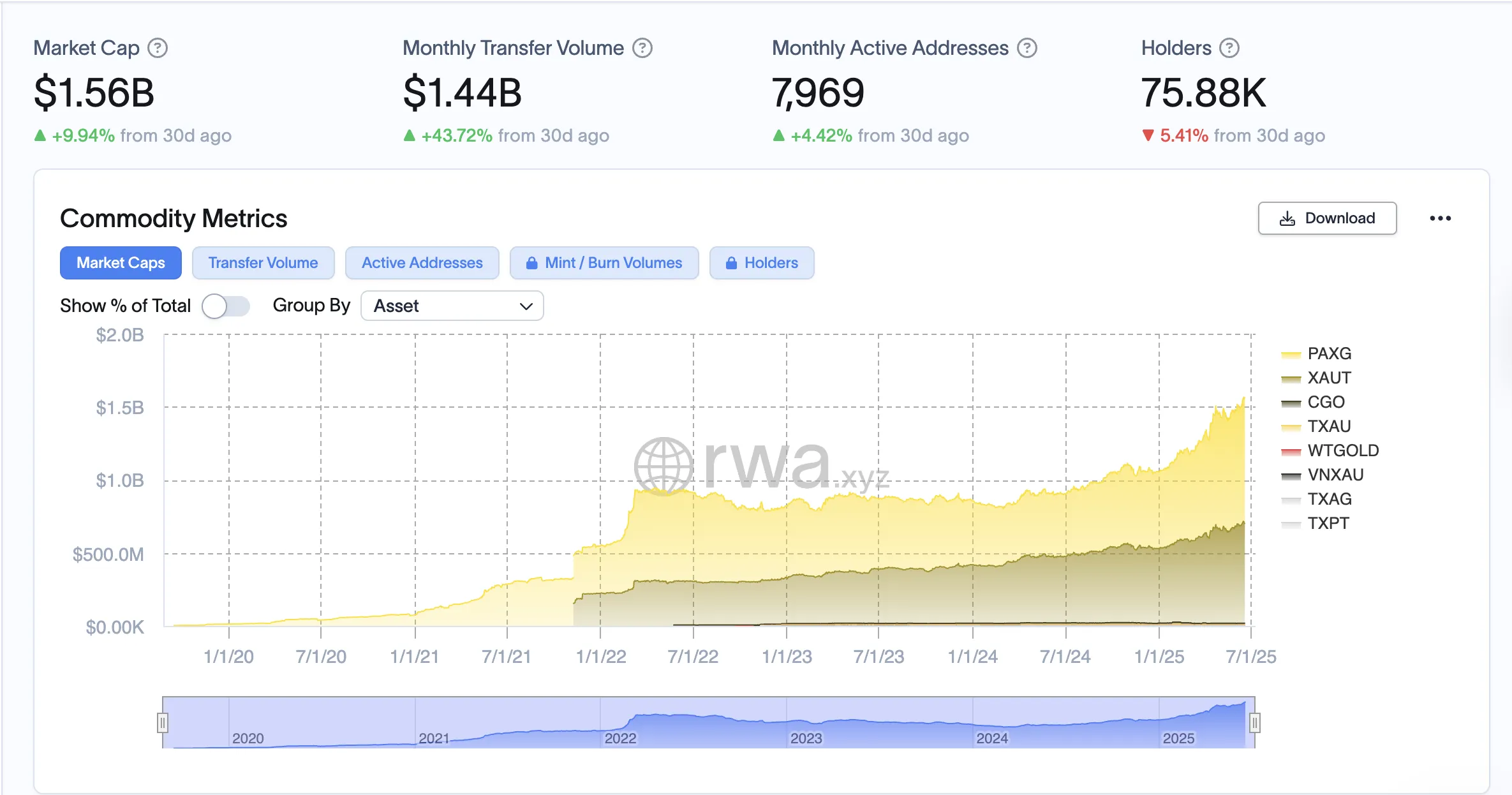 Chart showing the growth of tokenized commodity market capitalization, suggesting increasing interest in using assets like gold and real estate within the RWA space.
“While tokenized treasuries offer institutions a way to park their capital in a low-risk, yield-bearing asset, this does not offer the investors in these funds enough,” Kevin Rusher, founder of the RWA lending ecosystem RAAC, told Cointelegraph.
Rusher anticipates that the next phase of the RWA-backed market will involve the tokenization of hard assets like gold and real estate. Real estate, for instance, can provide cash flow income in addition to potential capital appreciation. Tokenized gold could also generate yield if lent out, or be used as collateral to secure loans across the DeFi ecosystem, offering diverse utility beyond just a store of value.
Conclusion
The integration of tokenized US Treasurys into crypto trading as collateral signifies a deepening connection between traditional and decentralized finance. While this trend brings efficiency and new opportunities, it also introduces complex risks related to financial markets, technology, and broader economic factors. As this space evolves, market participants and regulators will need robust risk management frameworks to navigate the potential for volatility and contagion. The exploration of other tokenized real-world assets like gold and real estate highlights the market’s drive for diversification and alternative collateral types in a changing economic landscape.
For further reading on this topic, explore CoinTelegraph’s coverage on tokenized funds scaling rapidly and the broader trend of Ethereum’s role in the TradFi tokenization race.