A new proposal for Toronto’s East Danforth neighbourhood aims to bring 64 purpose-built rental suites to 2720–2734 Danforth Avenue. Submitted by Collecdev-Markee Developments, this 8-storey mid-rise project stands out for its innovative use of modular mass timber construction, a car-free living approach, and a commitment to long-term affordability, marking the first of five similar “Missing Middle” developments planned across the city in partnership with the Canada Mortgage and Housing Corporation (CMHC). Key takeaways include the project’s focus on sustainable, prefabricated construction methods, its location near major transit hubs, and its contribution to increasing rental housing supply and affordability in Toronto.
Contents
Project Overview and Key Features
The proposed development is situated just east of Main Street, benefiting from excellent transit access with Danforth GO and Main Street subway stations within easy walking distance. Designed by Batay-Csorba Architects, the project seeks to add mid-rise density using factory-built construction techniques. This modular approach is intended to significantly reduce embodied carbon compared to traditional construction and substantially accelerate the timeline for project completion.
A core principle driving this and subsequent Collecdev-Markee projects is the creation of purpose-built rental housing, with a commitment to securing at least 10% of the units as affordable for a remarkable 99 years. The use of a modular system allows components like mass timber and light wood-frame elements to be efficiently assembled on a simple slab-on-grade foundation, cleverly avoiding complex and costly underground construction typically associated with larger developments. Each planned site for these “Missing Middle” projects is strategically located on a major street or within a Major Transit Station Area, reinforcing the car-free vision.
 Looking north at the proposed 2720 Danforth Avenue development, showing the building's exterior design
Design Philosophy and Site Integration
Unlike many conventional mid-rise buildings in Toronto that feature upper-level step-backs often referred to as the “wedding cake” design, the 2720 Danforth proposal adopts a clean-lined massing. This design choice allows for the inclusion of more units, including a higher proportion of two-bedroom suites, addressing a critical need for family-sized rental units. The ground floor design pays homage to the site’s history by featuring heritage reconstruction and incorporating “maker space” units. These spaces are intended to support small-scale retail and community-oriented uses, integrating the building with the existing main street fabric.
Jennifer Keesmaat, CEO of Collecdev-Markee, emphasized the importance of modular homes in expanding housing options along main streets. “While they present challenges, from design to financing to approvals, we’ve been willing to put in the sweat equity to make it work,” Keesmaat stated, highlighting the developer’s belief that incremental growth through mid-rise housing is fundamental to building a more affordable and sustainable city.
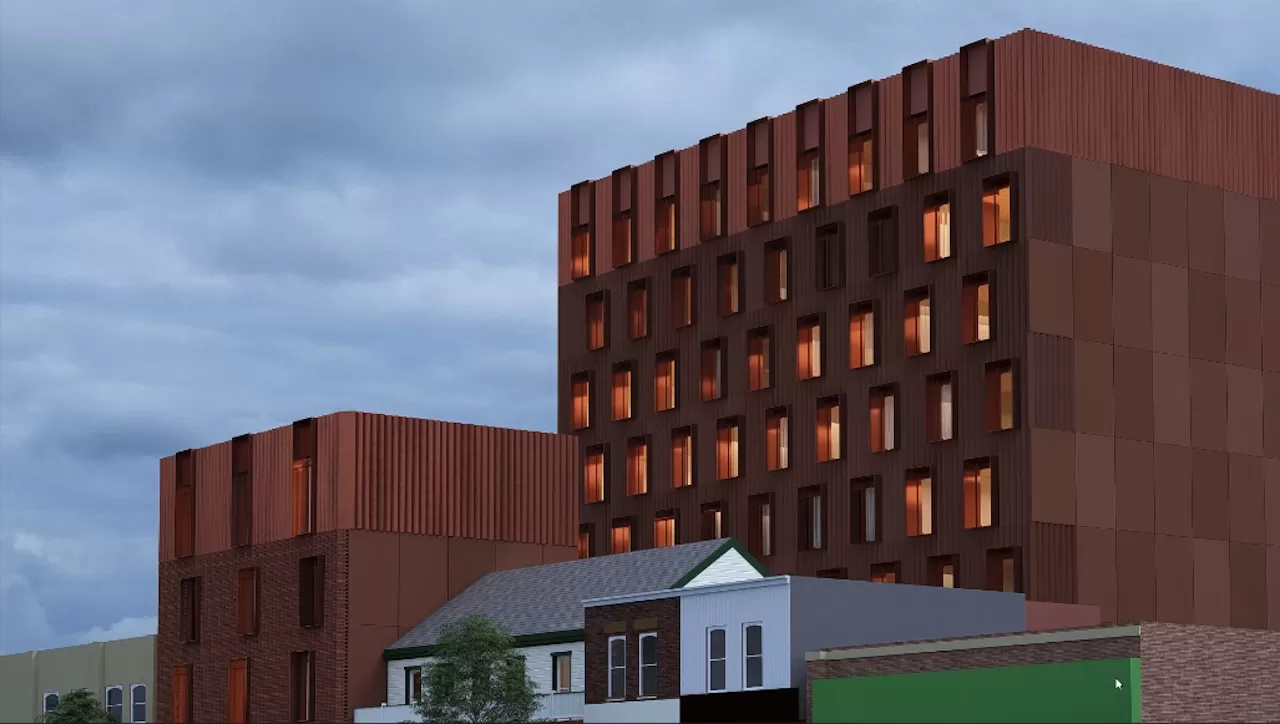 Northwest view of the planned 2720 Danforth Avenue mid-rise rental building in Toronto
The site itself, on the north side of Danforth Avenue, currently hosts a series of interconnected low-rise buildings and a small rear surface parking lot. These existing structures contribute to over a century of layered main street history in the area, featuring commercial frontages that have recently been used for retail or stood vacant.
Structure and Layout
The proposed development comprises two distinct buildings arranged around a central courtyard. Along the Danforth Avenue frontage, a four-storey light wood-frame structure is planned, incorporating the reconstruction of the historic 2726 Danforth building. This element will help maintain the character of the street wall, complemented by a new red-brick component to the west.
Behind this street-facing structure, an eight-storey modular mass timber building will rise along the rear laneway. The majority of the 64 residential suites are located within this larger volume. The design prioritizes natural light and generous living spaces, with larger-than-average floor-plates and exterior-facing windows in all rooms. The landscaped internal courtyard positioned between the two buildings is envisioned as the project’s social and spatial heart, offering communal outdoor space.
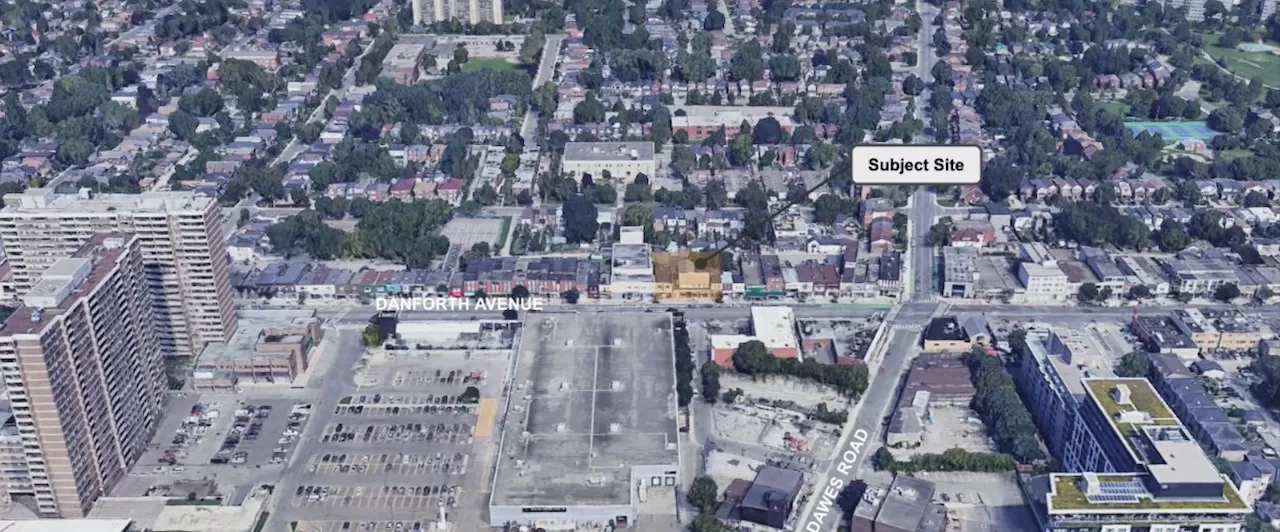 Axonometric view illustrating the two-building layout and courtyard of the proposed 2720-2734 Danforth Avenue development
A covered walkway along the west side of the courtyard will connect the two buildings and provide weather-protected bicycle parking, reflecting the project’s car-free stance. A significant provision of bicycle parking is included, with no underground garage or vehicular parking proposed on site.
With 160m² of outdoor amenities and 77m² indoors, the courtyard represents a significant focus on collective outdoor use, a feature not always common in mid-rise typologies. The project’s total Gross Floor Area is 4,703m², all dedicated to residential use, resulting in a Floor Space Index (FSI) of 3.72 on the 1,263m² lot. Six of the 64 proposed suites are designated as affordable rentals, served by a single elevator. Three ground-floor units in the heritage portion are set aside for the small-scale retail or maker-space uses.
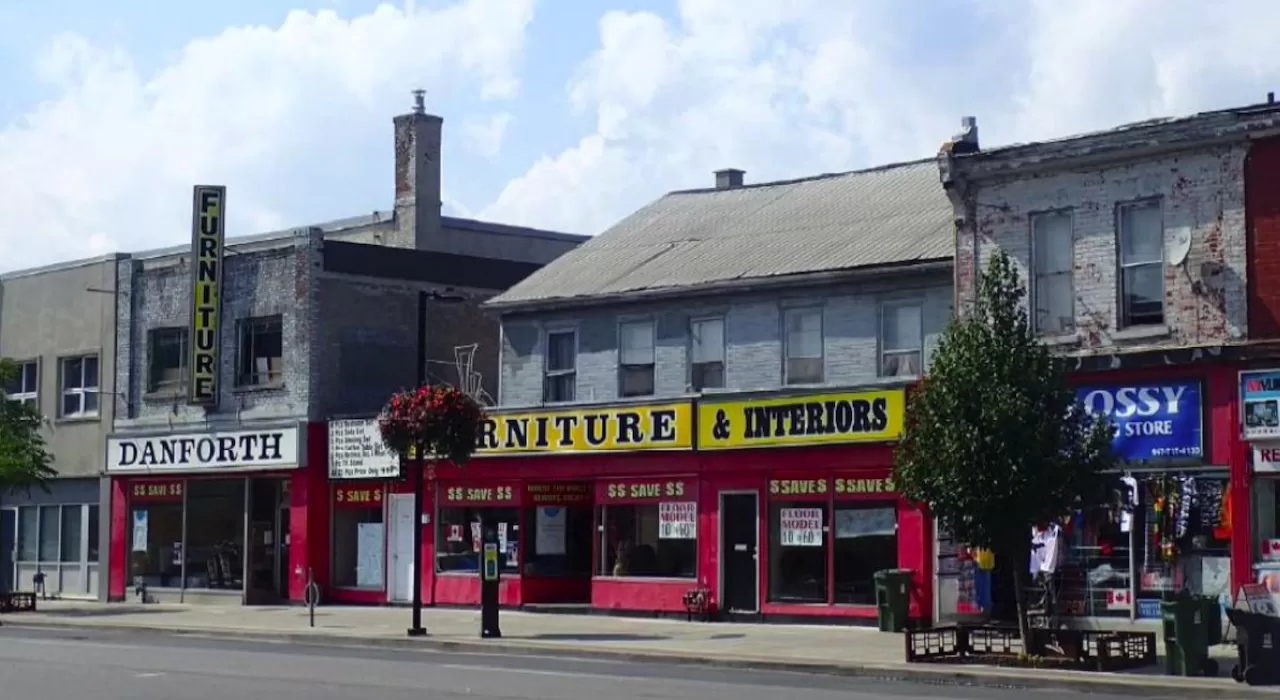 Current site conditions at 2720-2734 Danforth Avenue, Toronto, showing existing low-rise buildings
Transit Connectivity and Urban Context
The site’s location underscores its transit-oriented design philosophy. It is just 300 meters from Main Street subway station and 200 meters from the existing Danforth GO station on the Lakeshore East corridor, with even closer access anticipated once a planned east entrance to the GO station is completed. Multiple surface transit routes serve the area, and the future Ontario Line 3’s interchange at Pape station will be a short subway ride away, further enhancing connectivity. For cyclists, Danforth Avenue features dedicated cycle tracks implemented through the City’s Destination Danforth initiative, connecting to major routes like Bloor Street and Kingston Road.
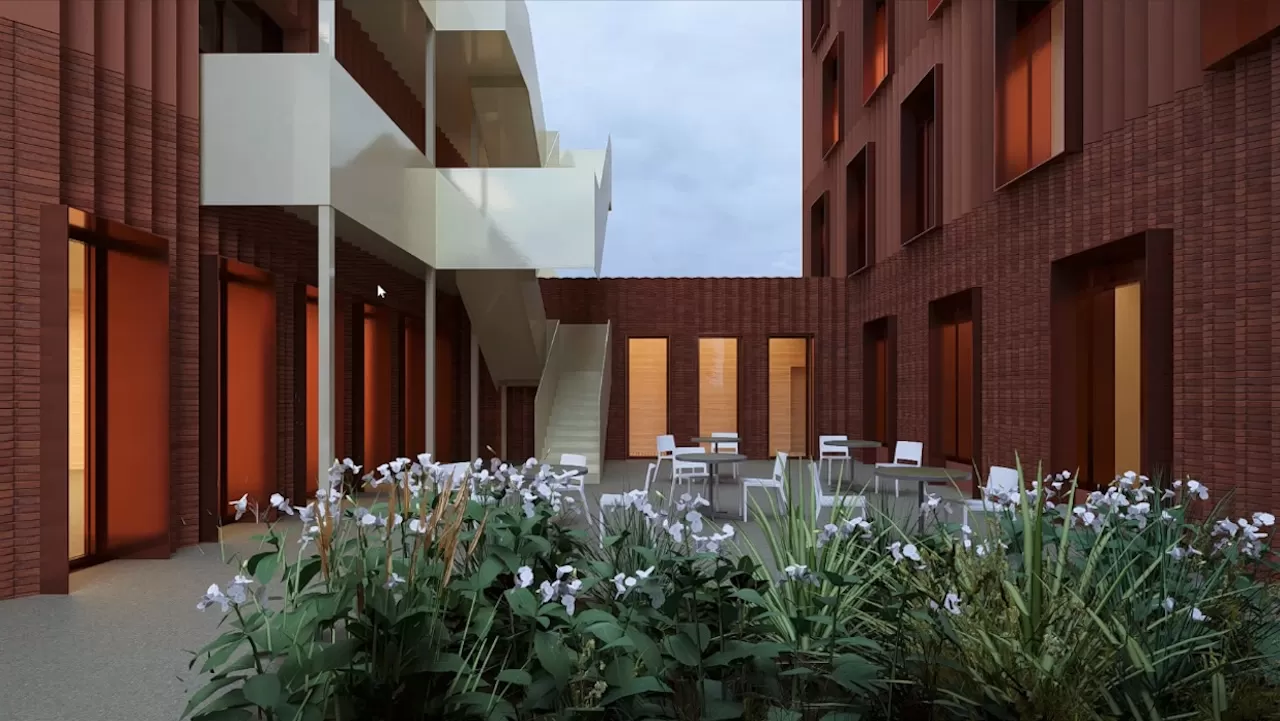 Rendering of the central landscaped courtyard planned for the 2720 Danforth Avenue residential development
What’s Next
Planned for completion by 2027, the 2720 Danforth proposal is a significant step in Collecdev-Markee’s larger strategy to roll out five modular, mid-rise rental housing projects across Toronto in partnership with CMHC. Following this East Danforth project, similar developments are anticipated at sites including College and Lansdowne and on Christie Street near Dupont. These projects aim to demonstrate how innovative construction methods and strategic design can help address Toronto’s urgent need for more affordable, sustainable, and well-located rental housing within existing urban neighbourhoods.
This initial project on Danforth Avenue sets a precedent for how modular mass timber construction can be integrated into established communities, potentially paving the way for more efficient and environmentally conscious residential development in the future.