
Vancouver City Council has given the green light to a massive mixed-use office and industrial project by PCI Developments in the city’s Mount Pleasant area. This significant approval marks a major step for urban development, aiming to boost employment space but also highlights challenges in adapting zoning to market demand. Here’s what you need to know about this landmark project and its implications for Vancouver’s business landscape.
Contents
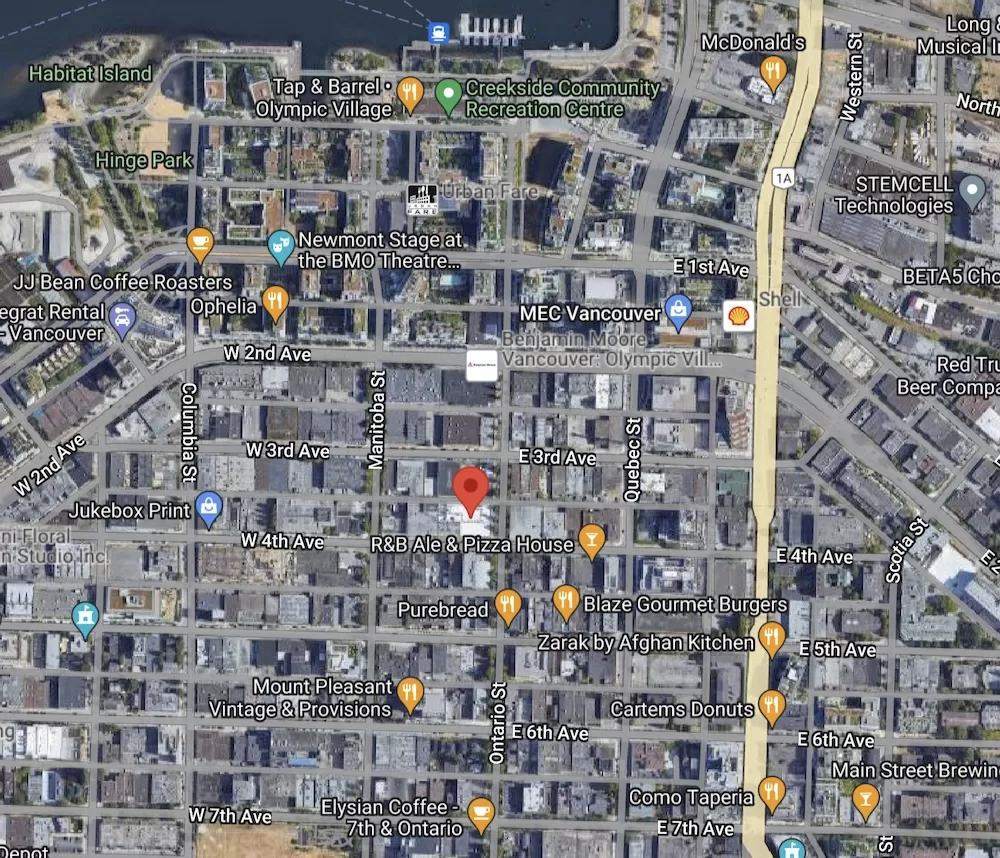
The approval pertains to an L-shaped site spanning 4-36 West 3rd Avenue and 5 West 4th Avenue. Located strategically near the new AbCellera headquarters and within walking distance of multiple SkyTrain stations, including future lines, the site is poised to become a central hub for the area’s growing employment base.
Project Details
Developed by PCI Developments, the project will feature two buildings: an 11-storey tower reaching 182 feet and a 10-storey building at 170 feet. The complex will offer approximately 480,000 square feet of total floor area. This includes a significant 185,000 square feet of office space on upper levels and 264,000 square feet designated for creative and light industrial uses on lower levels.
Adding to the complex’s functionality, the plans include 16,700 square feet for retail and restaurants, intended to serve both building occupants and the surrounding community. A 14,300 square foot private childcare facility for 37 children is also part of the design, addressing a key need for employees in the area.
 Aerial view of the L-shaped development site at 4-36 West 3rd Ave and 5 West 4th Ave in Vancouver's Mount Pleasant.
Implications for Vancouver’s Business Landscape
The developer, PCI President Tim Grant, highlighted the project’s potential to meet long-term demand for employment spaces and attract major businesses. The vision is to create a “strong, desirable anchor” for Mount Pleasant, specifically targeting innovation industries and urban industrial segments.
Targeting Innovation & Industrial
Grant acknowledges the challenging commercial leasing market, particularly for office space. However, he expressed optimism that a high-quality development in this prime location will be globally competitive, especially for the innovation sector Vancouver aims to attract to Mount Pleasant. The next critical step after this rezoning approval is securing anchor businesses.
Zoning Hurdles and Market Realities
A significant point of discussion during the public hearing was the limitations of current zoning definitions for creative/light industrial spaces. Grant argued that the existing “allowable industrial uses as currently defined are [a] seemingly insurmountable barrier to project viability” without broader definitions. He noted minimal demand for industrial space above the ground floor under current rules, which focus on operational logistics over market need.
Blair Quinn from CBRE, a commercial real estate firm, echoed these concerns, stating that the current classification fits only a narrow range of businesses. He also criticized the requirement for 17-foot-high ceilings in industrial spaces, arguing it’s unnecessary for sectors like life sciences and adds uneconomical construction costs, potentially driving companies to neighboring cities like Richmond and Burnaby. City councillors acknowledged these issues and indicated they would inform future policy discussions.
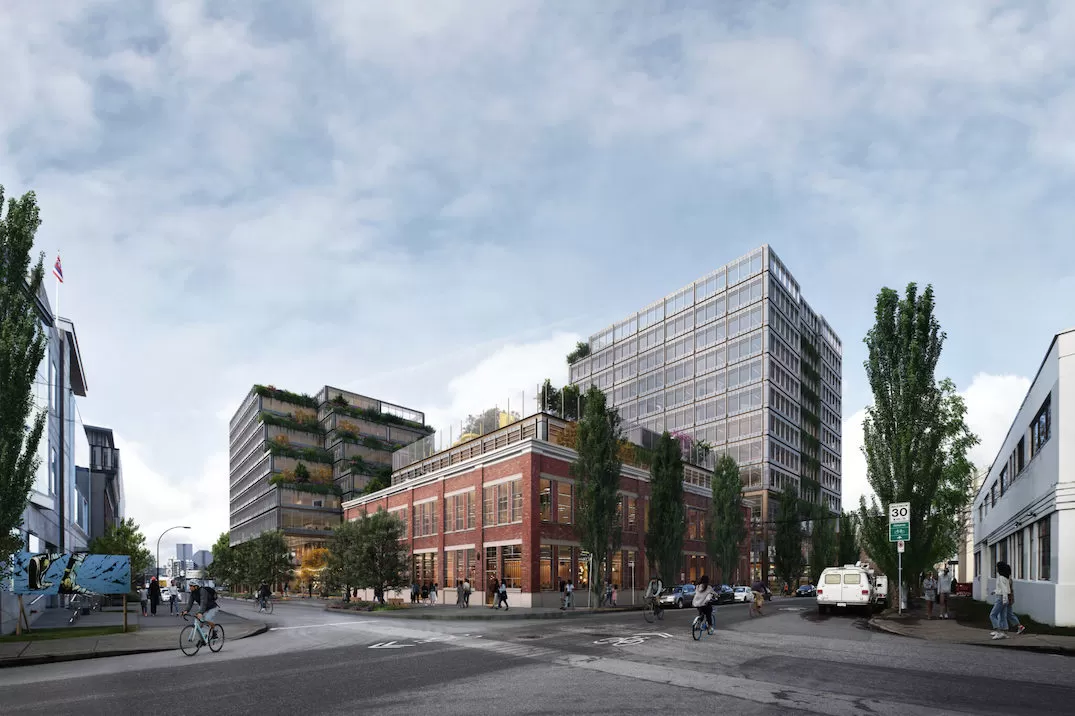 Architectural rendering showing the approved mixed-use office and industrial buildings by PCI Developments in Mount Pleasant, Vancouver.
Design and Features
The project, designed by Perkins&Will, received positive feedback for its architectural design and integration of amenities. A notable feature is the retention and restoration of a 1910-built, two-storey red brick heritage warehouse, which will be integrated into the complex and expanded to house retail/restaurant and childcare uses.
The two new buildings feature similar architectural styles, with terraced decks facing an internal courtyard. This privately-owned, mid-block courtyard plaza along West 4th Avenue will be activated by retail frontages, creating a public space within the block. Four underground levels will provide 405 vehicle parking stalls and 201 secured bike parking spaces.
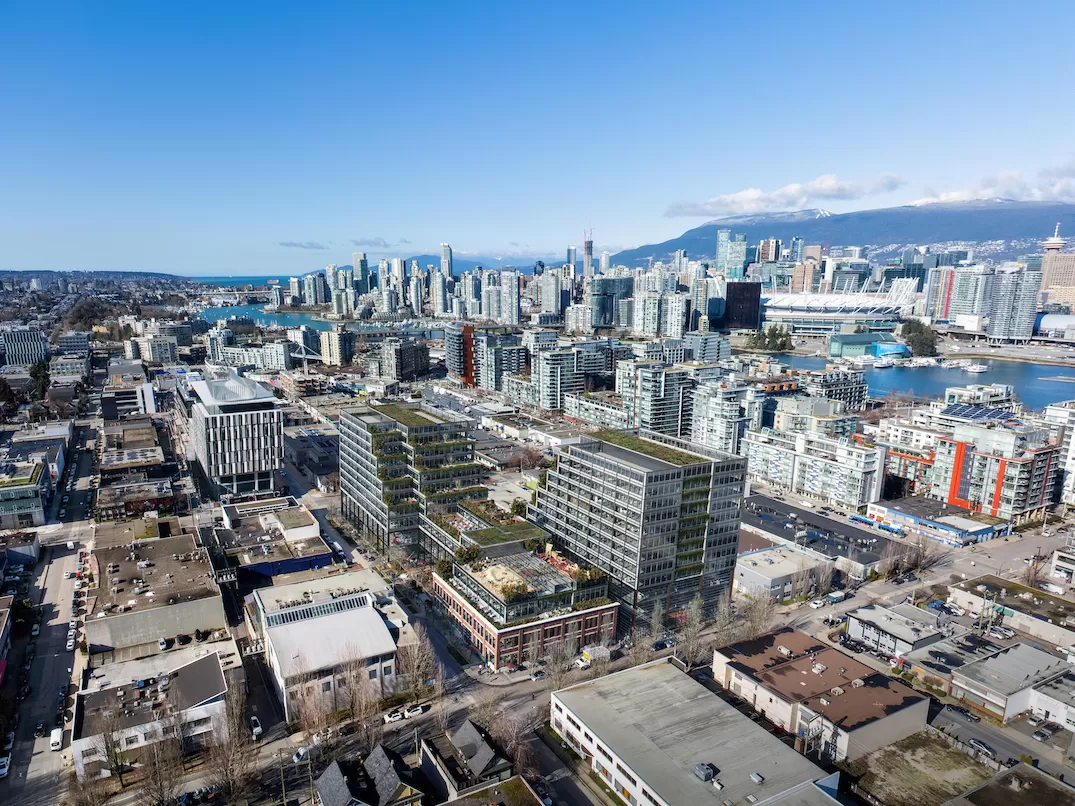 Concept design of the PCI Developments project showing the integrated heritage building and modern office/industrial complex in Vancouver.
Community & Financial Impact
The project’s density reaches a floor area ratio (FAR) of 6.62 times the site size, with industrial space accounting for at least 3.0 FAR. In exchange for this added commercial density, the developer will contribute approximately $2.5 million as a cash community amenity contribution (CAC). Additionally, the project will generate $11.15 million in development cost levies and contribute $950,000 towards public art.
Mount Pleasant’s Development Trend
This major approval follows other recent council decisions supporting similar mixed-use creative/light industrial, office, and retail projects in the Mount Pleasant Industrial Area. Earlier this year, council approved projects like the one at 43-95 East 3rd Avenue by Atelier Capital Partners and Gensler (136-foot, 8-storey) and another at 210-220 West 6th Avenue/2224 Alberta Street by Nicola Wealth Management, PC Urban, and Proscenium Architecture & Interiors (142-foot, 10-storey). While smaller, these projects signal a clear trend towards densifying and diversifying the employment opportunities in this evolving Vancouver neighborhood.
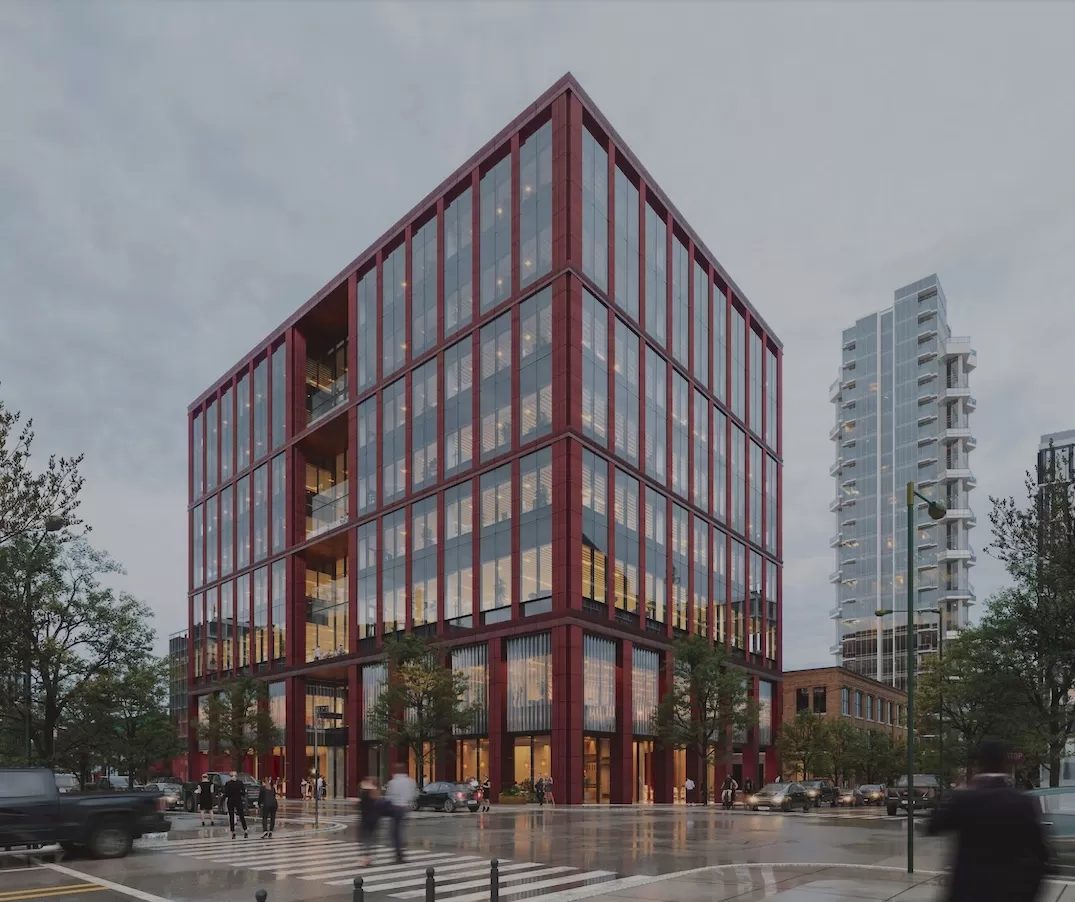 Artistic rendering of Project Phoenix, another approved mixed-use development by Atelier Capital Partners and Gensler in Vancouver's Mount Pleasant area.
What’s Next
The approval of this significant PCI development is a vote of confidence in Mount Pleasant’s future as a key employment hub for Vancouver. However, the path forward involves overcoming acknowledged market challenges, particularly regarding the suitability of current industrial zoning for modern businesses. The developer’s immediate focus is on securing tenants, while the city council’s acknowledgment of zoning limitations suggests potential policy reviews could be on the horizon to better support the growth of targeted innovation and urban industrial sectors in Vancouver. This project’s success will likely influence future development strategies in the area.