Vancouver City Council has given the green light to one of the largest commercial development proposals in the city’s recent history. This approval paves the way for a significant mixed-use project by PCI Developments in the booming Mount Pleasant area, aiming to boost office and industrial space crucial for Vancouver’s growing tech and innovation sectors. The decision highlights both opportunities for urban industrial growth and ongoing debates about zoning regulations and market needs.
Contents
Key Takeaways:
- Vancouver Council approved a large mixed-use office, industrial, retail, and childcare development in Mount Pleasant.
- The project by PCI Developments will add nearly 480,000 sq ft of space, including significant office and industrial floor area.
- Challenges remain regarding current industrial zoning definitions and building requirements versus market demand.
- The development signifies continued investment in Mount Pleasant as a hub for innovation industries.
Project Details: Scale and Scope
The approved project is located on an L-shaped site spanning 4-36 West 3rd Avenue and 5 West 4th Avenue. This prime location is strategically positioned near several SkyTrain stations and Vancouver’s burgeoning tech and creative industry hubs, including the new AbCellera headquarters.
PCI Developments plans a complex featuring two mid-rise buildings: an 11-storey north building (182 ft tall) and a 10-storey south building (170 ft tall). The total floor area is planned to be approximately 480,000 sq ft, allocated as follows:
- Office Space: Around 185,000 sq ft on upper levels.
- Industrial/Creative Space: Approximately 264,000 sq ft on lower levels.
- Retail/Restaurant: 16,700 sq ft.
- Childcare Facility: 14,300 sq ft for 37 children.
This distribution reflects the project’s ambition to serve a mix of users, supporting not just businesses but also community needs like childcare within the development footprint.
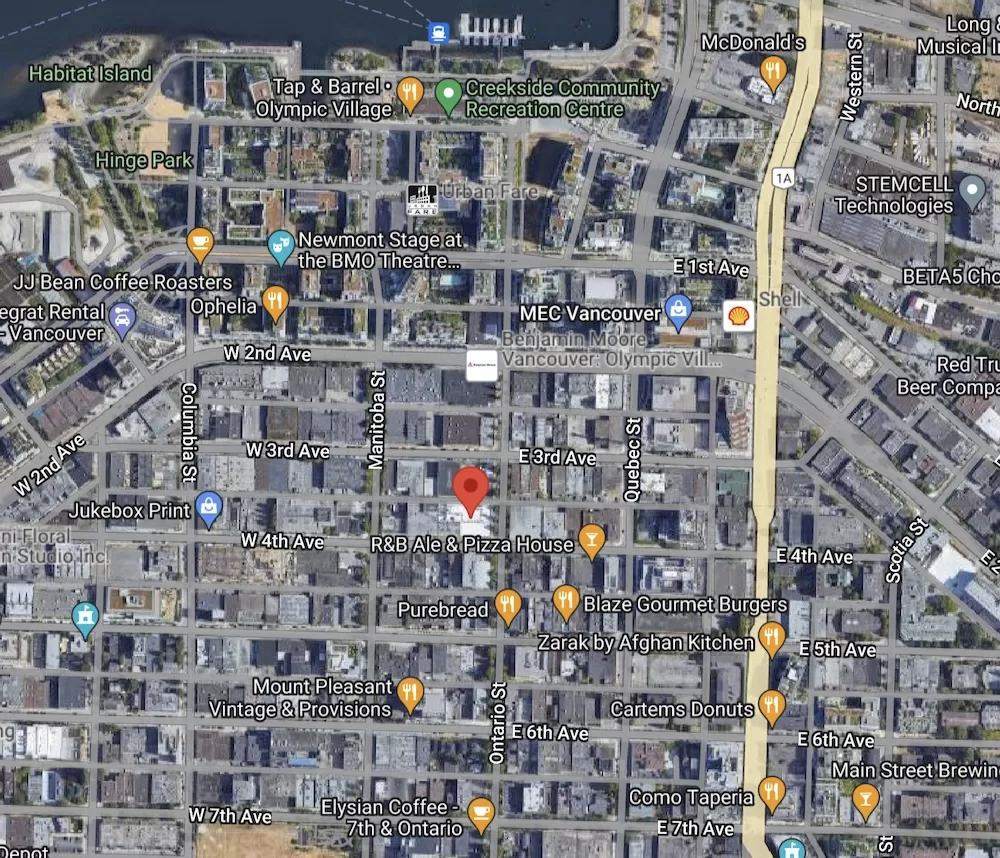 Map showing location of large mixed-use development site in Vancouver's Mount Pleasant area
The development will also retain and integrate a 1910-built heritage warehouse building on the site’s southeast corner, restoring it for retail, restaurant, and childcare uses.
Addressing Market Demand and Zoning Challenges
During the public hearing, PCI president Tim Grant emphasized the project’s goal of meeting long-term demand for employment spaces in a location ideal for attracting major businesses, particularly in innovation and urban industrial sectors.
“We think it could be a strong, desirable anchor for resurgent globally competitive Mount Pleasant,” Grant stated, acknowledging the currently challenging commercial leasing market, especially for office space. Despite this, he expressed optimism that the project’s quality and location would be attractive to the innovation firms the city aims to draw.
However, a key point of contention raised by the developer and market experts like Blair Quinn from CBRE was the limitations imposed by current zoning definitions for creative/light industrial spaces. Grant highlighted that there’s “little to no demand” for traditional industrial space above the ground floor under current rules, which are seen as a significant hurdle to project viability.
Quinn supported this, noting that strict definitions limit eligible businesses to a very narrow set, potentially driving companies to neighboring municipalities like Burnaby and Richmond where zoning is perceived as more accommodating.
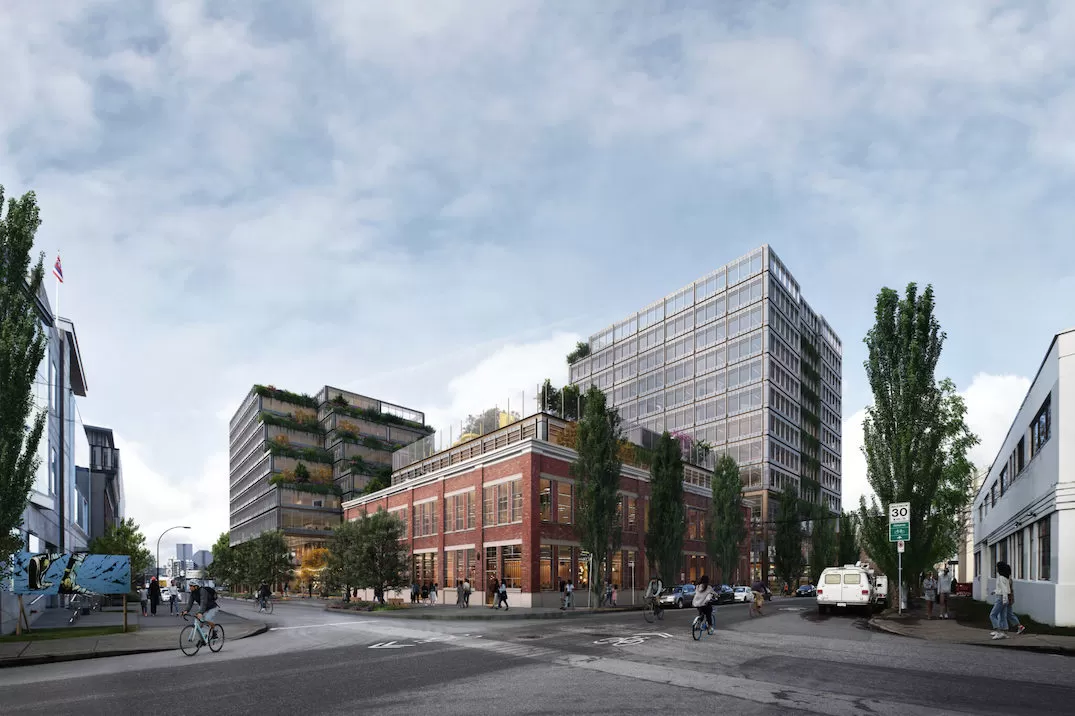 Architectural rendering of the approved PCI Developments mixed-use complex in Vancouver
Another specific challenge mentioned was the requirement for 17-ft extra-high ceilings in industrial spaces. While intended to potentially accommodate certain uses like life sciences labs, Quinn argued this significantly increases construction costs unnecessarily for many potential tenants, making the space uneconomical. While life sciences is a strategic sector, he cautioned that it’s still a relatively small industry, and mandatory design features catering specifically to it might be excessive for a large mixed-use project.
City Council Response and Future Outlook
City councillors acknowledged the concerns raised about zoning flexibility and restrictive requirements. Councillor Mike Klassen noted the trend of businesses potentially moving to adjacent cities and expressed a desire to see more tech companies remain and grow within Vancouver. He affirmed that the issues would be considered for potential future policy adjustments.
The project’s architectural design by Perkins&Will, which includes terraced decks, a privately-owned courtyard, and the integration of the heritage building, was well received by the Council. Councillor Lisa Dominato praised the design, stating, “I actually think it’s quite a beautiful building… and I think it’ll add value to the area.”
Financially, the project achieves a floor area ratio (FAR) density of 6.62 times the site size, with a significant portion dedicated to industrial space (at least 3.0 FAR). The developer will contribute approximately $2.5 million in cash community amenity contributions (CAC), $11.15 million in development cost levies, and $950,000 for public art in exchange for the approved density.
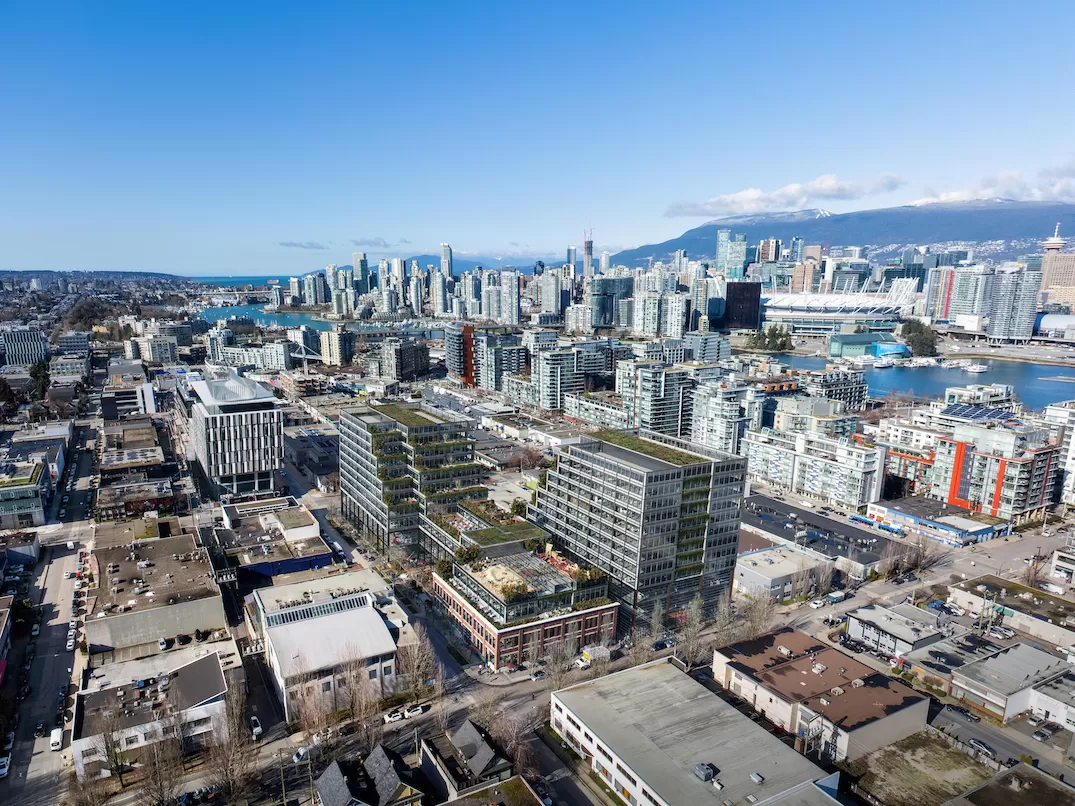 Rendering showcasing the modern design of the Vancouver office and industrial development buildings
The approval of this large project follows the unanimous council approval earlier this year of two other significant mixed-use creative/light industrial and office projects in the same Mount Pleasant Industrial Area:
- 43-95 East 3rd Ave (Atelier Capital Partners): An 8-storey building with 76,000 sq ft industrial, 62,000 sq ft office, and 8,000 sq ft retail.
- 210-220 West 6th Ave & 2224 Alberta St (Nicola Wealth/PC Urban): A 10-storey building with 72,000 sq ft industrial, 90,000 sq ft office, and 4,000 sq ft retail, incorporating a heritage building.
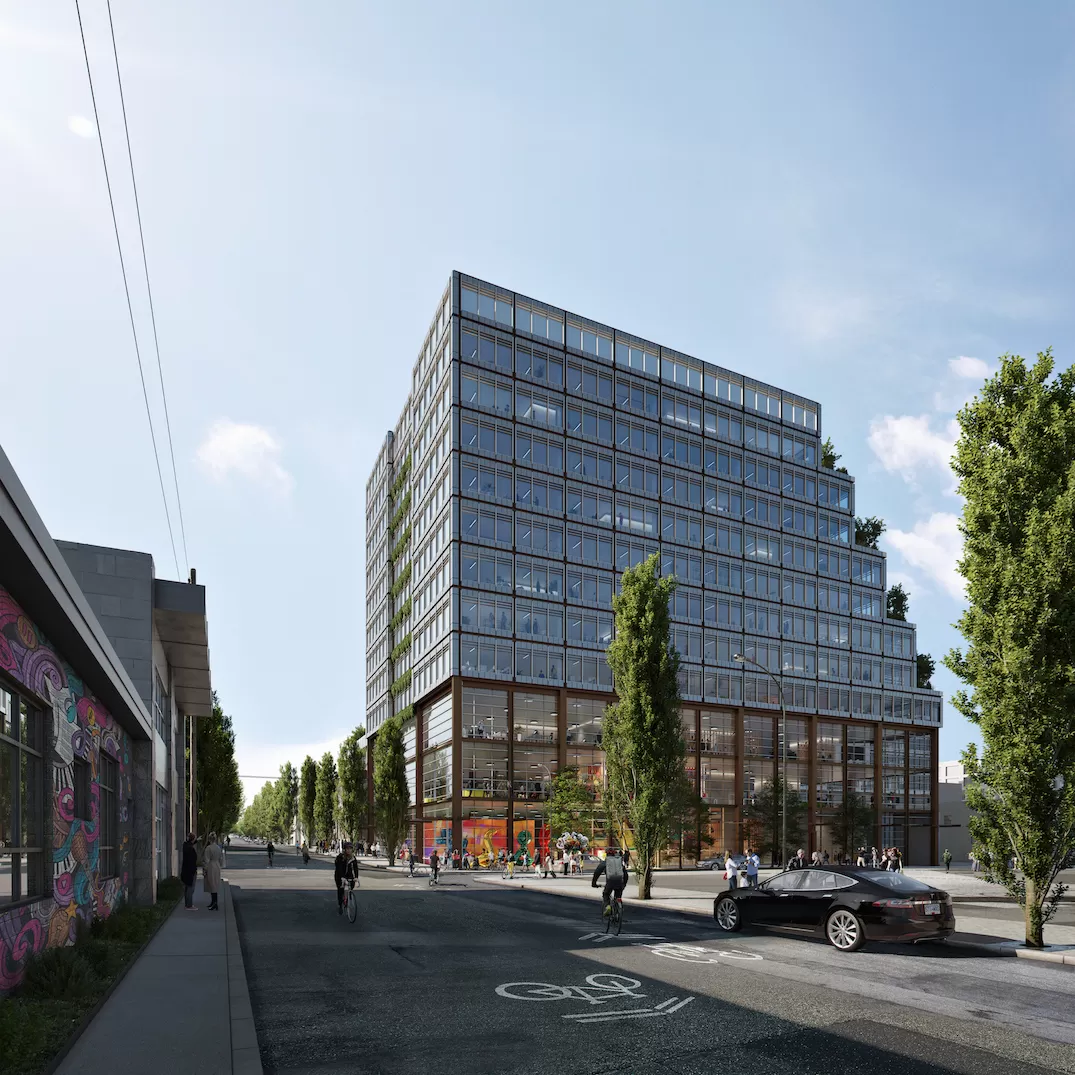 Conceptual image of the new PCI mixed-use development blending with retained heritage building
What’s Next
With rezoning approved, the next step for PCI Developments will be to secure tenants for the space, particularly the innovation industry businesses the city hopes to attract. The viability of the project, especially its substantial industrial component, may still depend on future policy adjustments regarding allowed uses within creative/light industrial zoning. The project’s progress will be a key indicator of how Vancouver’s commercial real estate market, particularly in the Mount Pleasant area, adapts to evolving business needs and regulatory frameworks.
For more details on other developments shaping Vancouver’s landscape, explore our coverage on [Vancouver Real Estate News](link to relevant category page or article on your site).