Forget AI tools that just create finished videos like Sora. A new player, Cartwheel AI, is focused on giving animators control over 3D characters. Backed by Dreamworks founder Jeffrey Katzenberg, this tool translates text prompts into editable motion data for standard software like Maya and Blender. It promises a future where AI empowers artists, making animation faster and more accessible by working with their existing tools and workflows.
Cartwheel isn’t designed to generate final animation frames or videos directly. Instead, you use text prompts to tell the AI what you want a character rig to do. The real magic is that the data Cartwheel creates – the character’s movements and poses – isn’t locked into a final image. You can export this motion data to your favorite 3D animation software like Maya, Blender, or Unreal Engine. This means you can then refine, tweak, and fully control the performance created by the AI, giving artists the final say.
This approach directly addresses a major frustration with generative video tools: the lack of editability. Andrew Carr, Cartwheel co-founder and formerly of OpenAI, explains this frustration came from using early image generators like DALL-E. While impressive, the output was just pixels you couldn’t easily change. His background in “program synthesis” (basically, AI that helps write code) sparked the idea: what if AI could control the code or underlying structure of 3D animation instead of just generating a flat image or video?
Carr experimented by linking his AI work to Blender, asking it to set up lighting or make objects move. It worked, and critically, he could still go into the 3D scene afterward and make any changes he wanted. This blend of speed and complete creative control was the lightbulb moment. He left OpenAI to pursue this. A connection through OpenAI led him to his co-founder, Jonathan Jarvis, a skilled animator and product designer. They bonded over the core principle of “editability.” One day, brainstorming the hardest animation problem, Jarvis immediately pointed to 3D characters – complex, tough, but with huge demand. That challenge became the focus for Cartwheel, starting in 2022.
 Cartwheel AI founders Andrew Carr (left) and Jonathan Jarvis standing together.
This focus on control sets Cartwheel apart from tools often called “AI slot machines,” where you pull a lever (enter a prompt) and hope for a usable result. Carr argues that while those tools can create fantastic things, they often don’t match the artist’s specific vision. Cartwheel aims to give animators the tools to tell their stories, not just whatever the AI generates.
While Cartwheel is a powerful tool, their initial target users are animation professionals – people who already work in 3D animation. Carr notes that the industry is struggling to keep up with demand, and traditional tools can be slow. Cartwheel aims to speed up this process dramatically, potentially making projects of all sizes more feasible. The hope is that by making the core task easier, it will also become accessible to creative individuals who aren’t expert 3D animators today. Carr envisions a future where animation creation is as common as smartphone photography, with experts still pushing the boundaries. Currently, you can use their web app and export motion, but they are also building an API to allow more direct integration into 3D pipelines.
How does Cartwheel learn to create motion? It’s trained on “ethically sourced” data – not scraped from random online videos. They purchase and license motion capture libraries, pay animators to create specific motions, and even perform motion capture themselves. The AI is primarily trained on this motion capture data. Critically, they refine this data so the output isn’t raw motion capture with a keyframe on every single frame (which is hard to edit). Instead, Cartwheel produces smooth, “beautiful curves” with good tangents that are easy for animators to manipulate in their software.
This cleanup process is guided by experienced animators, including former Pixar directors Cat Hicks and Neil Helm, who joined the Cartwheel team. These veterans, with years of experience using sophisticated production tools, inform the development to ensure Cartwheel isn’t just a fun toy but a powerful professional instrument. For example, based on their feedback, Cartwheel was built from the ground up to include professional features like full IK/FK (Inverse Kinematics/Forward Kinematics) rigs, which are essential for animators controlling digital characters. This kind of practical insight elevates the tool beyond a simple demonstration of AI capability.
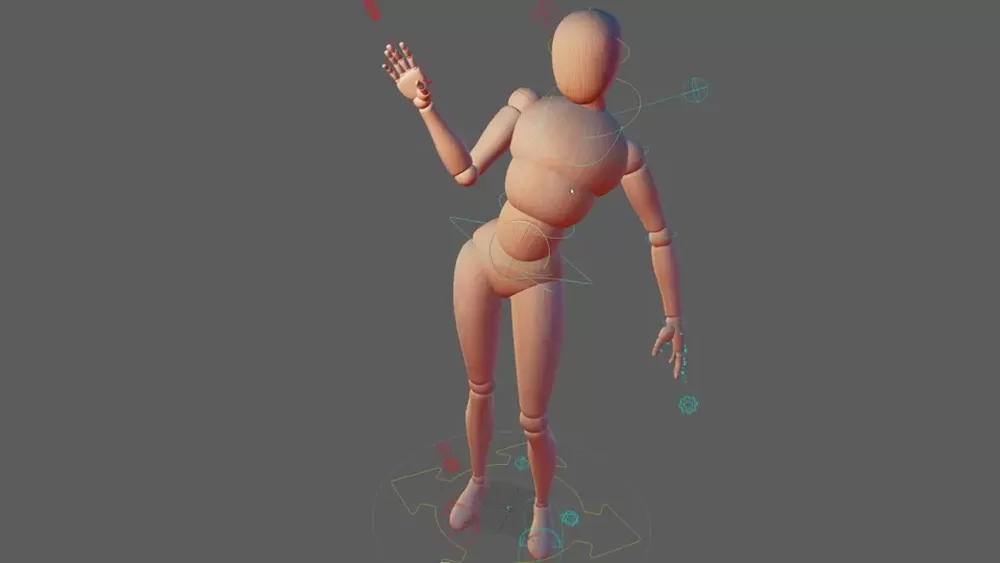 3D character model shown within the Cartwheel AI animation software interface.
Beyond generating motion from text, Cartwheel is building a motion library containing a mix of AI-generated and cleaned-up motion capture data. The team observes that animators simply want great motion, regardless of its origin. A major upcoming feature is video reference upload. Users will be able to record themselves or upload existing video to extract 3D motion, similar to a modern form of rotoscoping. This creates a three-pronged approach: generate motion with text, search the library, or upload reference video.
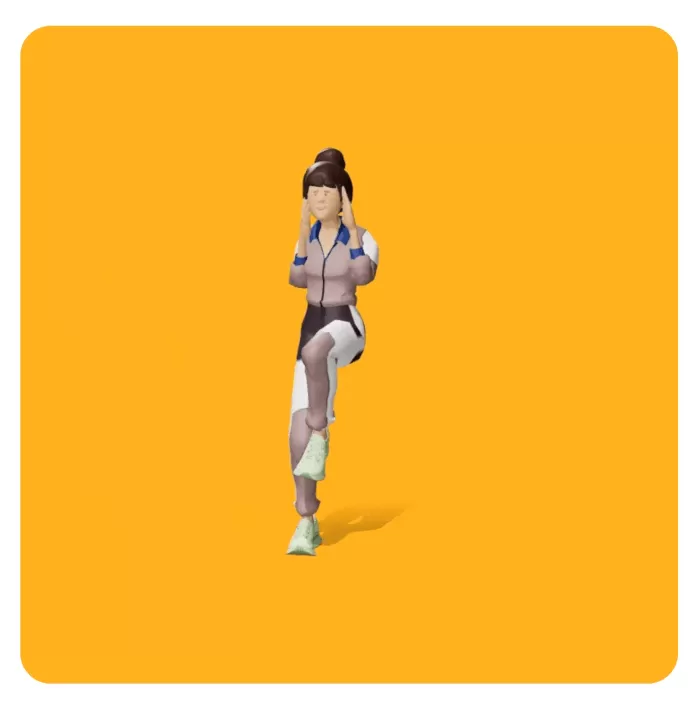 Animated GIF showing various fluid 3D character motions generated or refined by Cartwheel AI.
One common criticism of AI-generated art is its tendency towards a “sameness” or generic look. Cartwheel is working to combat this. While initial training involves large datasets, they are developing a “post-training” step that uses small, curated sets of high-quality, stylized motion to help the model capture life, anticipation, and unique character in its output. This is still an active area of research, but early results are promising.
They also aim to allow users to tune the style of the generated motion. For studios with a history of animation in a particular style, they can work with Cartwheel to create custom models trained on their unique motion data. For individual users, a feature is coming soon that will let you upload just a few reference motions (like a walk cycle or an idle pose), and the AI will generate subsequent motions in a style closer to those examples. This could even allow a 2D animation studio to upload their classic character motion and generate 3D motion that matches their established look.
The potential impact on animation jobs is a significant concern for many artists. Jeffrey Katzenberg, one of Cartwheel’s investors, has even suggested animated features could be made with a fraction of the current workforce. Carr acknowledges these fears but offers a different perspective. He believes there’s massive, untapped demand for animation that’s currently too expensive to meet. By making animation tools more accessible and faster, he argues the overall volume of animation created will increase dramatically. He draws a parallel to Photoshop, which didn’t eliminate graphic designers but empowered more people to do design and increased the amount of design work being done across various fields. Cartwheel’s goal, according to Carr, is to empower individual animators and smaller teams, shifting some of the power currently held by large studios back towards the creators.
Ultimately, Cartwheel is building a tool focused on empowering artists by giving them speed and control over AI-generated motion data. They are actively seeking feedback from animators to shape the tool’s development, believing that close communication with the artist community is key to its success and integration into the animation workflow.
Explore related content about AI in creative fields or the future of animation technology.