Google is diving back into the world of augmented and virtual reality with its new platform, Android XR. But will this ambitious effort finally succeed, or is it destined for the same fate as Google’s previous attempts at head-mounted tech? This article breaks down why Google’s track record, combined with the challenge of consumer adoption, makes Android XR’s future uncertain.
Contents
- The Uphill Battle for Wearable Tech
- Google’s Playbook: Where They Win (and Why)
- Android’s Origins: Improving on What Existed
- Chromebooks: Simple, Affordable, Partner-Built
- Can Samsung’s Hardware Prowess Save Android XR?
- The Biggest Hurdle: Do People Even Want This?
- Google Glass: Too Early, Too Expensive, Too Weird?
- Google Cardboard: Cheap and Cheerful, Still Failed
- Daydream: The Middle Ground That Didn’t Last
- Conclusion
The Uphill Battle for Wearable Tech
AR and VR tech holds huge potential for things like accessibility or new ways to work and play. But let’s be real, strapping a computer to your face hasn’t exactly become mainstream yet. Meta has dominated the market with Quest, but even tech giants like Apple are finding it tough to get everyday users excited about expensive headsets like the Vision Pro.
Is it because we’re not ready? Not interested? Or has nobody built the ‘must-have’ device or experience yet that convinces people they need this technology? The author believes Google isn’t the company best positioned to figure this out, suggesting Android XR might face a similar fate to past projects like Google Stadia. While this is just one perspective, it’s worth looking at Google’s history with new platforms and hardware.
Google’s Playbook: Where They Win (and Why)
To understand why Android XR might struggle, let’s first look at where Google has truly won in the consumer tech space. They have two massive, widely adopted platforms: Android and Chromebooks.
Google doesn’t necessarily make its money by selling vast quantities of its own Pixel phones or Pixelbooks. Instead, its success is deeply tied to its core business: understanding user interests and serving relevant information and ads. Android and Chrome OS are platforms that enable this on billions of devices built by other companies.
Android’s Origins: Improving on What Existed
Android didn’t start inside Google. It was a smart acquisition of a company already building a Java-based mobile OS. Google’s genius move was looking at the mobile landscape dominated by players like Microsoft, Palm, and BlackBerry, and finding ways to make a better, more open platform. They succeeded wildly, making Android the dominant mobile OS globally.
 An Honor Magic 7 Pro phone displaying the Android 16 logo, symbolizing the widespread success of the Android operating system.
Chromebooks: Simple, Affordable, Partner-Built
Chromebooks are another success story, particularly in education and for users needing simple, reliable computing. Their ease of management makes them a hit in schools, and their ability to run software without needing powerful (and expensive) hardware means affordable models are popular.
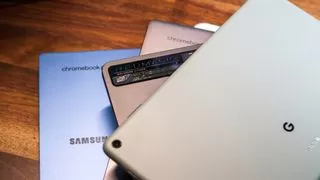 A stack featuring various devices including Chromebooks and a Pixel Tablet, illustrating the diversity of Google's successful hardware partnerships.
A key takeaway from both Android and Chromebooks is that Google was smart enough to rely on experienced hardware manufacturers. While Google makes some of its own hardware today, companies like Samsung, Acer, and others are the ones building and selling the vast majority of devices running Google’s successful platforms. This partnership model has been crucial.
Can Samsung’s Hardware Prowess Save Android XR?
Google is partnering with Samsung, a global electronics powerhouse, for Android XR hardware. This is potentially the platform’s biggest strength, as the original article points out.
Samsung is renowned for building high-quality, well-designed physical products, from phones to appliances. If anyone can build a polished, well-made Android XR headset or pair of smart glasses, it’s Samsung. They also have the manufacturing scale and marketing muscle to produce and potentially bundle or discount devices to get them into more hands.
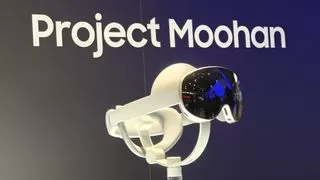 A Samsung Project Moohan headset prototype on display, representing Samsung's hardware efforts in the Android XR space.
However, while Samsung excels at hardware, their approach to new software platforms can sometimes be unique, and not always the ideal way to launch a groundbreaking new ecosystem. And critically, having a great hardware partner wasn’t enough to save Google’s previous VR effort, Daydream.
The Biggest Hurdle: Do People Even Want This?
The most critical factor for Android XR’s success isn’t the software platform itself or even great hardware; it’s whether consumers want to adopt this technology in the first place. And here, Google’s track record with face-worn tech is particularly telling.
Google Glass: Too Early, Too Expensive, Too Weird?
Remember Google Glass? It offered an amazing, futuristic heads-up display experience that felt truly innovative to those who tried it.
 Close-up view of a Google Glass Explorer Edition headset, an early attempt by Google at wearable augmented reality tech.
But it faced major hurdles: a prohibitive price tag ($1,500 for the Explorer Edition), social awkwardness (dubbed “Glassholes”), and privacy concerns. Despite the tech’s promise, consumer interest and acceptance never materialized, leading to its eventual retreat from the consumer market.
Google Cardboard: Cheap and Cheerful, Still Failed
At the opposite end of the spectrum was Google Cardboard. This was a brilliant, accessible idea: turn your existing smartphone into a VR viewer using just a piece of folded cardboard and some lenses. It was incredibly cheap, sometimes even free.
Despite the low barrier to entry and wide availability, Cardboard remained largely a novelty. The experience was often clunky and basic, and it didn’t drive sustained interest in VR for most people, eventually being discontinued.
Daydream: The Middle Ground That Didn’t Last
Google Daydream was an attempt to find a middle ground between Cardboard’s simplicity and more advanced VR. It used compatible Android phones with slightly more robust viewers and controllers.
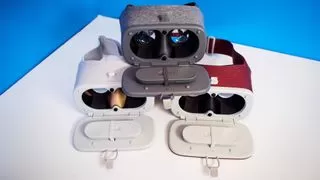 A collection of original Google Daydream View VR headsets in different colors, symbolizing Google's past virtual reality platform.
It was reasonably priced and leveraged the phone people already owned, similar to Cardboard but with a better experience. Yet, Daydream also failed to gain significant traction and was eventually abandoned by Google.
These past attempts highlight a persistent challenge: getting people to regularly use technology worn on their faces. The author speculates that perhaps 90% of consumers haven’t tried AR/VR, and most aren’t particularly interested. Until that fundamental consumer desire shifts, any XR platform faces a massive financial challenge.
Meta seems willing to invest billions and lose money today betting on a future where the metaverse and XR are commonplace. Google, however, typically only sustains projects that either make significant money or directly support its core data and advertising business model. If Android XR doesn’t quickly find a path to profitability or data collection, its future looks uncertain, regardless of the technology or partners involved.
Conclusion
So, where does this leave Android XR? It’s an ambitious step into a challenging market. While Google has a winning formula with Android and Chromebooks by leveraging partners and its ad-driven business model, its track record with consumer-facing hardware that doesn’t fit this mold – especially face-worn tech – is poor. Despite Samsung’s potential hardware prowess, the biggest question mark remains: do people really want to wear an XR device every day? Until that changes, Android XR faces a significant uphill battle. Only time will tell if Google and Samsung can crack the code, or if this platform will join the list of past Google projects.
Want to learn more about the history of Google’s AR/VR efforts or Samsung’s hardware plans? Explore our related articles on past Google projects like Daydream and Glass, or check out the latest news on Samsung’s headset developments.