The world of portable PC gaming is heating up! Just as ASUS and Microsoft gear up to launch their new Xbox Ally and Xbox Ally X handhelds, a fresh leak has given us our first tantalizing glimpse of Lenovo’s next-generation contender: the Lenovo Legion Go 2. This early peek suggests some truly exciting upgrades, particularly for its display, potentially setting a new standard for on-the-go gaming.
Contents
The Big Reveal: What the Leak Shows
A recent YouTube video by “in yo” offered an unofficial look at what’s claimed to be a Lenovo Legion Go 2 prototype. The most talked-about feature? The display. According to the leak, this new Legion Go could boast both VRR (Variable Refresh Rate) and a vibrant OLED panel. This is a significant leap, especially considering its predecessor and even the upcoming Xbox Ally X, which only features VRR without OLED.
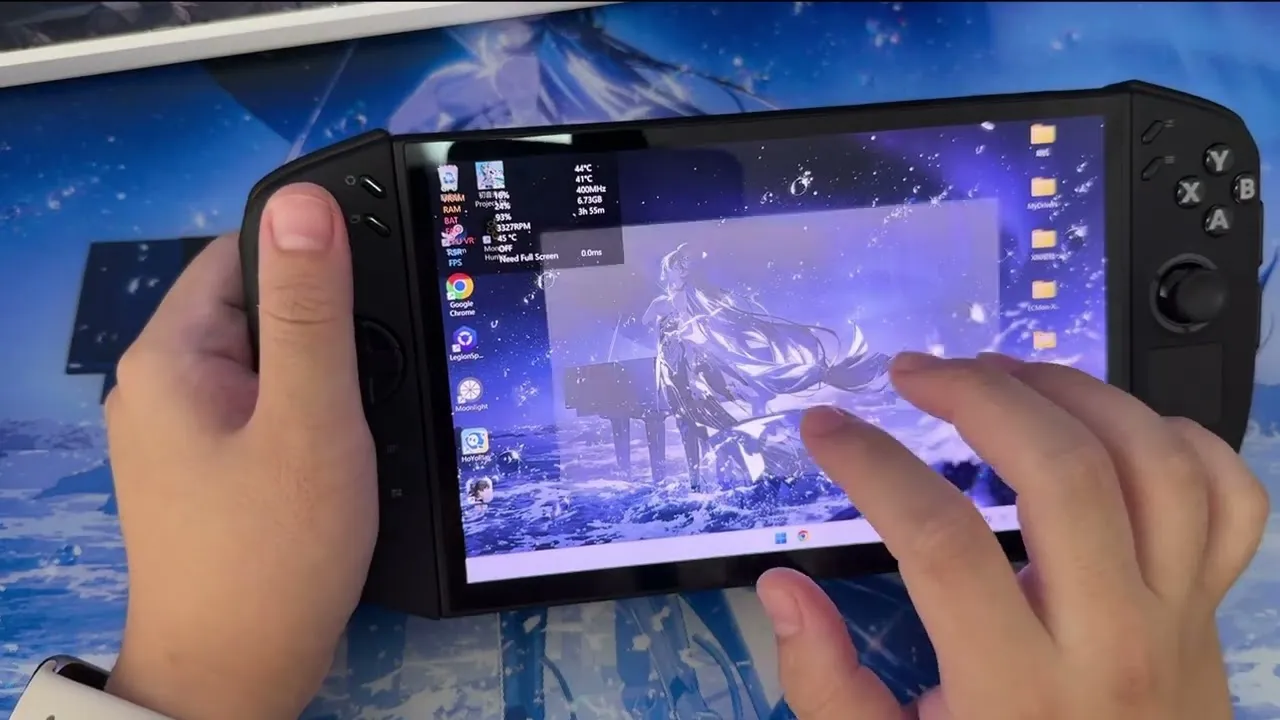 Leaked image showing the Lenovo Legion Go 2 prototype in action, highlighting its new display features.
This combination of VRR and OLED could mean incredibly fluid gameplay with deep, rich colors and true blacks, making your games look absolutely stunning. For non-techies, VRR helps eliminate screen tearing and makes games feel smoother, especially when frame rates fluctuate. OLED, on the other hand, delivers unparalleled visual fidelity compared to traditional LCD screens.
Display Wars: OLED Brilliance vs. Standard Panels
One of the standout features of the original Lenovo Legion Go was its massive 8.8-inch screen, which offered more screen real estate for games typically designed for larger displays. The ASUS ROG Ally, by contrast, opted for a 7-inch VRR FreeSync display, which, while smaller, helped maintain smoother visuals during performance dips.
The potential inclusion of OLED on the Legion Go 2 positions it as a strong contender against rivals like the Xbox Ally X, which is expected to retain an IPS LCD screen with VRR. While the exact size of the Legion Go 2’s screen remains unconfirmed, it’s widely believed to stick to its large 8.8-inch form factor, offering the best of both worlds: a large, immersive display with the benefits of OLED and VRR technology.
Under the Hood: Power & Performance
While the leaked prototype currently features an AMD Ryzen Z2 (non-Extreme) processor, the final retail version could well see an upgrade. Here’s a quick look at how the rumored specs compare:
| Specification | Lenovo Legion Go 2 (expected) | ROG Xbox Ally X |
|---|---|---|
| Processor | AMD Ryzen Z2 (8-core Zen 4) | AMD Ryzen AI Z2 Extreme (8-core Zen 5) |
| Integrated GPU | AMD Radeon 780M (12 CUs, RDNA 3) | AMD Radeon 890M (12 CUs, RDNA 3.5) |
| Memory | 32 GB LPDDR5 | 24 GB LPDDR5X |
| Storage | 2TB | 1TB |
| Display | VRR and OLED, presumed 8.8″ FHD | 7″ FHD IPS, 120 Hz, FreeSync Premium, 500 nits |
| Battery | 75 Wh | 80 Wh |
| Network | Wi-Fi 6E, Bluetooth unknown | Wi-Fi 6E, Bluetooth 5.4 |
It’s worth noting that the Xbox Ally X is expected to be a powerhouse, potentially outperforming this specific Legion Go 2 prototype, especially with its newer AMD Ryzen AI Z2 Extreme APU. However, the Legion Go 2 would still be a significant upgrade over the original Xbox Ally. The OLED panel, while beautiful, typically consumes more battery, so it will be interesting to see how Lenovo balances performance and battery life.
Historically, ASUS had an exclusive period with certain AMD chips. However, with other manufacturers now using the Z2 Extreme, it’s plausible that a more powerful version of the Legion Go 2 will hit the market.
Versatility Reigns Supreme
One of the original Legion Go’s most beloved features was its incredible versatility, drawing comparisons to the Nintendo Switch. The Legion Go 2 looks set to continue this trend, retaining crucial elements that make it more than just a gaming device:
- Detachable Joysticks: Just like its predecessor, the ability to remove the controllers allows for more flexible gameplay, whether you’re using it like a tablet or prop it up with its kickstand.
- Integrated Kickstand: This feature is a lifesaver for comfort, letting you set the device down on a table or flat surface, saving your neck from strain during long gaming sessions.
- Full Trackpad: For games and Windows 11 navigation that truly demand a mouse cursor, the built-in trackpad offers a much-needed precision missing from many handhelds.
These features make the Legion Go 2 not just a gaming machine, but a highly adaptable portable computer, perfect for both play and productivity.
 The Lenovo Legion Go 2 showcasing its signature detachable controllers, emphasizing its versatile design.
Price and the Evolving Handheld Landscape
Pricing will be a key factor in how these devices compete. With the Legion Go 2 prototype featuring an OLED panel and a massive 2TB SSD, its price tag could be substantial. Leaked figures for the Xbox Ally and Xbox Ally X suggest prices around $599 and $899 respectively. The Legion Go 2, with its premium features, might find itself in a similar or even higher price bracket than the Ally X, depending on its final configurations.
In exciting news for all PC gaming handheld owners, Microsoft is actively working to improve the Windows 11 experience for these compact devices. Future Windows 11 updates are expected to allow direct booting into full-screen apps like the Xbox PC app or Steam Big Picture mode, and controller-based multitasking will become standard. While ASUS ROG devices might get these features first due to their partnership with Microsoft, other manufacturers are slated to receive them by early 2026. This means a smoother, more console-like experience is on the horizon for devices like the Legion Go 2.
What’s Next for Portable Gaming?
The leaked Lenovo Legion Go 2 prototype paints a compelling picture of the future of PC gaming handhelds. With its potential OLED screen, continued focus on versatility, and ongoing Windows 11 optimizations, the next generation of portable gaming devices promises more immersive, flexible, and user-friendly experiences than ever before. It’s an exciting time to be a gamer on the go!
Want to dive deeper into the world of PC handhelds? Check out our detailed reviews of the original Lenovo Legion Go and the ASUS ROG Ally, or read more about Microsoft’s plans to improve Windows 11 for gaming handhelds.