A new Nintendo console launch is a big deal, arriving like a major holiday event. After spending nearly 15 hours hands-on with the upcoming Nintendo Switch 2, here’s a deep dive into what’s new, what’s different, and whether you should aim to get one when it launches on June 5. This preview covers everything from the redesigned hardware and boosted performance to the initial game lineup and essential accessories, giving you a clear picture before release day.
Contents
What’s New with the Design?
Nintendo hasn’t reinvented the wheel, sticking close to the beloved hybrid design of the original Switch. You still get a central tablet with detachable controllers, a kickstand, and a dock for TV play. But look closer, and you’ll find thoughtful upgrades everywhere.
The screen is noticeably bigger and sharper, now 7.9 inches with a 1920×1080 resolution, up from 6.2 inches and 1280×720. While it’s an LCD panel and not OLED like the Switch OLED model, the quality of LCD technology has improved dramatically – it’s bright, vibrant, and supports HDR and variable refresh rates up to 120Hz in handheld mode.
 Nintendo Switch 2 console with both Joy-Con controllers detached, shown in handheld mode
The Joy-Con controllers retain their shape but feel completely reworked. They’re slightly larger and introduce a clever new magnetic attachment system with a bigger, easier-to-press release button. No more sliding rails! Haptic feedback gets a boost too, with HD Rumble 2 offering more nuanced and powerful vibrations.
A surprising addition is a new C button for Game Chat and built-in cameras on the side of each Joy-Con. These cameras allow the controllers to act like mice when tilted sideways. It sounds unusual, but it works surprisingly well, especially for aiming in games like Metroid Prime 4: Beyond. While not quite as precise as a dedicated PC mouse, it’s a neat option that adds versatility.
Of course, the big question mark remains: will these new Joy-Con suffer from the dreaded “drift”? Nintendo says they’ve used a more robust internal setup, but only extended use over time will truly confirm this.
Step Up in Performance
The Switch 2 is a significant power upgrade. It features a custom NVIDIA chip supporting modern tech like real-time ray tracing (for more realistic lighting) and DLSS (smart upscaling for better visuals and performance). Nintendo claims up to 10 times the graphics power of the first Switch. Inside, you get 12GB of RAM and a much larger 256GB of fast UFS storage, expandable via a new, faster microSD Express card slot.
This performance jump is most obvious in the games coming to the platform. We’re seeing major third-party titles like Cyberpunk 2077 and Hitman World of Assassination – games that simply wouldn’t have run well on the original Switch. This opens up the Switch 2 to a much wider library beyond Nintendo’s own titles and indie games.
Battery Life: What to Expect
Nintendo estimates the Switch 2’s battery life at 2 to 6.5 hours, depending on the game. In a real-world test playing the demanding Mario Kart World at maximum screen brightness and connected to Wi-Fi, the console dropped from 100% to 81% in 30 minutes. This suggests a worst-case scenario around 2.5 hours of intense gameplay.
However, this was under strenuous conditions. Playing less demanding games, especially older Switch 1 titles, should easily push towards the 6.5-hour mark. Like many devices, battery drain can also be slightly higher right after a full charge. Tweaking settings like brightness or disabling Wi-Fi when not needed will likely extend playtime significantly. It seems sufficient for a typical commute or a few hours on the go, but pack a charger for longer trips.
Launch Games and the Library
One point of consideration is the relatively slim lineup of brand new first-party Nintendo games at launch. The headliners are Mario Kart World and the Nintendo Switch 2 Welcome Tour.
The Nintendo Switch 2 Welcome Tour is essentially a tutorial game designed to show off the console’s new features, including mini-games that use the Joy-Con’s mouse functionality. While informative and a good way to learn the system, it feels more like something that should be pre-installed or a free download rather than a $10 purchase. It’s not as charming or substantial as Astro’s Playroom was for the PS5.
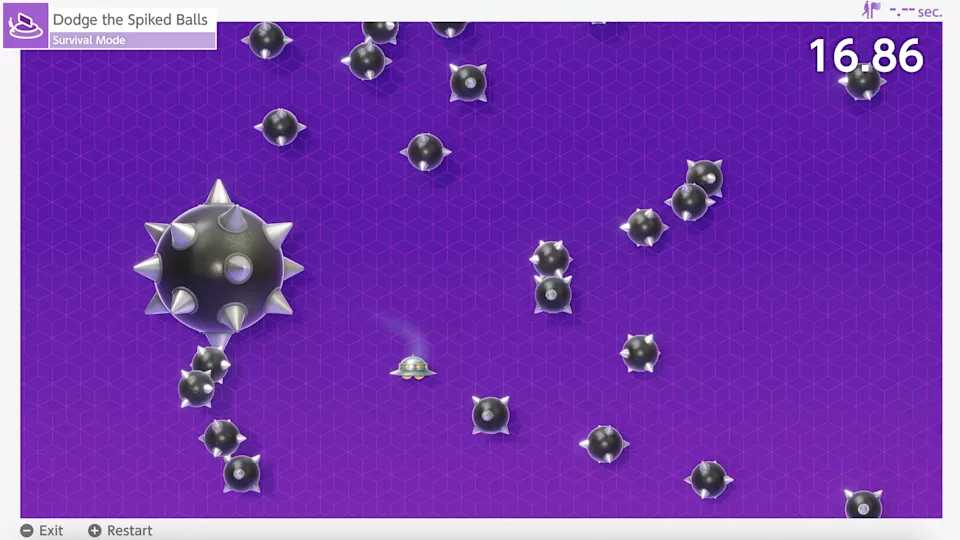 A screenshot from the Nintendo Switch 2 Welcome Tour showing a UFO dodging obstacles using the mouse-like Joy-Con control
Mario Kart World, on the other hand, is everything a fan could want. It builds on the classic Mario Kart formula with massive, interconnected tracks, a huge roster, and new mechanics like generating boosts without drifting and potentially dodging blue shells. Supporting up to 24 players makes races even more chaotic and fun. Buying a Switch 2 without this game feels like a missed opportunity. Note that the console bundle includes a digital download, not a physical cartridge.
Crucially, the Switch 2 is backward compatible with most original Switch games. This means you have a massive library available from day one. Combined with the strong lineup of third-party games arriving at or soon after launch (like Elden Ring, Borderlands 4, and the ports mentioned earlier), there will be plenty to play, even if the list of new Nintendo titles is short initially. More flagship Nintendo games like Donkey Kong Bananza and Metroid Prime 4: Beyond are expected later in 2025.
Must-Have Accessories
Beyond standard cases and screen protectors, two accessories warrant special attention for the Switch 2:
-
MicroSD Express Card: While the 256GB internal storage is a big step up from the original Switch’s 32GB, large games like Mario Kart World (23.4GB) can fill it up quickly if you prefer digital downloads. The Switch 2 uses the new microSD Express format, which is significantly faster than older microSD cards but also more expensive. Expect to pay around $60 for 256GB or upwards of $200 for 1TB. This faster storage can mean quicker game loading times.
-
Camera: Essential if you plan to use the new Game Chat video features. It also enables fun personalized features in games like Mario Kart World and Super Mario Party Jamboree, letting you superimpose your face into the game. Nintendo’s official camera is reasonably priced at $50, and unique third-party options, like a Piranha Plant-themed one, are also available.
The Value of Nintendo Switch Online + Expansion Pack
Nintendo’s online service has two tiers. The basic plan ($20/year) offers online play, Game Chat, classic NES, SNES, and Game Boy games, cloud saves, and save data transfer between Switch consoles.
Upgrading to the Expansion Pack ($50/year) adds N64, Sega Genesis, and GameCube games to the classic library. More importantly, it includes upgrade packs for popular original Switch titles like Breath of the Wild, Tears of the Kingdom, and Pokemon Scarlet/Violet. These upgrades can smooth performance and add features like HDR support for select games. If you have a large Switch 1 library and want to experience those games with potential enhancements on the Switch 2, the Expansion Pack adds significant value, helping bridge the gap until more new games arrive.
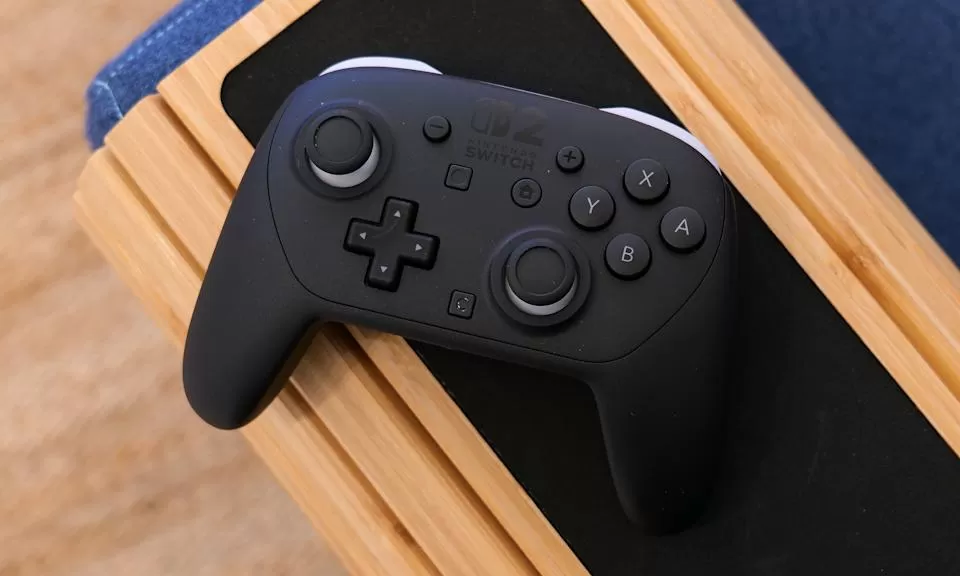 The Nintendo Switch 2 Pro Controller, shown detached from the console, is a recommended accessory for playing on a TV
While not strictly an accessory for new features, the Switch 2 Pro Controller (similar to the original) is highly recommended if you frequently play docked on your TV for a more traditional gaming experience.
Trying Out Game Chat
A notable addition is Nintendo’s native Game Chat feature, accessible via a dedicated button on the Joy-Con. While voice chat isn’t new to gaming, integrating it directly into the console simplifies connecting with friends.
You can easily host or join chat rooms with people from your friends list. It supports voice-only or video chat, with layouts showing up to four video streams simultaneously within dedicated windows. Up to 12 people can be in a group chat. Features like speech-to-text and text-to-speech are included, supporting multiple languages.
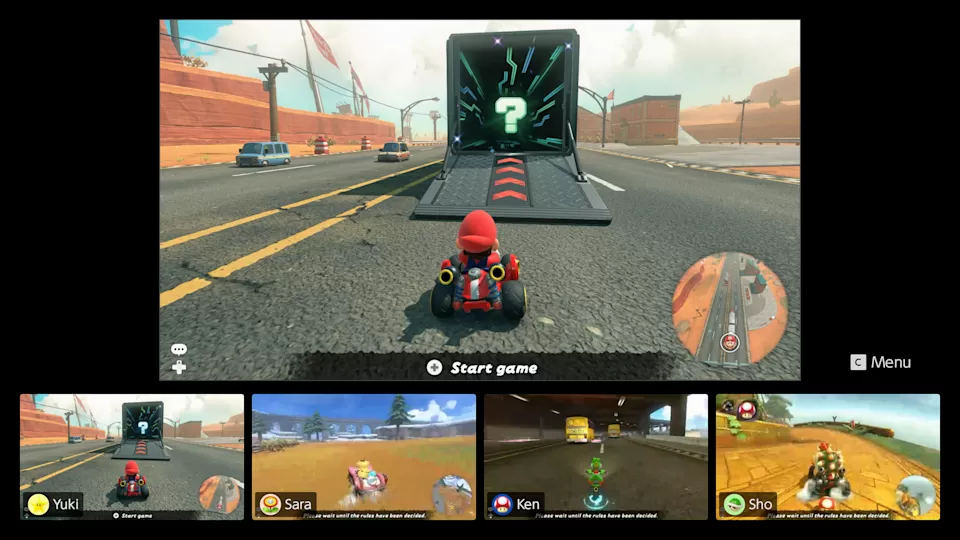 A screenshot from Nintendo showing the Game Chat interface within Mario Kart World, displaying video streams of four other players
Nintendo also included robust parental controls, allowing parents to approve who their children can chat with, adding peace of mind. The only minor drawback observed was that some video features, like background removal, can look a bit low-resolution.
Connecting to Your TV
Hooking the Switch 2 up to your TV is straightforward. The console can output 4K resolution at 60 frames per second or 1440p at 120 fps. While the handheld screen supports VRR up to 120Hz, this feature doesn’t apply when docked to a TV.
Compared to the original Switch, which didn’t support 4K at all, this is a welcome improvement. While it might not match the graphical fidelity or frame rates consistently delivered by PS5 or Xbox Series X on high-end TVs, it’s a significant step up and makes for a much better docked experience.
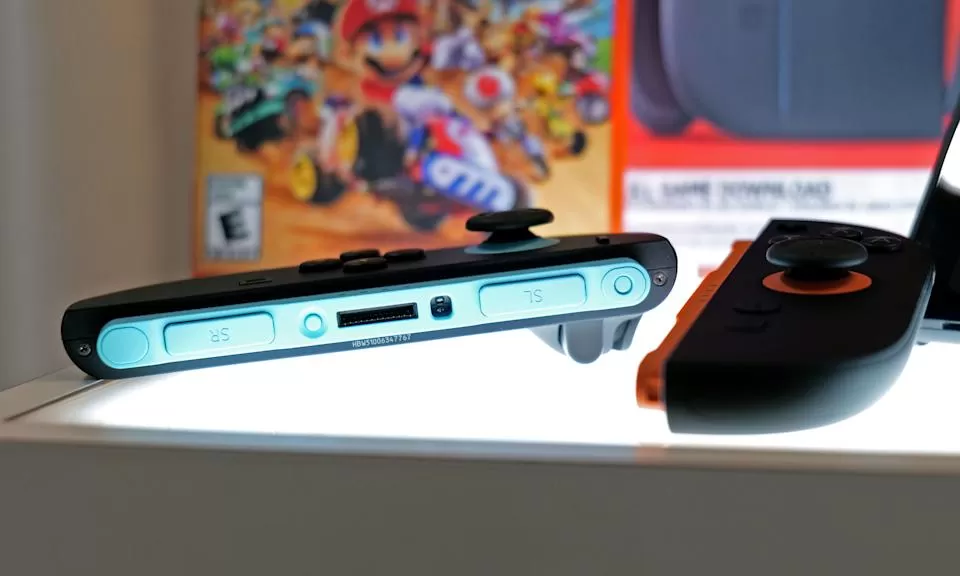 A close-up view of the magnetic attachment system on the side of the Nintendo Switch 2 console, showing the new Joy-Con slot
The dock itself also seems slightly refined, though the core function is the same. The Switch 2 has two USB-C ports, but only the one on the bottom (when in handheld mode) supports video output for docking.
The Price Tag
The Switch 2 is priced at $450, or $500 for the bundle including Mario Kart World. This is a jump from the original Switch’s $300 launch price. However, when you factor in inflation, $300 in 2017 is roughly $400 today, making the $450 base price feel a bit more palatable, considering the substantial hardware upgrades.
Beyond the console itself, remember to budget for games, accessories like the microSD Express card or camera, and potentially a Nintendo Switch Online subscription (especially the Expansion Pack for older game upgrades). The total cost can add up quickly.
Final Thoughts: Should You Buy One?
The Nintendo Switch 2 feels like a polished and powerful successor to a beloved console. It keeps the innovative hybrid concept while boosting performance, improving the display, redesigning the controllers with cool new features, and adding native chat.
If you’re excited about playing the latest third-party games on a portable system, value the backward compatibility with your existing Switch library, or simply can’t wait to jump into Mario Kart World (which is truly excellent), the Switch 2 offers a compelling upgrade. Its ability to seamlessly switch between handheld and TV play, combined with enhanced power, positions it well against rivals like the PS5 and Xbox Series X, especially when considering its unique form factor.
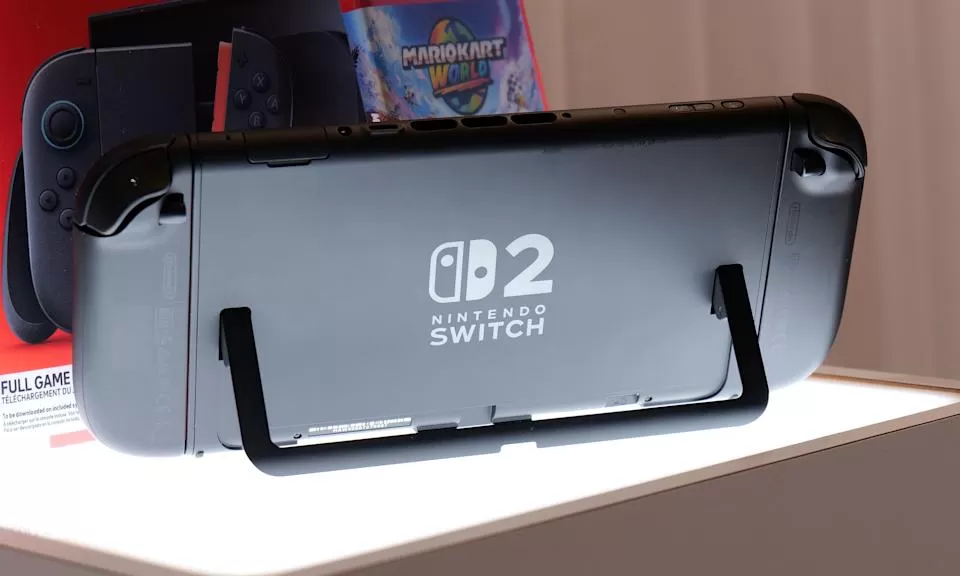 The back of the Nintendo Switch 2 console showing the built-in kickstand unfolded
The main drawback at launch is the limited number of brand new first-party Nintendo titles besides Mario Kart World. While backward compatibility and strong third-party support fill the gap, those hoping for a wave of new Nintendo exclusives immediately might feel a slight lull until games like Donkey Kong Bananza and Metroid Prime 4 arrive later in the year.
If you can’t get your hands on a Switch 2 right away due to limited stock, don’t feel too bad. Mario Kart World is fantastic, but you won’t be left completely behind. Waiting until later in the year means more new flagship titles will be available, and supply might stabilize, making it easier to find one and potentially play with more friends online. For many, aiming to get a Switch 2 by the end of 2025 might be the most practical goal.