Forget complicated names for a moment – the Sony Bravia 8 II is one of the most exciting new TVs hitting the scene this year. Why? Because it’s the successor to Sony’s fantastic A95L, a QD-OLED TV so good it’s still considered a top performer almost two years later. This new model takes that winning formula and pushes it even further.
Contents
What’s the big deal? The Bravia 8 II delivers absolutely stunning picture quality that’s a noticeable upgrade over its predecessor, paired with seriously impressive built-in sound. However, its confusing name and limited HDMI 2.1 ports might give some potential buyers pause.
What’s In a Name? And What is QD-OLED?
First, about that name: “Bravia 8 II.” It’s a bit odd because it sounds like an update to the standard Bravia 8 (which uses a different OLED tech, W-OLED), but the Bravia 8 II actually sits above the standard Bravia 8 in Sony’s lineup and replaces the high-end A95L. It’s using Sony’s top-tier QD-OLED panel, not the W-OLED found in the regular Bravia 8.
So, what’s QD-OLED? Think of it as combining the best parts of two technologies: the perfect blacks and infinite contrast of OLED, plus the vibrant colors and increased brightness potential of Quantum Dots. The result is a picture with incredibly pure, bright colors and true, inky blacks, which is tough to achieve with other display types. The Bravia 8 II uses what Sony calls “the latest QD-OLED panel,” promising even better performance.
Picture Quality: A Stunning Leap Forward
This is where the Bravia 8 II truly shines. Compared to the A95L and especially the standard Bravia 8, the picture here is a significant step up across the board.
The most immediate improvement? Brightness. Sony says this new QD-OLED panel can hit peak brightness 25 percent higher than the A95L and 50 percent brighter than the Bravia 8. What does this mean for you? HDR content (like Dolby Vision and HDR10) looks even more dazzling. Pinprick stars in space movies glisten more intensely, and bright outdoor scenes have more pop and realism.
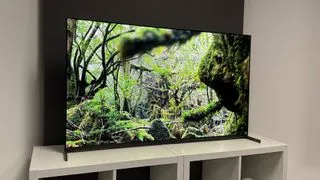 Sony Bravia 8 II QD-OLED TV showcasing vibrant nature content on stand.
But it’s not just about peak brightness. Colors are more vibrant, even in darker areas, and Sony has made strides in “dark gradation,” meaning you see more subtle detail in shadows that might look like a block of black on other TVs. This makes scenes in dimly lit environments feel richer and more textured.
Sony’s powerful XR Processor is back, now boosted with a new AI scene recognition system for 2025. This AI analyzes what’s on screen and optimizes the picture in real-time. The result is an image that feels incredibly solid, three-dimensional, and lifelike. Objects and people have a wonderful sense of depth and “roundedness” that makes them look like they’re truly in the scene, not just flat on the screen.
Getting the best picture is surprisingly easy thanks to Sony’s excellent factory presets. For pure accuracy, Dolby Vision Dark or Professional modes are spot-on. If you want a bit more punch (great for bright rooms or just a more exciting look), Dolby Vision Bright or Cinema modes deliver without sacrificing natural colors.
We threw everything at it – from sharp 4K HDR blockbusters like Alien: Romulus and Civil War to older, lower-resolution content like a standard-definition TV show from the ’90s. In 4K, the increased brightness, improved shadow detail, and AI processing make everything leap off the screen with astonishing dynamism and realism. The upscaling of standard-def content is also seriously impressive, making older shows look much cleaner and sharper than you’d expect – almost like HD.
Ultimately, the Bravia 8 II’s picture quality is a masterclass in balance. It’s incredibly bright and vibrant, but never looks unnatural or exaggerated. It delivers the absolute best version of your movies and shows.
 Side-by-side comparison of the Sony A95L and Bravia 8 II QD-OLED TVs showing picture quality differences.
Sound Quality: Built-in Audio That Impresses
One of Sony’s standout features on its high-end TVs is Acoustic Surface Audio+. This technology uses actuators that vibrate the screen itself to produce sound, making it feel like the audio is coming directly from the characters or action on screen. The Bravia 8 II inherits the same setup as the A95L: two actuators and two subwoofers.
The result is one of the best built-in sound systems you can find on a TV. It’s not just direct; it’s also surprisingly spacious, with effects extending well beyond the physical edges of the screen. Detail is excellent, and the TV handles dynamic shifts (from quiet whispers to loud explosions) very well. Voices sound warm and full thanks to good lower midrange.
While the bass won’t rattle your walls like a dedicated subwoofer, it’s weightier and much more controlled than most rival TVs. For many people, this TV’s sound quality will be perfectly adequate, especially if they aren’t looking for a full home theater experience. That said, a picture this good really deserves a quality external sound system, but you won’t need a cheap soundbar to see an improvement – you’ll want something substantial like a good soundbar or receiver/speaker setup.
 Detailed shot of the Sony Bravia 8 II screen performance with nature footage.
Design & Practicalities
The Bravia 8 II looks very similar to the A95L, likely reusing design elements to help manage costs. It’s a sleek, premium-looking TV, though at 3.4cm thick, it’s not quite as razor-thin as some rivals like Samsung or LG OLEDs. This thickness is partly due to the unique sound system and custom heatsink Sony uses.
The TV sits on blade-style feet placed at the very edges, which requires furniture as wide as the TV itself (122cm for the 55-inch, 145cm for the 65-inch). The feet can be extended upwards by a few centimeters, which is a handy feature if you plan to place a soundbar in front of the TV without blocking the screen.
One practical downgrade compared to the A95L (and even the standard Bravia 8) is the remote. It’s switched from a rechargeable, backlit model to one requiring AAA batteries and lacking backlighting – a minor but annoying change if you watch in the dark.
 Close-up view of the modern blade stand on the Sony Bravia 8 II television.
Features & Gaming: Almost Perfect
The Bravia 8 II runs the Google TV platform, which is generally user-friendly and boasts an excellent selection of apps, including all the major streaming services. Content streams in expected formats, though strangely, Netflix audio tops out at 5.1 instead of Dolby Atmos – something Sony says they are looking into.
For movie buffs, it supports the key HDR formats (HLG, HDR10, Dolby Vision) and is IMAX Enhanced certified. Like previous Sony TVs, it does not support HDR10+. It also features Sony’s “Studio Calibrated Modes” for services like Netflix, Prime Video, and Sony Pictures Core, aiming to show content exactly as the creators intended.
Gamers will find most of the key features here: 4K/120Hz support for smooth gameplay, VRR (Variable Refresh Rate) to prevent screen tearing, and ALLM (Auto Low Latency Mode) for quick response times. It also includes a Dolby Vision Game mode and the “Perfect for PlayStation 5” features, which automatically optimize settings when connected to a PS5.
However, there’s a significant caveat: the TV only has two full-bandwidth HDMI 2.1 ports. Crucially, one of these is also the eARC port, which you’ll likely use to connect a soundbar or AV receiver. This leaves only one HDMI 2.1 port free for your high-end gaming console (like a PS5 or Xbox Series X) or gaming PC. If you have more than one such device, you’ll face annoying cable swapping or compromise on performance. This is a notable limitation compared to some competitors that offer more HDMI 2.1 ports.
 The 55-inch Sony Bravia 8 II displaying a detailed nature scene.
Price: A Shifting Landscape
Sony initially said the Bravia 8 II would be more affordable than the A95L’s launch price. While this held true in the UK and Australia, it actually launched higher in the US. However, the good news is that early discounts have already brought the US price down significantly, making it much more competitive with its rivals like the LG G5 and Samsung S95F.
Pricing in the TV world is constantly changing, and while Sony TVs, especially flagship models, historically see less aggressive discounting than LG or Samsung over time, the current market is volatile. It’s always recommended to check current prices before buying, but the Bravia 8 II has become much more attractive in the US after its initial price drop.
Verdict: One of the Best Just Got Better
The Sony Bravia 8 II QD-OLED TV is truly exceptional. It takes the already fantastic picture quality of the A95L and elevates it with increased brightness, better shadow detail, and impressive AI processing that creates a stunningly dynamic, deep, and realistic image. It even makes its predecessor look a bit flat by comparison.
Add to that one of the best built-in sound systems on the market, a great smart TV platform, and solid gaming features (despite the HDMI limitation), and you have a seriously compelling package.
Is it the absolute best TV you can buy right now? It’s certainly one of them. While competitors like the LG G5 might offer even higher peak brightness in some areas, the Bravia 8 II counters with more considered picture processing, better subtle detail, and superior sound. It’s a heavyweight contender that delivers picture performance that will leave you consistently impressed.
SCORES:
- Picture: 5/5
- Sound: 5/5
- Features: 4/5
Want to explore options? Check out our guide to the best TVs. Considering upgrading your audio? See our picks for the best soundbars.