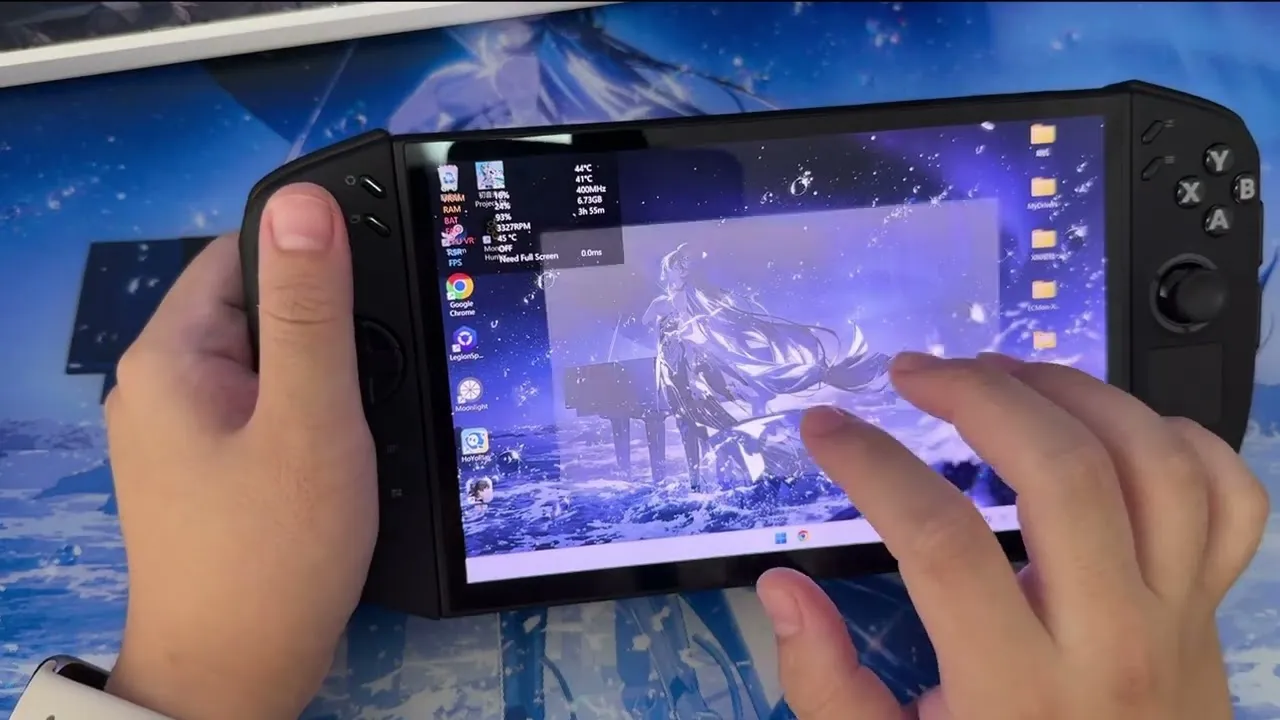
Get ready for a surprise: when it comes to gaming performance on the new Lenovo Legion Go S handheld PC, Valve’s Linux-based operating system, SteamOS 3.7, is actually outperforming Windows 11 in many recent games, according to new testing. This marks a significant shift from earlier days and highlights how SteamOS is becoming a serious contender in the portable gaming space.
Contents
Key Takeaways:
- SteamOS 3.7 generally provides higher frame rates than Windows 11 on the same Lenovo Legion Go S hardware.
- Performance gains range from modest to quite significant, sometimes making the difference between a smooth game and a choppy one.
- This advantage challenges Windows’ long-held dominance for PC gaming, especially on handhelds.
- Driver issues were noted on Windows 11’s “out of the box” configuration for the Legion Go S.
The Unexpected Winner: SteamOS Performance
Remember the early days of “Steam Machines” nearly a decade ago? Testing then showed that SteamOS often struggled to keep up with Windows performance. Fast forward to today, and things look very different. Our recent testing on the Lenovo Legion Go S found that newer, more polished versions of SteamOS are now pulling ahead, at least on this specific piece of hardware.
For many modern 3D games tested, running them on SteamOS 3.7 resulted in noticeably higher frame rates compared to running the exact same games on the same device with Windows 11 installed.
How We Tested
Lenovo’s Legion Go S is unique because it’s designed with both operating systems in mind. While the original version came with Windows 11, a newer release specifically supports SteamOS and includes SteamOS 3.7, which is updated to work better with non-Valve AMD hardware.
We started with the SteamOS version of the Legion Go S. We tested five demanding 3D games released in the last five years, using their built-in benchmark tools at two different quality and resolution settings.
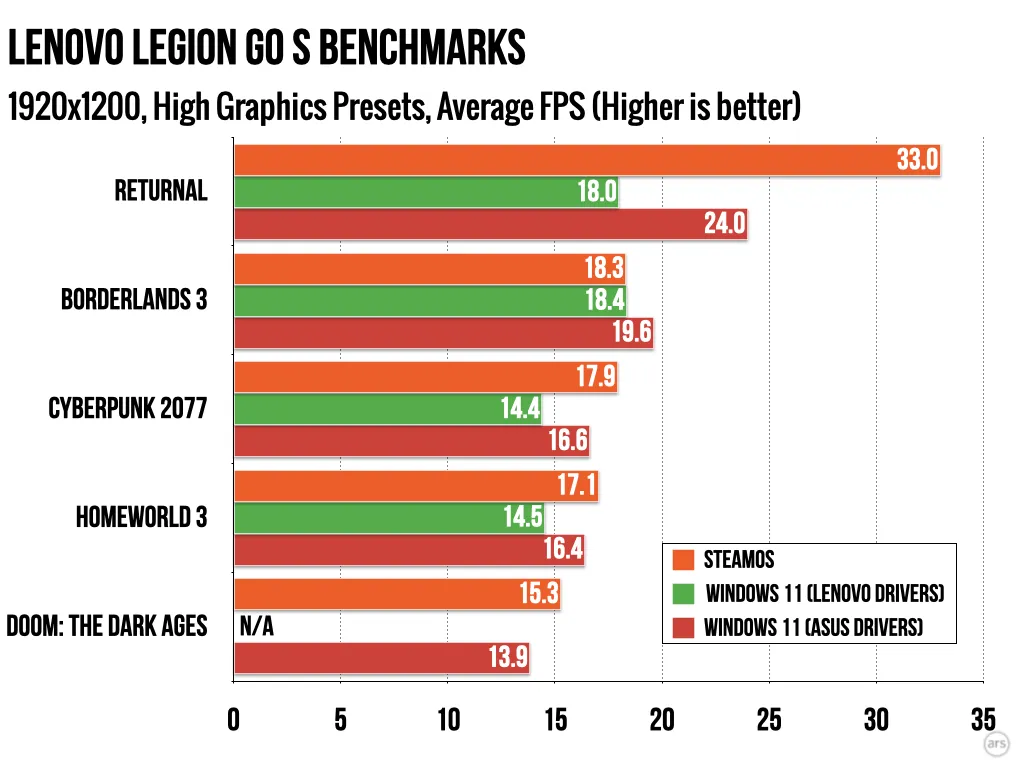 Benchmark comparison showing frame rate differences between SteamOS and Windows 11 on Lenovo Legion Go S
After establishing the baseline on SteamOS, we then installed Windows 11 on the same handheld. We downloaded the standard, official drivers provided by Lenovo for the device and re-ran all the benchmarks using the same games downloaded from Steam for Windows. This process ensured we were comparing the standard “out of the box” experience for both operating systems on identical hardware.
What the Numbers Show
The results were compelling. For most of the tested games, the frame rate improvements on SteamOS varied. Some saw small boosts, but others saw significant jumps.
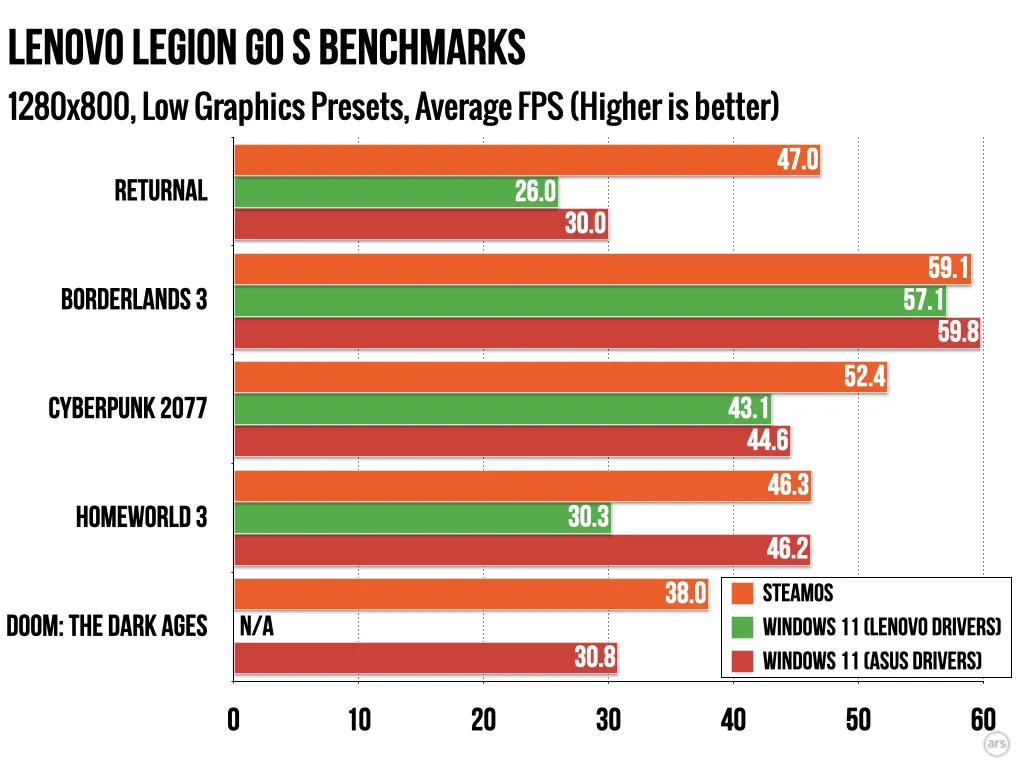 Benchmark graph illustrating performance differences, highlighting playable vs unplayable frame rates
At lower graphics settings, where players might try to eke out every possible frame on a handheld device, the difference could sometimes mean hitting a playable frame rate on SteamOS while the Windows version of the game remained unplayably slow.
The Driver Dilemma on Windows
One key factor that seemed to impact the Windows performance was the graphics driver situation. During testing, one game, Doom: The Dark Ages, wouldn’t even run on Windows, reporting outdated drivers.
While we found a workaround – installing newer, unofficial drivers intended for the Asus ROG Ally (another popular handheld) – this isn’t something the average user would likely do. The official Lenovo-provided drivers for the Legion Go S Windows version hadn’t been updated as recently as the drivers included with SteamOS, or even drivers available for competing handhelds. This highlights a potential issue with using Windows on specialized hardware like handhelds: relying on manufacturers to provide timely, optimized driver updates. SteamOS, being tightly controlled by Valve, seems to offer a more consistent and perhaps better-optimized driver experience for gaming out of the box.
A New Era for Handheld Gaming OSes?
This finding on the Lenovo Legion Go S suggests that SteamOS, initially known for the Steam Deck, is maturing into a powerful operating system for portable gaming, capable of challenging Windows’ traditional dominance. While Windows still offers broader compatibility outside of games, for pure gaming performance on this specific hardware, SteamOS is currently ahead. As more handheld PCs emerge, the choice of operating system could become an increasingly important factor for gamers looking for the best performance.