Big news in the Windows world: Microsoft has started rolling out a new type of update for Windows 11 that doesn’t require you to restart your PC. This feature, called “hotpatching,” is a major step towards uninterrupted work and faster security. However, there’s a significant catch – it’s currently only available for a specific group of enterprise users, leaving most Home and Pro users out for now.
Contents
This change promises a smoother, more convenient update experience, but highlights the disparity between consumer and enterprise features in Windows.
What is Hotpatching and Why Does it Matter?
Normally, when Windows gets an important update, especially for security, your PC needs to reboot to fully apply the changes. This means saving your work, closing everything, waiting for the restart, and then reopening your apps. It’s disruptive, especially if you’re in the middle of something or managing many computers.
Hotpatching changes this by applying updates directly to the computer’s memory while Windows is running, patching code on the fly. Think of it like changing a tire on a moving car (if that were possible and safe!). The benefit is immediate protection from security threats without the downtime of a restart. This is particularly valuable for businesses where every minute of downtime costs money and impacts productivity.
Who Gets This Cool New Feature?
Here’s where the disappointment kicks in for many. The first hotpatch update (KB5058497) for Windows 11 version 24H2 isn’t for everyone. Microsoft is rolling this out exclusively for Windows 11 Enterprise users who meet specific, strict requirements.
To get these no-reboot updates, you need:
- A specific Microsoft subscription (like Windows 11 Enterprise E3/E5, Education A3/A5, or Windows 365 Enterprise).
- Your device must be running Windows 11 Enterprise, version 24H2 (Build 26100.2033 or later).
- An x64 processor (sorry, some Arm®64 devices are still testing this).
- Microsoft Intune to manage how updates are deployed.
- Virtualization-based Security (VBS) enabled.
As you can see, this isn’t your standard Windows setup. It requires a business-focused operating system version, specific licenses, and particular configurations and management tools. This means the vast majority of Home and Pro users won’t see this feature on their personal or work PCs anytime soon.
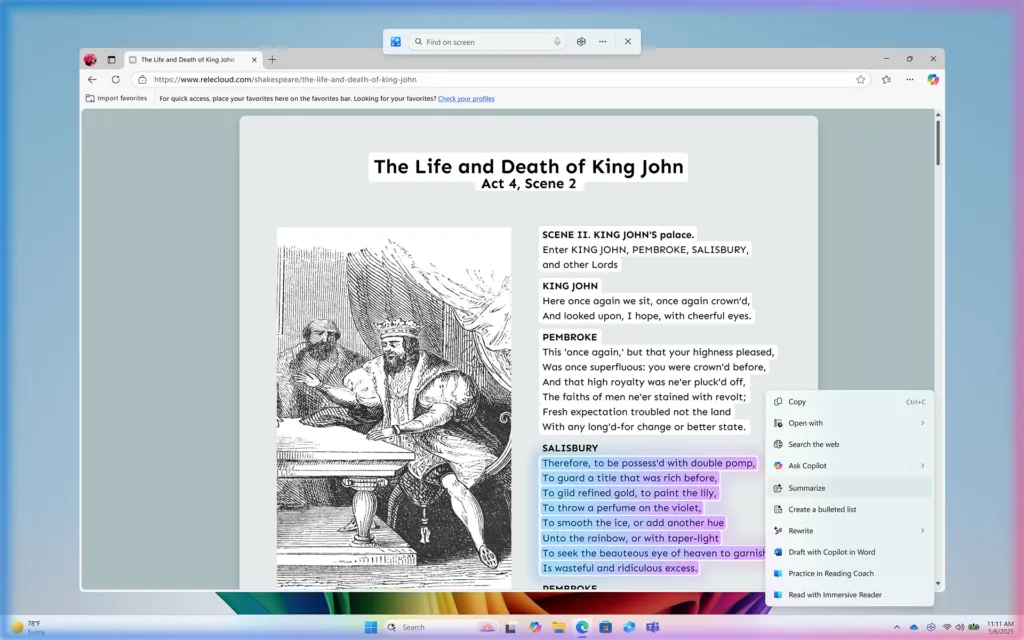
 Windows 11 on screen
How Hotpatching Works (and When You Still Need a Reboot)
While many updates can now be applied without a restart using hotpatching, it’s not every update. Microsoft has designed a cycle. Most security updates throughout the quarter will be hotpatches, requiring no reboot.
However, roughly every three months (with every third update), a baseline update will be released that does require a traditional reboot. This baseline update ensures that the PC’s core system files are fully updated in ways hotpatching alone can’t achieve, providing a comprehensive security posture. The recent KB5058497 hotpatch falls within the “no restart” period of this cycle.
What About the Rest of Us?
For users on Windows 11 Home or Pro editions, the monthly update process remains the same. When a critical security update arrives, you’ll still need to reboot your PC to complete the installation. This can be inconvenient, causing temporary downtime. Microsoft hasn’t shared any specific timeline or even confirmation on when (or if) this hotpatching technology might trickle down to consumer versions of Windows.
While you miss out on the no-reboot convenience for now, it’s still crucial to keep your Windows 11 system updated. Updates contain vital security fixes that protect your data and privacy from ever-evolving online threats.
Stay Updated: Recent Windows News
May has been a busy month for Windows updates, highlighting why staying current is important. Besides the rollout of hotpatching for enterprise, Microsoft has also released emergency updates to address serious issues, including problems with Bitlocker recovery and reports of blue screens of death (BSOD) appearing unexpectedly. Keeping your system patched, even if it requires a reboot, is your best defense against these kinds of problems and other potential security vulnerabilities. It’s also wise to be cautious about potential threats like malicious video files that can target unpatched systems.
The Takeaway
Windows 11’s new hotpatching feature is a genuinely exciting technical advancement for reducing update disruption and improving security reaction times. However, for the time being, it’s a premium feature exclusive to certain enterprise users. While Home and Pro users still face the familiar reboot routine, keeping your system updated remains essential for security and stability.