Canada is engaged in discussions with the United States regarding participation in the proposed “Golden Dome” missile defense system, a potential move experts suggest could significantly enhance national security despite facing a lengthy and complex implementation timeline. This initiative aims to strengthen North American defense against evolving threats.
Contents
What is the ‘Golden Dome’ Missile Defense Plan?
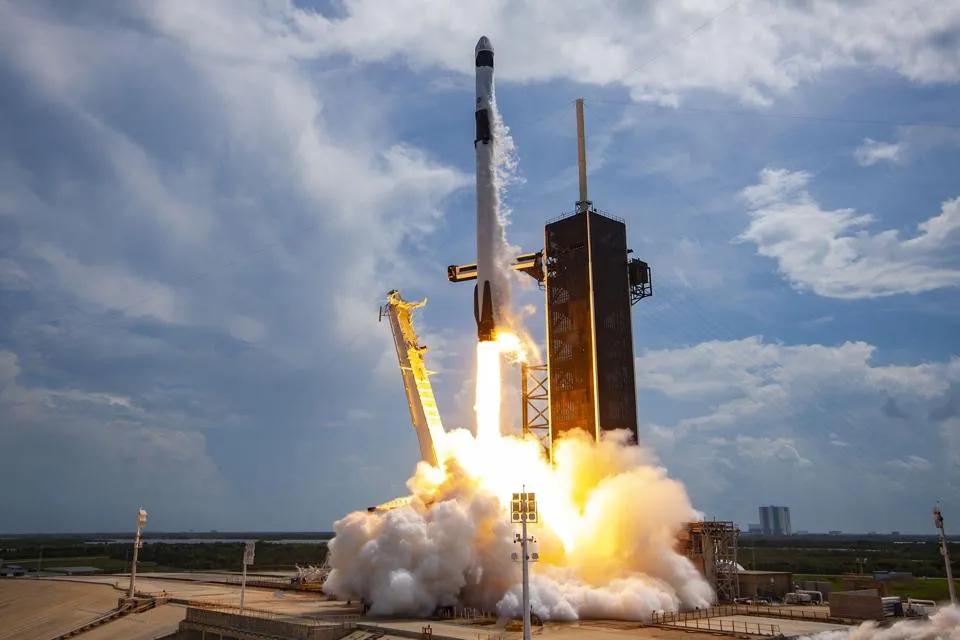
The “Golden Dome” is a conceptual U.S. missile defense system envisioned by former President Donald Trump. It proposes a multi-layered defense architecture combining ground-based and space-based capabilities, including a potential network of hundreds of satellites.
This system would be designed to detect and neutralize incoming missiles at various stages: before launch, in their initial boost phase, during mid-course flight, and in the terminal phase as they descend.
Experts compare the concept to systems like Israel’s Iron Dome, which specializes in intercepting short-range rockets, but note the Golden Dome would operate on a vastly larger scale and target more complex, longer-range threats like intercontinental ballistic missiles (ICBMs). The required effectiveness rate for Golden Dome would need to approach zero failures due to the potentially devastating nature of the missiles it would target.
 Thumbnail for video explaining the US Golden Dome missile defense concept
Israel’s multi-layered system, which also includes the Arrow for long-range and David’s Sling for medium-range missiles, demonstrated a high interception rate against recent attacks. However, experts highlight the fundamental difference in the threats targeted by Iron Dome versus the proposed Golden Dome.
Why Canada is Considering Participation
Policy experts argue that joining a comprehensive continental missile defense system aligns with Canada’s security interests, particularly given its proximity to the United world power and evolving global threats. The Arctic is increasingly viewed as a potential vector for future attacks.
Prime Minister Mark Carney confirmed discussions with the U.S. include strengthening NORAD (North American Aerospace Defense Command) and related initiatives like the Golden Dome. He stated that participation is an option being considered at a high level to bolster national defense.
 Thumbnail for video on Canada considering joining Golden Dome missile defense, featuring Mark Carney
Currently, Canada participates in NORAD for aerospace warning and control but is not part of the U.S. ballistic missile defense system, a decision made in 2005. This means Canada is not involved in some critical defense planning discussions.
Retired Maj.-Gen. Scott Clancy, former director of operations for NORAD, notes that the threat environment has changed significantly since 2005, with advanced missile capabilities developed by countries like Russia and China approaching North America’s borders.
Experts suggest that an integrated air and missile defense system is necessary to counter the growing variety of threats, from drones and cruise missiles to hypersonic weapons and ICBMs. Deterrence, they argue, now requires demonstrable defensive capability.
 Thumbnail for video featuring Anand discussing Canada's need for integrated defense against various threats
Implementation Timeline and Costs
While former President Trump expressed a hope for the system to be fully operational within the next few years, experts view this timeline as unrealistic.
Developing and deploying a system of the Golden Dome’s complexity, especially involving space-based assets, is expected to take years, potentially even decades, for full implementation. Budget constraints and the scale of the engineering challenge are significant factors.
The estimated cost of the system is around US$175 billion. Trump has stated that Canada, if it joins, would need to “pay their fair share,” though no specific figures for Canada’s contribution have been confirmed.
Canada’s Potential Contributions
Canada is already investing in modernizing its NORAD capabilities, including a $6-billion purchase of an Over-the-Horizon Radar system for early warning coverage stretching into the Arctic. These investments in integrated air and missile defense are seen by experts as likely contributions to a potential Golden Dome system.
Financially, an investment in Golden Dome could also help Canada move closer to the NATO target of spending at least two per cent of its GDP on defense, a goal the current government aims to achieve by 2030.
While the U.S. may prefer building space-deployed components domestically, Canada could play a role in the system’s operation and overall architecture. Experts suggest participation makes sense strategically and financially for Canada as a key Western ally.
 Thumbnail for video showing Mark Carney discussing Canada's openness to joining the US Golden Dome missile shield
Concerns exist regarding the proposal’s impact on global stability. China has reportedly criticized the Golden Dome concept, suggesting it risks triggering an arms race.
 Thumbnail for video on China's reaction to the Golden Dome proposal, citing arms race risks
Conclusion
Discussions are ongoing between Canada and the United States regarding Canada’s potential involvement in the “Golden Dome” missile defense plan. While experts highlight the strategic benefits of bolstering North American defense against evolving threats, particularly in the Arctic, the significant costs and lengthy timeline for implementation remain key considerations. The decision represents a critical juncture for Canada’s defense policy and its role in continental security.
Explore more stories on North American defense, NORAD modernization, and Canada-US security partnerships.