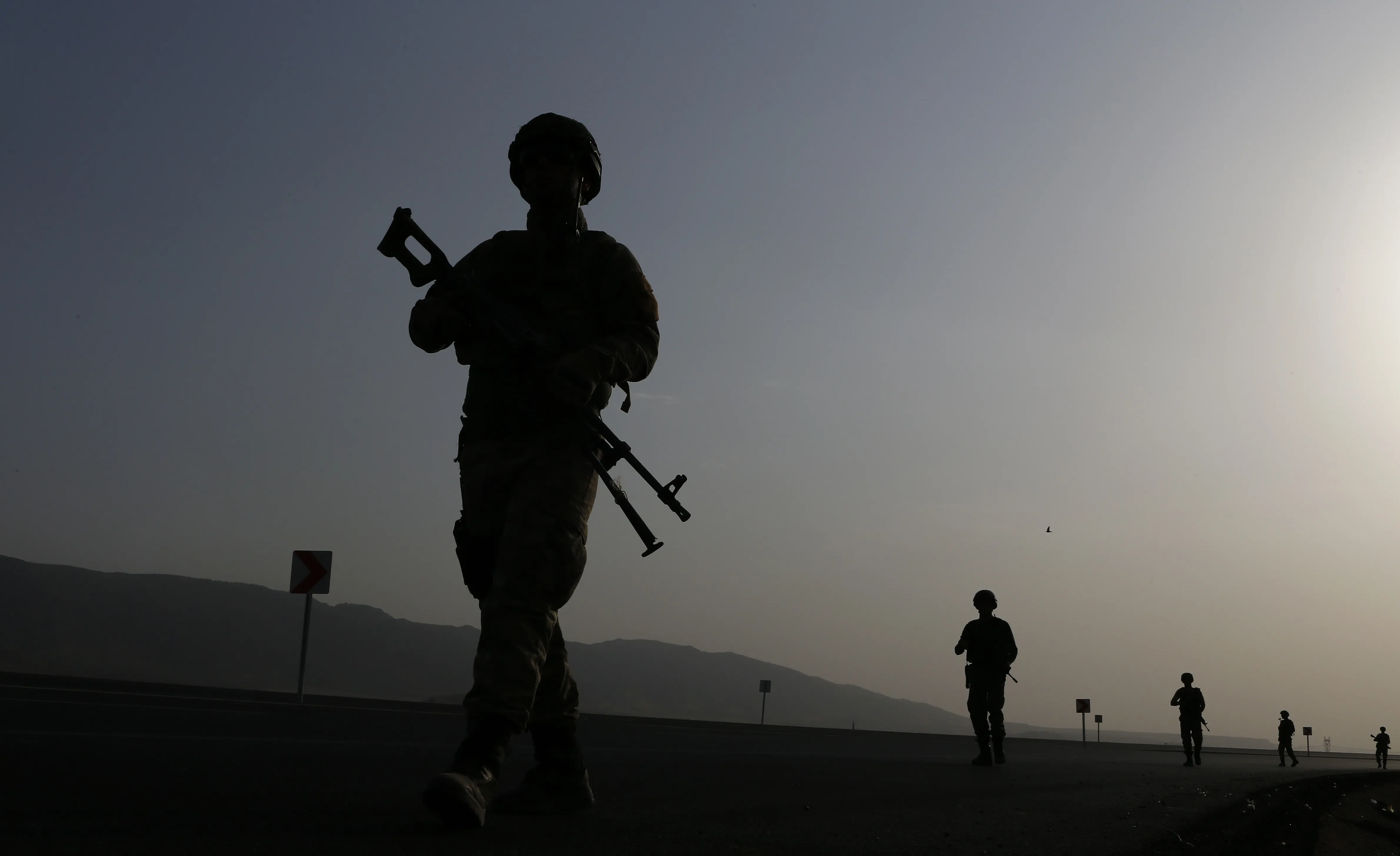
Nearly 5,000 federal troops, including National Guard members and Marines, were deployed to Los Angeles following orders from President Donald Trump in response to protests. The deployment, which began over a week ago, has involved minimal direct action according to military officials and is projected to cost taxpayers hundreds of millions of dollars.
Contents
This deployment occurred despite objections from California Governor Gavin Newsom and local officials, sparking debate among experts and politicians about the use of federal military forces on U.S. soil against civilians and the potential costs versus outcomes.
Deployment Details
President Trump initiated the deployment, initially calling up over 2,000 National Guard members on June 7. This action utilized federal powers, bypassing state authority. Days later, an additional 2,000 National Guard members were called up.
On June 9, the Trump administration escalated the deployment further by activating 700 Marines from the 2nd Battalion, 7th Marines, 1st Marine Division, stationed at Twentynine Palms, California, and sending them to Los Angeles.
Minimal Activity Reported
Despite the large number of deployed troops, U.S. Army North public affairs stated that Title 10 forces had been involved in only one temporary detainment as of Sunday. This was for protection purposes, allowing the individual to be transferred safely to federal law enforcement.
According to U.S. Army North, military members in a Title 10 status are generally not authorized to directly participate in law enforcement activities. Their role in temporary detainment is limited to stopping assaults, preventing harm, or preventing interference with federal personnel performing their duties, with the individual being transferred to civilian law enforcement as soon as safely possible.
The single reported detention involved Marcos Leao near the Wilshire Federal Building. Leao, a former Army combat engineer heading to an appointment, was reportedly detained by Marines after crossing caution tape. Video footage showed Marines detaining an unresisting man, who was later identified as Leao and not involved in any protest activity. U.S. Army North did not provide further details on this specific incident.
 Federal troops potentially deployed in Los Angeles
Cost and Duration Projections
Defense Secretary Pete Hegseth informed the House Defense Appropriations subcommittee that he anticipated troops could remain in Los Angeles for up to 60 days.
The estimated cost for deploying the initial 2,000 National Guard members and 700 Marines was approximately $134 million, according to the Pentagon’s acting comptroller/CFO, Bryn Woollacott MacDonnell. An updated cost estimate for the current larger deployment was not immediately available from the Pentagon.
Controversy and Criticism
The deployment drew criticism from local officials and experts. California Governor Gavin Newsom and Los Angeles officials had raised objections.
Critics argued that the deployment of thousands of troops to counter largely peaceful or limited protests represented an unnecessary militarization of domestic issues, a misuse of federal funds, and a dangerous precedent. Rep. Ro Khanna, D-Calif., called it a “complete waste of resources” and an “unnecessary militarization,” arguing local and state law enforcement were capable of handling the situation.
William Hartung, a senior research fellow at the Quincy Institute for Responsible Statecraft, described the deployment as a “threat to democracy” and “likely illegal,” asserting that sending troops over the objections of state and local officials undermines the federal system.
Department of Homeland Security (DHS) assistant secretary for public affairs Tricia McLaughlin initially stated that DHS Secretary Kristi Noem had requested military personnel arrest “rioters” to restore order. However, DHS later retracted this statement, clarifying that the “posture” of the troops had not changed.
Despite the minimal involvement of federal troops in direct law enforcement actions as stated by U.S. Army North, Los Angeles saw numerous arrests related to protests. Since June 8, there have been 561 arrests across the city related to protests, with a significant number for failure to disperse on the night Trump ordered the federal deployments.
Rep. Khanna highlighted the situation as a lesson for other states, urging governors to be vigilant against what he termed “Trump’s overreactions” and the potential for targeting “blue cities and blue states.”
The deployment in Los Angeles raises questions about the appropriate role of federal military forces in domestic situations, the coordination between federal and state authorities, and the financial implications of such large-scale operations with limited direct outcomes. Readers interested in related topics might explore articles on civil liberties during protests, the Posse Comitatus Act, or federal-state relations during domestic unrest.