Leading climate scientists warn that the remaining “carbon budget” to limit global warming to 1.5 degrees Celsius could be exhausted within approximately three years at current emission rates. This raises critical questions about the inevitability of climate catastrophe if this key global warming threshold is surpassed and whether temperature rises can be reversed. Experts indicate that while crossing this mark presents significant challenges, particularly for vulnerable nations, it does not mean an immediate apocalypse, and future interventions may slowly reduce temperatures if emissions are curbed.
Contents
The Critical 1.5°C Target
The 1.5°C target, a central aim of the 2015 Paris Agreement signed by 195 countries, is considered a critical benchmark by climate scientists. Beyond this limit, the consequences of warming are deemed unsafe, especially for economically developing and island nations. Current global temperatures are already approximately 1.2°C warmer than pre-industrial averages, primarily due to human activities.
A report released in June indicated that the world has only about 143 billion tons (130 billion metric tons) of carbon dioxide (CO2) left to emit before likely exceeding the 1.5°C target. With current emissions at around 46 billion tons (42 billion metric tons) of CO2 per year, according to the World Meteorological Organization, this budget is rapidly diminishing.
Delayed Warming and Natural Cycles
Even if carbon emissions were to cease today, global temperatures would likely continue to rise for several decades due to the ocean’s absorption and subsequent release of excess heat. The National Oceanic and Atmospheric Administration (NOAA) predicts an additional 0.5°C (0.9°F) of warming from oceanic heat transfer alone.
However, temperatures would eventually stabilize as heat radiates into space. Over thousands of years, natural carbon sinks like trees and soils would slowly absorb CO2, gradually returning Earth to pre-industrial temperature levels. This natural process is significantly slower than the rate of current human-induced warming.
The Risk of Climate Tipping Points
Exceeding the 1.5°C limit increases the risk of triggering climate tipping points. These are critical thresholds within Earth’s systems where a small additional perturbation can lead to abrupt, irreversible changes. Examples include the potential sudden melting of the Greenland Ice Sheet, which could significantly raise sea levels, or the transformation of the Amazon rainforest into a dry savanna. These shifts would fundamentally alter ecosystems and have far-reaching global impacts.
Strategies for Reversing Temperature Rise
While preventing warming is considered more effective and less costly, reversing a temperature rise of 1.5°C or more might be possible if the threshold is crossed. This requires achieving “net negative emissions,” meaning more carbon is removed from the atmosphere than is emitted. Net zero emissions, by contrast, would only halt warming by balancing emissions with sequestration.
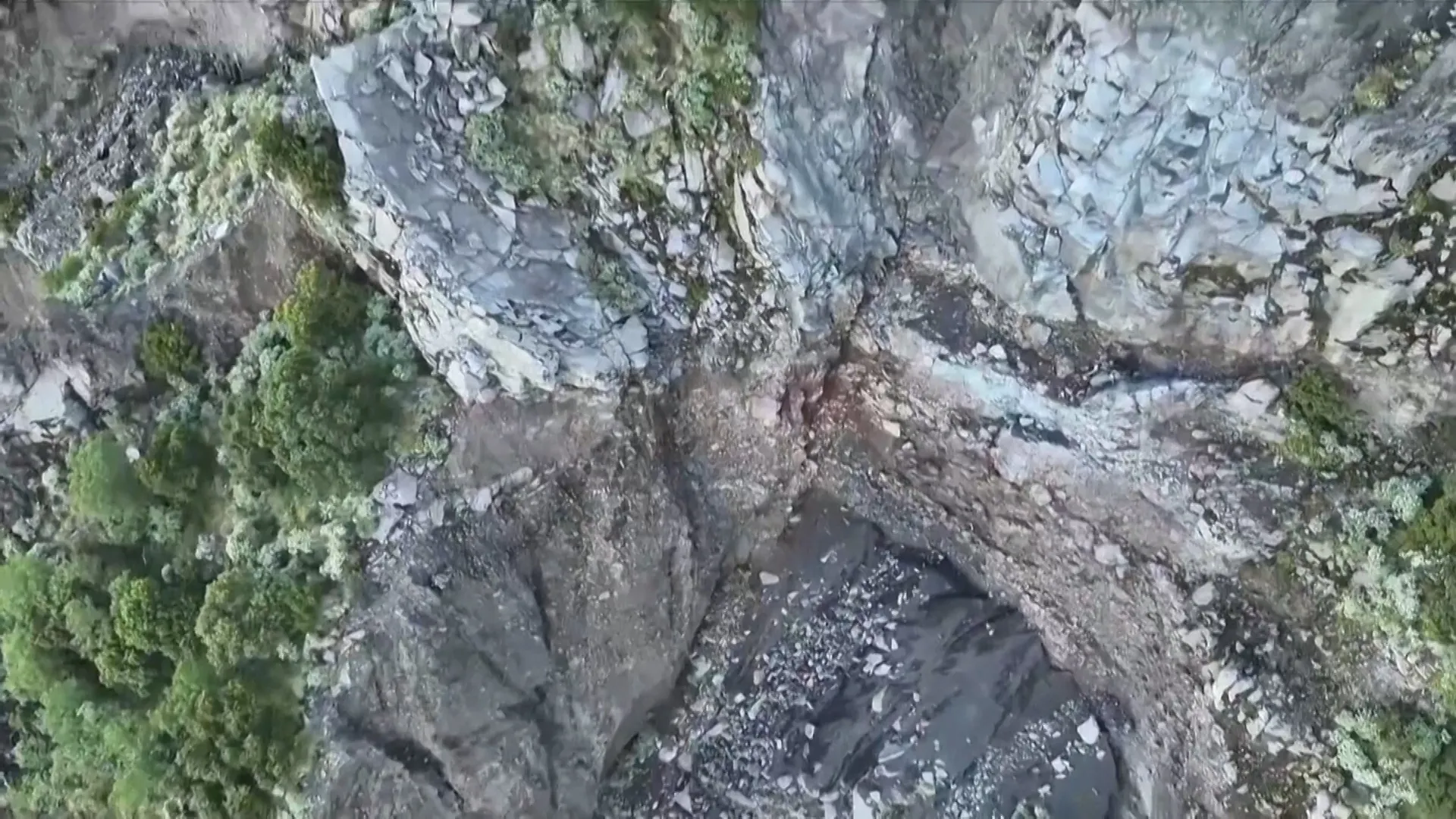
Reversing temperatures would not undo the effects of all climate tipping points, such as refreezing ice sheets or lowering sea levels once they have risen. However, it could significantly reduce risks for ecosystems that respond more quickly to temperature changes, like permafrost-covered tundras.
 Aerial view of an icy, mountainous landscape, representing permafrost-covered tundras that could be restored if global temperatures are lowered.
Currently, nature-based carbon-removal techniques, such as planting trees, sequester approximately 2.2 billion tons (2 billion metric tons) of CO2 annually. To reduce temperatures by just 0.1°C, an estimated 243 billion tons (220 billion metric tons) of CO2 would need to be removed, requiring a roughly 100-fold increase in current nature-based efforts.
Given the scale of the challenge and competing land demands, relying solely on natural methods for significant temperature reversal is unlikely. This suggests a future need for negative emissions technologies (NETs), which actively suck carbon from the atmosphere and store it. Most NETs are still in experimental stages, making their effectiveness and scalability uncertain. They are also currently very expensive.
The Path Forward
Despite the complexities and challenges, every fraction of a degree of warming prevented contributes to a better outcome. While the Paris Agreement does not explicitly mandate negative emissions technologies, the goal to stay “well below 2°C” may prompt governments to accelerate their development if 1.5°C is exceeded.
Projections indicate that at current emission rates, carbon budgets for 1.6°C, 1.7°C, and 2°C warming could be depleted within approximately seven, 12, and 25 years, respectively. Preventing even small increments of warming remains a critical objective. It is also important to note that global efforts are beginning to show progress in reducing carbon emissions.
For more insights into the broader impacts of climate change, explore related articles on how global warming could redefine global conflict or affect rainfall patterns.