Hurricane Erick made landfall on Mexico’s southern Pacific coast as a Category 3 storm, causing damage in Oaxaca state before weakening, though authorities warn of ongoing risks from heavy rain and potential mudslides. The storm struck near Puerto Escondido on Thursday morning, bringing powerful winds and flooding.
Contents
Storm Impact and Weakening
The hurricane hit the coast with strong winds and intense rain. After making landfall near the beach town of Puerto Escondido, Oaxaca, Hurricane Erick was downgraded to a Category 1 storm. Maximum sustained winds, which peaked around 205 km/h (125 mph) before landfall, dropped to about 137 km/h (85 mph) later in the day.
Damage Reported in Coastal Areas
In Puerto Escondido, the storm left behind damaged businesses, wrecked boats, and flooded streets. Emergency crews and local residents worked to clear fallen trees, downed signs, and sand-covered boats to restore access. Large sections of the town experienced power outages and loss of mobile coverage.
Luis Alberto Gil, a 44-year-old shopkeeper, described the flooding as unprecedented in recent memory. “The water had never hit with this magnitude,” he said.
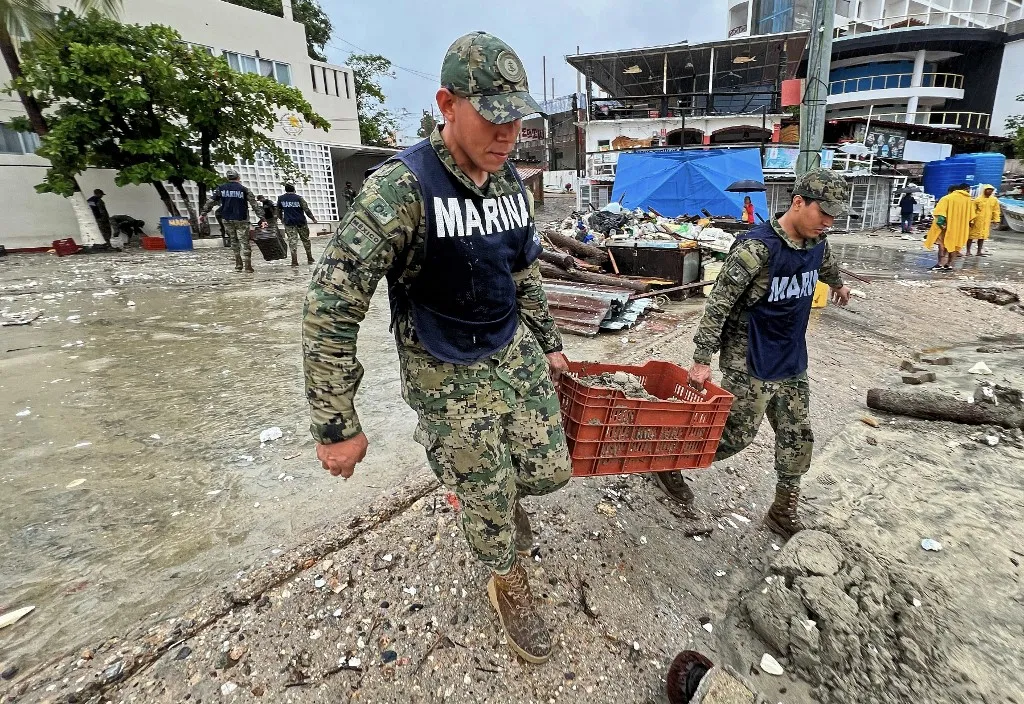 Mexican navy members assist with cleanup efforts in Puerto Escondido, Oaxaca after Hurricane Erick passed.
Despite the damage, officials have reported no deaths or injuries in the wake of the storm. The Mexican government deployed hundreds of military personnel and electricity workers to assist with cleanup and restoration efforts.
Ongoing Risks and Warnings
Although Erick weakened, forecasters and authorities continue to warn of significant hazards. The US National Hurricane Center (NHC) and Mexican authorities maintained alerts for life-threatening flooding and mudslides, particularly in areas with steep terrain in Oaxaca and Guerrero states.
Heavy rainfall, potentially reaching 40cm (16 inches) in some areas, is expected. Wind gusts are anticipated for several more hours, and a storm surge could cause coastal flooding and large, destructive waves.
Preparedness Efforts
Mexican authorities had prepared residents and tourists ahead of Erick’s arrival. President Claudia Sheinbaum urged people in low-lying areas to seek shelter or stay home.
About 2,000 temporary shelters were established across the states of Chiapas, Guerrero, and Oaxaca to accommodate those who needed to evacuate their homes. Schools in Guerrero state were closed, and fishing and tourism operators were instructed to secure their boats.
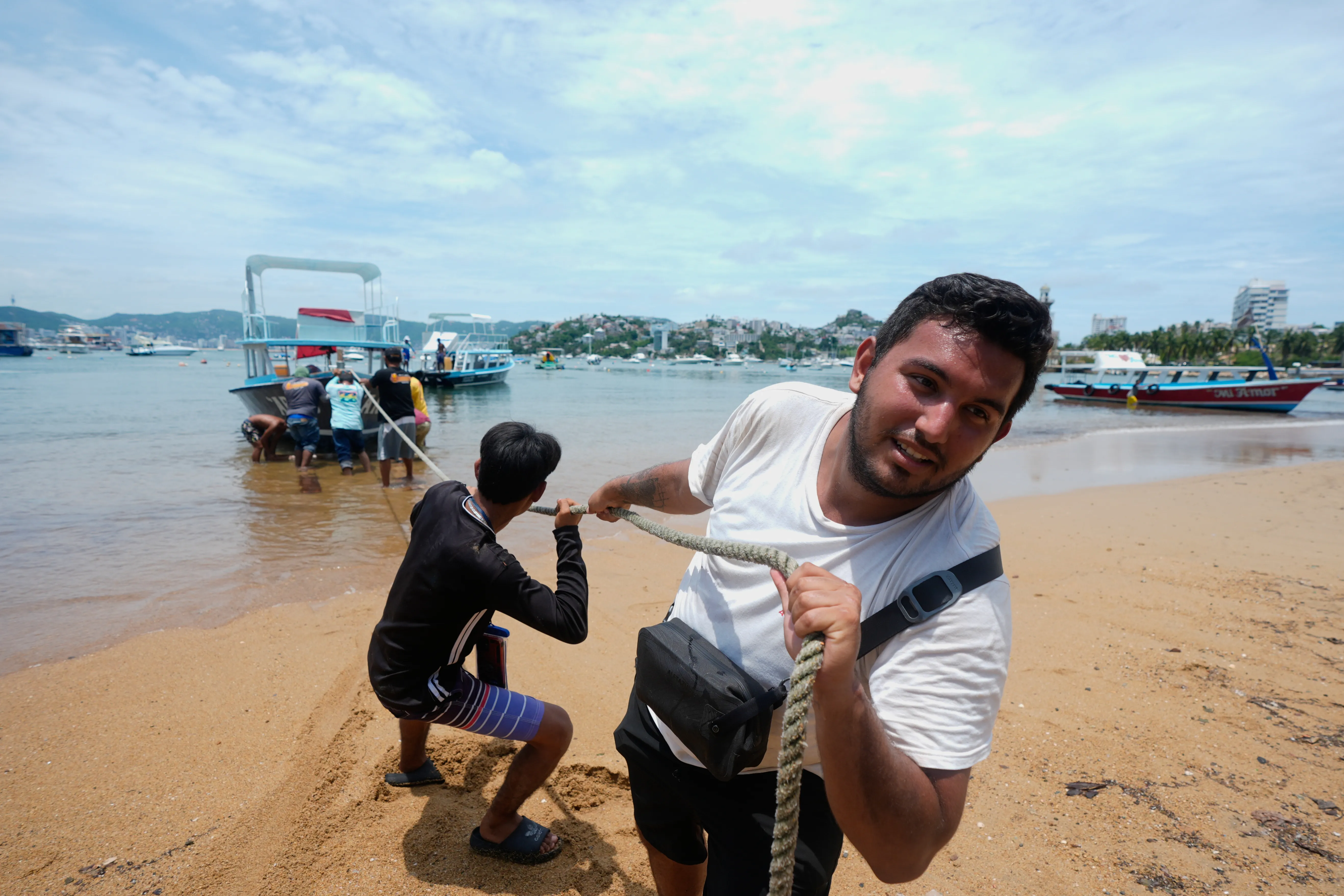 Boats are moved from the water onto Manzanillo beach in Acapulco as preparation for Hurricane Erick's arrival.
Coastal communities, including the city of Acapulco, braced for the storm. Acapulco was severely impacted by Hurricane Otis in October 2023, a Category 5 storm that caused widespread destruction and resulted in at least 52 deaths.
Carlos Ozuna Romero, whose restaurant was destroyed by Hurricane Otis, oversaw preparations this time, storing furniture and equipment. He noted that the warnings brought back memories of the previous event.
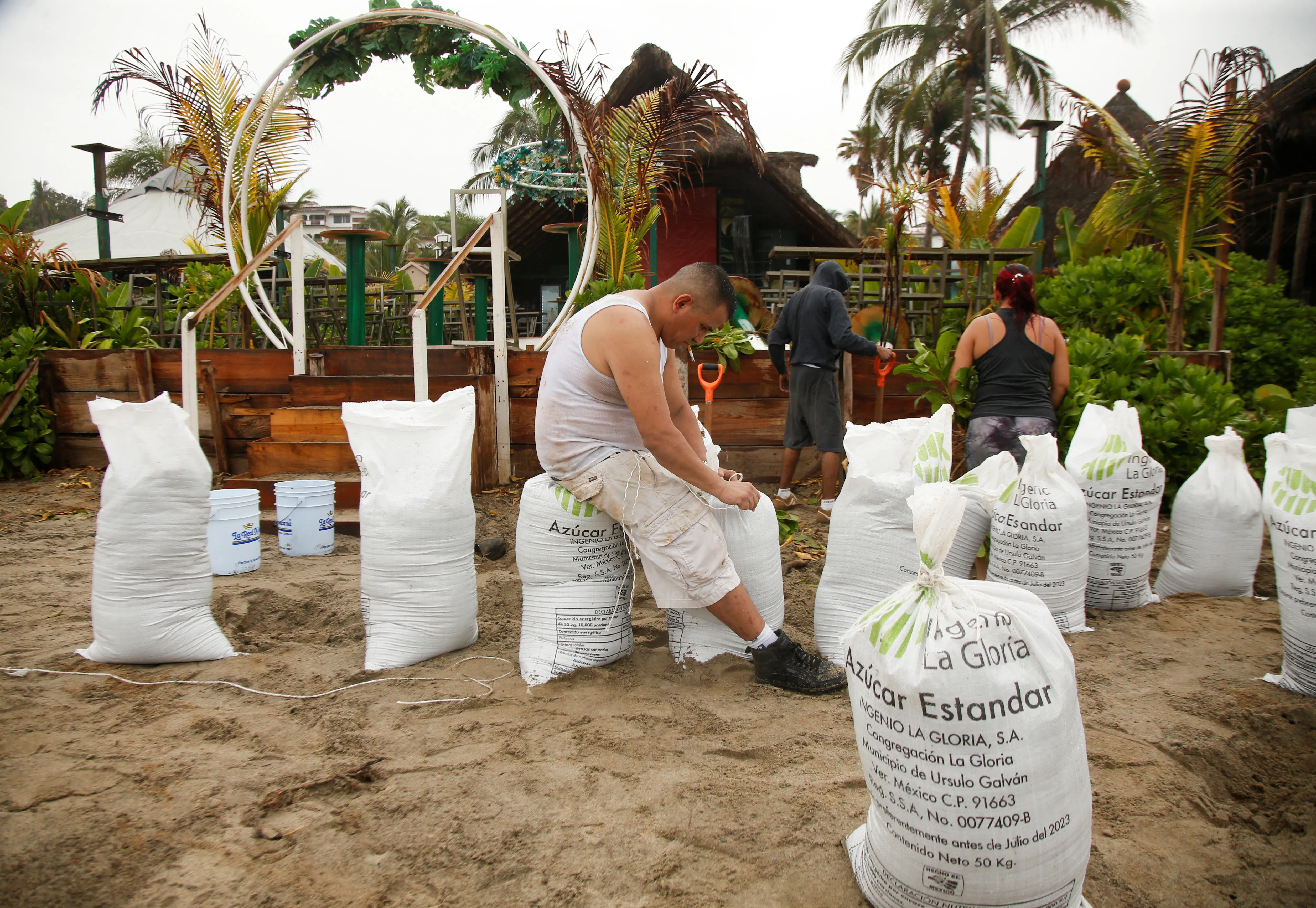 A man fills sandbags before Hurricane Erick reaches Puerto Escondido, Oaxaca, Mexico.
Veronica Gomez, a shipping company worker in Acapulco, felt the city was better prepared this time, stating, “Now it’s not going to catch us by surprise.” Residents were seen boarding up windows and taking other precautions.
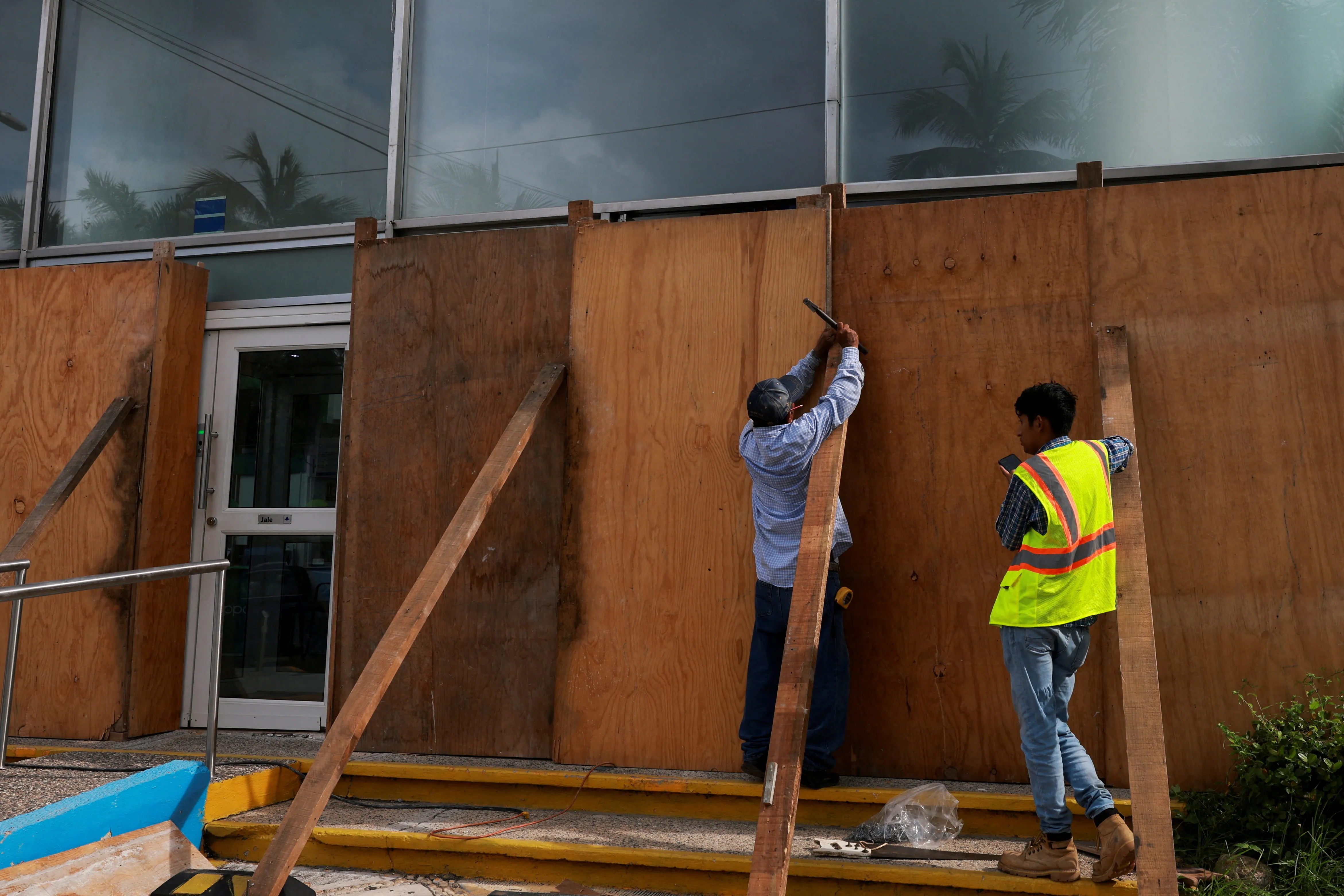 Workers board up windows on a business in Acapulco preparing for Hurricane Erick.
Outlook
While Hurricane Erick has weakened significantly since landfall, the risks of flooding, mudslides, and dangerous coastal conditions persist in parts of southern Mexico. Cleanup and recovery efforts are underway, with official reports indicating no storm-related fatalities or injuries so far.
For more on hurricane impacts in Mexico, read about how Hurricane Otis left a trail of destruction in Mexico’s Acapulco.