Japan’s space agency, JAXA, successfully launched its 50th and final H-2A rocket on Saturday, June 28, 2025, from the Tanegashima Space Center. The mission carried the GOSAT-GW satellite, designed to monitor Earth’s greenhouse gases and water cycles. This launch marks a significant milestone, concluding the H-2A’s near 25-year operational history and deploying a crucial tool for climate monitoring.
Contents
Launch Details and Timeline
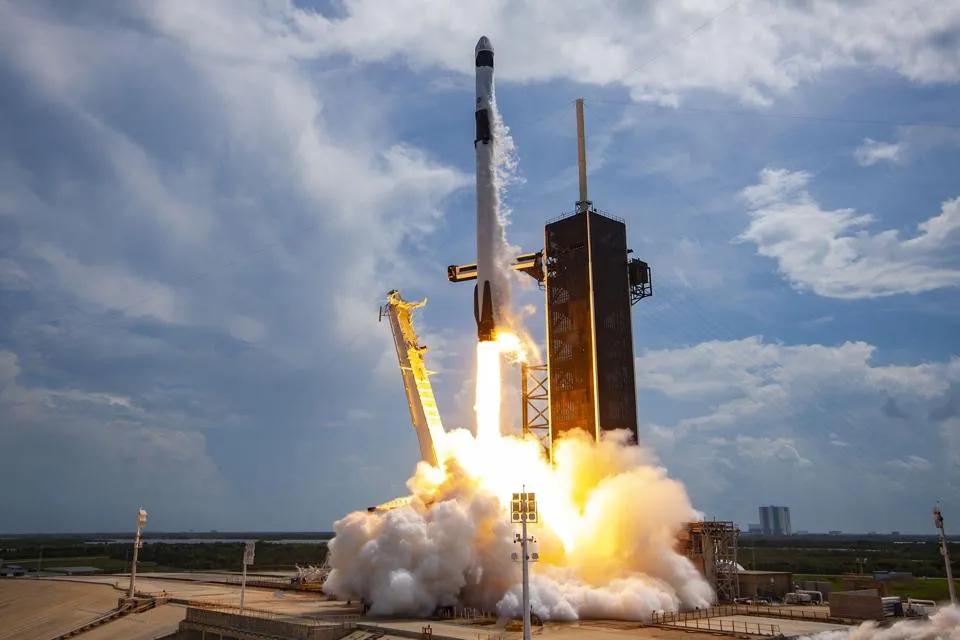
The launch took place at 1:33 a.m. local time on June 29 (12:33 p.m. EDT / 1633 GMT on June 28) from the Yoshinobu Launch Complex (LP-1) at the Tanegashima Space Center in southern Japan. The successful liftoff proceeded as planned, placing the satellite into orbit.
The GOSAT-GW Satellite: Monitoring Earth
The primary payload for this mission is the Greenhouse Gas and Water Cycle Observation Satellite, or GOSAT-GW. This advanced satellite is designed to provide critical data on Earth’s climate, focusing on both greenhouse gas concentrations and the global water cycle.
GOSAT-GW is equipped with two key instruments. The Advanced Microwave Radiometer (AMSR) will measure variations in water vapor and precipitation, along with sea surface temperatures. The Greenhouse Gases Observation Sensor (TANSO) will specifically track atmospheric components like carbon dioxide to help assess climate change. It joins previous Japanese Earth observation satellites like GCOM-W2 ‘SHIZUKU’ and GOSAT-1 ‘IBUKI’ in orbit.
Legacy of the H-2A Rocket
Built by Mitsubishi Heavy Industries for JAXA, the H-2A rocket has been a workhorse for Japan’s space program. Operational since 2001, the H-2A was capable of delivering payloads to various orbits, including geostationary orbit and even missions to the Moon.
Over its 50 missions, the H-2A demonstrated remarkable reliability, experiencing only a single launch failure. This gives the vehicle a high success rate of 98%.
 Japan's H-2A rocket ignites on launchpad for final mission carrying GOSAT-GW satellite
Transition to the H3 Rocket
The launch of the GOSAT-GW satellite marks the final flight for the H-2A. Its retirement paves the way for Japan’s next-generation launch vehicle, the H3 rocket. The H3 is designed to offer similar performance to the H-2A but at a reduced cost, aiming to make Japanese space access more competitive.
Conclusion
The successful launch of the GOSAT-GW satellite on the final H-2A rocket concludes a successful chapter in Japan’s space history. The GOSAT-GW will now begin its mission to provide crucial data on climate change and water cycles, contributing to global environmental monitoring efforts. Readers interested in Japan’s space activities can explore related stories on its new H3 rocket or other satellite missions.