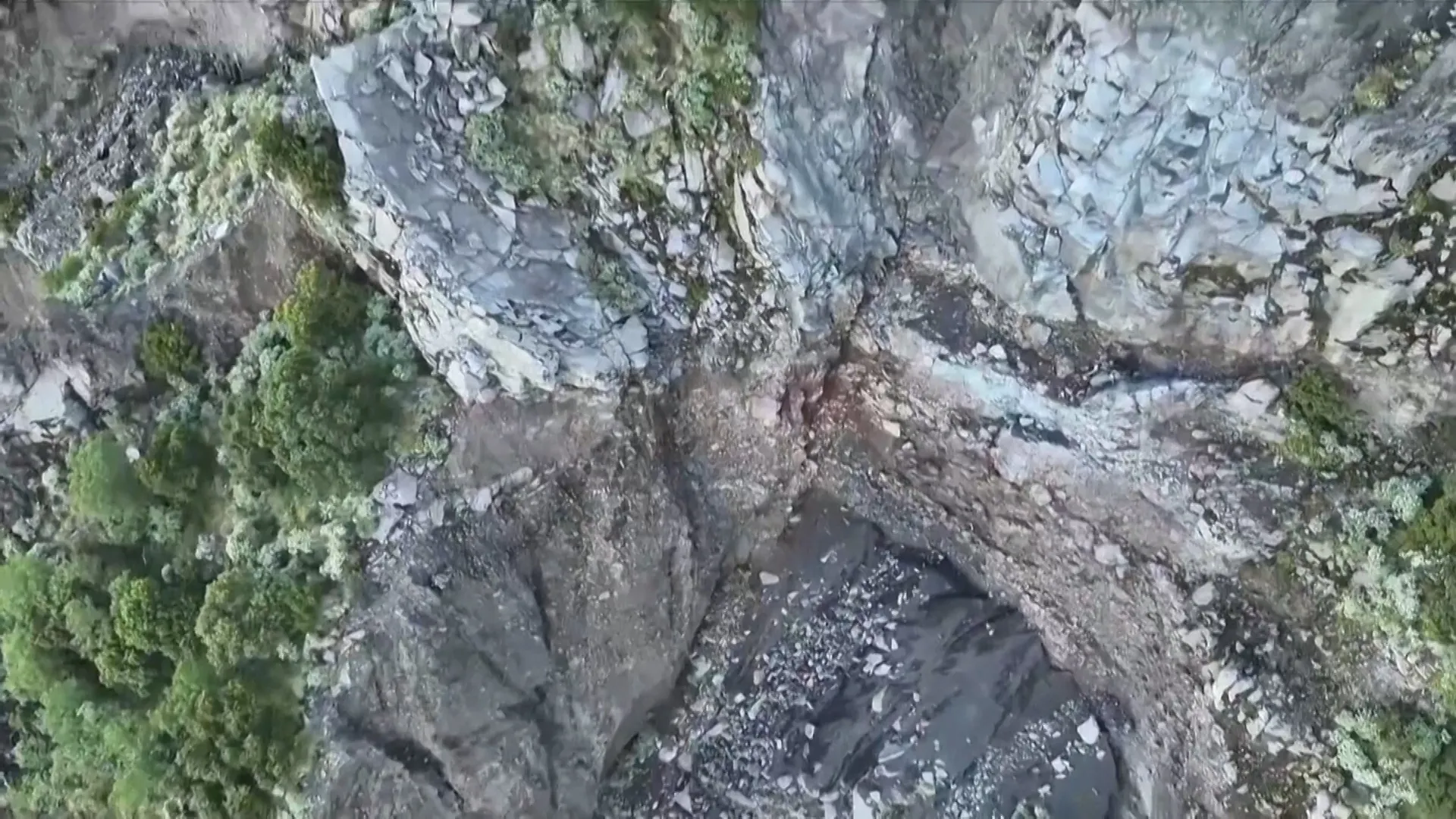
Mount Etna, one of the world’s most active volcanoes located on the east coast of Sicily, Italy, experienced an eruption today, June 2, 2025. The event produced a significant ash plume high into the sky, prompting tourists present on the volcano’s slopes to descend quickly.
Contents
Initial reports indicate no major damage or injuries, with authorities closely monitoring the situation.
Eruption Overview
The eruption sent a large plume of gases, ash, and rock miles into the atmosphere. Footage shared on social media showed individuals moving rapidly away from the summit area as the eruption intensified.
Understanding Mount Etna
Located on the east coast of Sicily, Mount Etna is not only one of the most active volcanoes globally but also the largest in Europe. It stands approximately twice the height of Mount Vesuvius near Naples, famous for its 79 AD eruption that buried Pompeii. Despite its frequent activity, the intensity of this particular eruption is noted as significant, reportedly the largest in over a decade.
 Thick volcanic ash cloud rises from Mount Etna during eruption in Sicily, Italy, as observers watch.
Safety and Local Impact
Authorities are closely monitoring the situation regarding safety for residents and tourists in the surrounding areas. Fortunately, early forecasts suggest the ash plume is likely to bypass the city of Catania, located at the volcano’s base.
Catania Airport and the nearby Palermo Airport reportedly remain operational following the event. There have been no reports of injuries among tourists or residents caught near the eruption site. While the eruption includes lava emissions, these are not currently projected to reach populated areas.
Geological Observations
Italy’s National Institute of Geophysics and Volcanology (INGV) is providing real-time monitoring of the eruption. Geologists observing the event suspect a possible collapse within the volcano’s summit crater may have contributed to the eruption.
While pyroclastic flows, fast-moving currents of hot gas and rock, can be dangerous, reports indicate no immediate threat from these to areas surrounding the volcano. According to INGV’s latest updates, volcanic debris has remained contained within the ‘Valley of the Lion’ (Valle del Bove), an uninhabited area and the furthest point accessible to tourists hiking towards the peak.
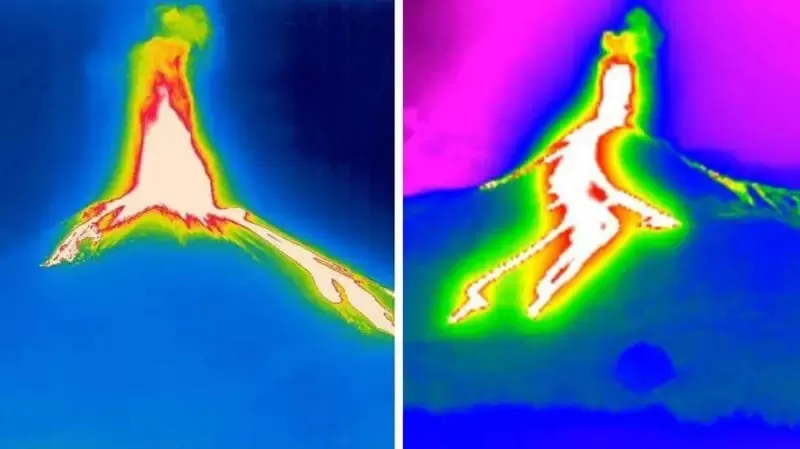 Thermal image from Italy's INGV showing heat patterns during the recent Mount Etna eruption.
Understanding Strombolian Eruptions
INGV reported the eruption began with initial signs around 12:40 AM local time, later confirming it as a ‘Strombolian’ eruption. Strombolian eruptions are characterized by distinct, short, explosive bursts of fluid lava from a conduit, caused by the liberation of trapped volcanic gases. This process is often compared to the rapid release of pressure and bubbles from a carbonated drink when opened.
No injuries or significant damage have been reported following the eruption, with authorities continuing to monitor activity.