On June 1, 2025, Ukraine conducted “Operation Spider Web,” a coordinated drone attack targeting Russian airbases situated deep within Russian territory, resulting in significant damage to strategic aircraft and challenging traditional military doctrine regarding the safety of rear areas. This operation leveraged remote-controlled drones smuggled over 18 months to strike assets far from the front lines.
Contents
What Happened: Operation Spider Web Details
The operation involved 117 remote-controlled drones, which were reportedly transported into Russia over an extended period. These drones were launched by operators located miles away from the targets.
According to Ukrainian officials, the raid targeted strategic bombers, including Tu-95, Tu-160, and Tu-22 M3 models, along with an A-50 airborne early warning jet. Kyiv reported that over 40 aircraft were destroyed or damaged. These figures, if confirmed by satellite imagery, would represent approximately one-third of Russia’s long-range strike fleet, valued at an estimated US$7 billion.
Why Target Deep Airbases? Russian Strategy
Since the 2022 invasion of Ukraine, Russia has relied heavily on its strategic bomber bases, some located over 2,000 miles from the Ukrainian front line. These bombers, combined with waves of Iranian-designed Shahed attack drones, have been used in a strategy of coercive airpower, aiming to degrade Ukrainian civilian morale.
Ukraine’s military planners view destroying the launch platforms deep within Russia as a more cost-effective approach compared to intercepting every incoming missile and drone. While Ukraine’s air defense has achieved an estimated 80% success rate against Russian missiles, it relies heavily on Western-donated equipment, which faces supply constraints. Targeting the source of the strikes directly undercuts Russia’s strategy.
Historical Context of Airfield Attacks
Attacking airfields is not a new concept in warfare; grounded aircraft have historically been seen as vulnerable targets.
During World War II, the UK’s Special Air Service (SAS) used jeep raids and explosives to destroy enemy aircraft on the ground in North Africa. Also in WWII, German paratroopers captured airfields on Crete, impacting the island campaign.
In Vietnam, Viet Cong and North Vietnamese Army teams repeatedly breached US airbase perimeters using satchel charges and mortars, destroying aircraft and forcing the diversion of personnel for base security. This history demonstrates the effectiveness of targeting parked aircraft to impose costs and disrupt operations.
 US soldiers look at wreckage of an Air Force B-57 Canberra bomber after Viet Cong mortars destroyed 21 planes at Bien Hoa airbase in 1964.
The New Dimension: Drone Warfare
Operation Spider Web introduces a modern element through the use of unmanned drone technology. Military analysis increasingly discusses “air littorals,” the lower part of the atmosphere where drones can operate effectively. Drones in this zone can often evade traditional radar and infantry weapons while still being capable of hitting targets like aircraft.
By smuggling disassembled drones and assembling them closer to the targets, Ukraine created temporary launch points deep inside Russia. This allowed them to bypass layered defenses and achieve surprise. The economic asymmetry is significant: a drone costing under $3,000 was used to target a bomber like the Tu-160, which costs around $250 million.
Consequences for Russia
Ukraine’s drone attack is expected to have immediate and long-term consequences for Russia. Surviving aircraft may need to be relocated to more secure bases. Protecting airfields from future attacks will require substantial investment in physical defenses like earthen revetments, as well as advanced systems like radar-guided cannons and electronic warfare jammers.
These protective measures and base repairs incur significant financial costs. Furthermore, implementing them will require diverting trained military personnel and technicians who could otherwise be deployed to the front lines.
The attack also impacts Russia’s strategic nuclear capabilities, as Tu-95 and Tu-160 bombers can carry nuclear weapons. Losing a significant number of these aircraft is a strategic setback that could influence Russia’s long-range air patrols and nuclear signaling.
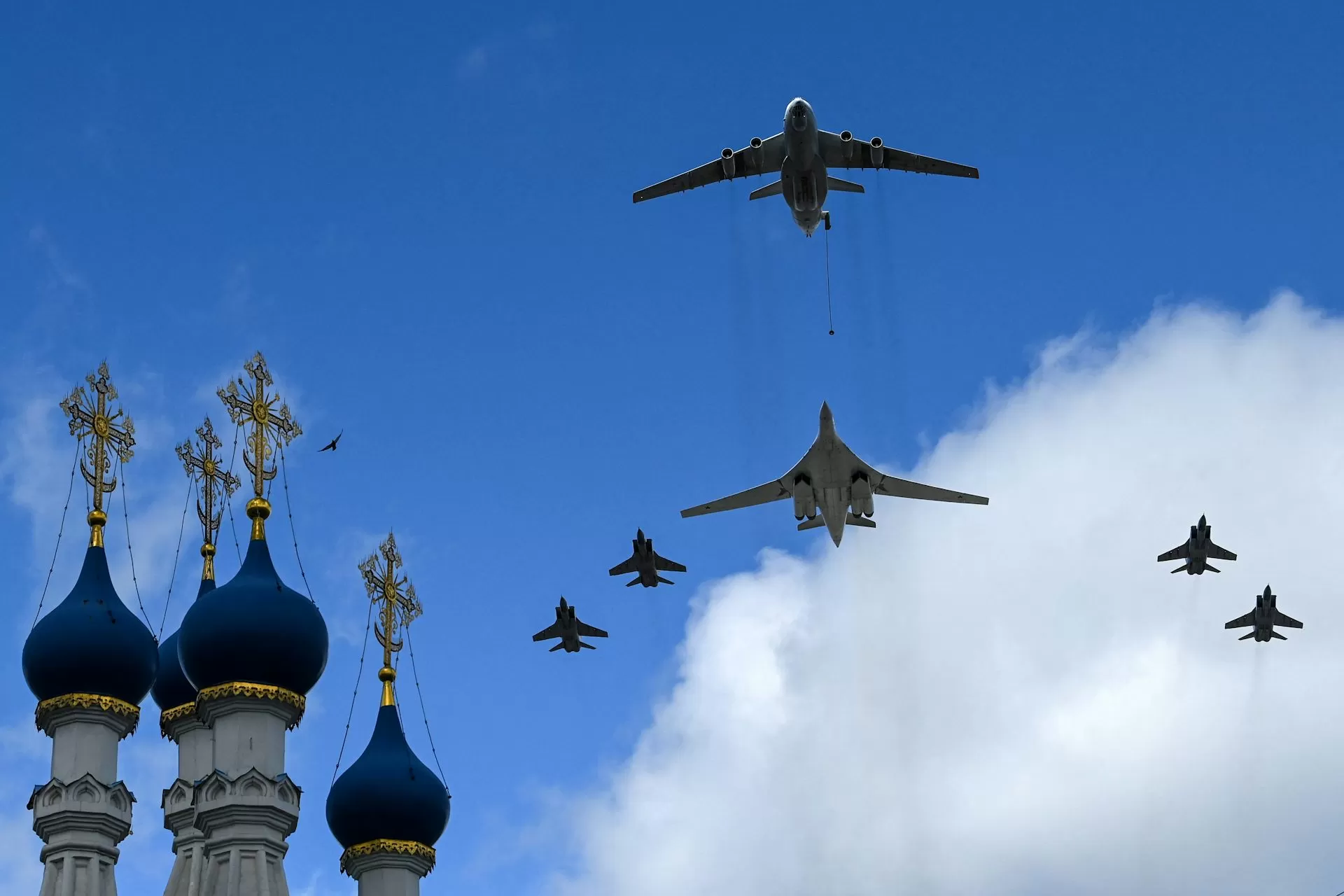 Russian MiG-31bm fighter jets, a Tu-160 strategic bomber and an Il-78 aerial refueling tanker fly over Moscow during a rehearsal for the WWII Victory Parade on May 4, 2022.
Beyond the material damage, the operation carries a notable psychological impact. It demonstrates Ukraine’s capability to plan and execute complex attacks deep within Russia, challenging the perception of security far behind the front lines, even years into the conflict. The operation’s reported success was the result of patient planning, involving 18 months of smuggling components, reassembling kits, and meticulous scouting of launch sites. Remote operators steered the drones using live video feeds, with impacts across wide areas intended to overwhelm local defenses.
Broader Implications: A New Front Line?
For Ukraine, Operation Spider Web provides a potential model for striking other key Russian assets located deep within its territory, such as missile storage depots and factories producing drones like the Shahed. This capability is crucial as Russia increasingly relies on cost-effective drone and ballistic missile attacks.
More broadly, the operation challenges the long-held military concept that rear areas are inherently safe from direct attack. By using relatively inexpensive drones launched from within the adversary’s own territory, Ukraine demonstrated that it is possible to inflict significant damage on high-value assets costing billions. This asymmetric strategy could potentially be adopted by other nations or non-state actors against a variety of targets. Air forces relying on large, fixed bases may need to adapt by hardening infrastructure, dispersing aircraft across multiple locations, or accepting that their airfields are now potential front lines.
Explore related analysis on the strategic implications of drone warfare and asymmetric tactics in modern conflicts.