A journalist traveled to Israel in late 2023 to report on the country’s situation following the October 7 Hamas attacks. The trip, organized by the non-profit organization Sharaka, aimed to provide firsthand insights into the impact of the conflict on Israeli communities and holy sites, offering a perspective on the complexities of the region.
Contents
The visit occurred months after the October 7 attacks, when Hamas militants from Gaza infiltrated southern Israel, resulting in widespread casualties, kidnappings, and destruction. This triggered a military response from Israel in Gaza, leading to significant civilian casualties and displacement. The journalist sought to observe the aftermath and understand the perspectives of those affected.
Impact in Southern Israel
The journey included visits to areas directly impacted by the October 7 attacks in southern Israel, close to the Gaza Strip.
Nir Oz Kibbutz
Located just a few kilometers from Gaza, Nir Oz was among the communities severely affected. Before October 7, the kibbutz was home to nearly 400 residents. The attack resulted in significant destruction, and approximately a quarter of the community was killed or taken hostage.
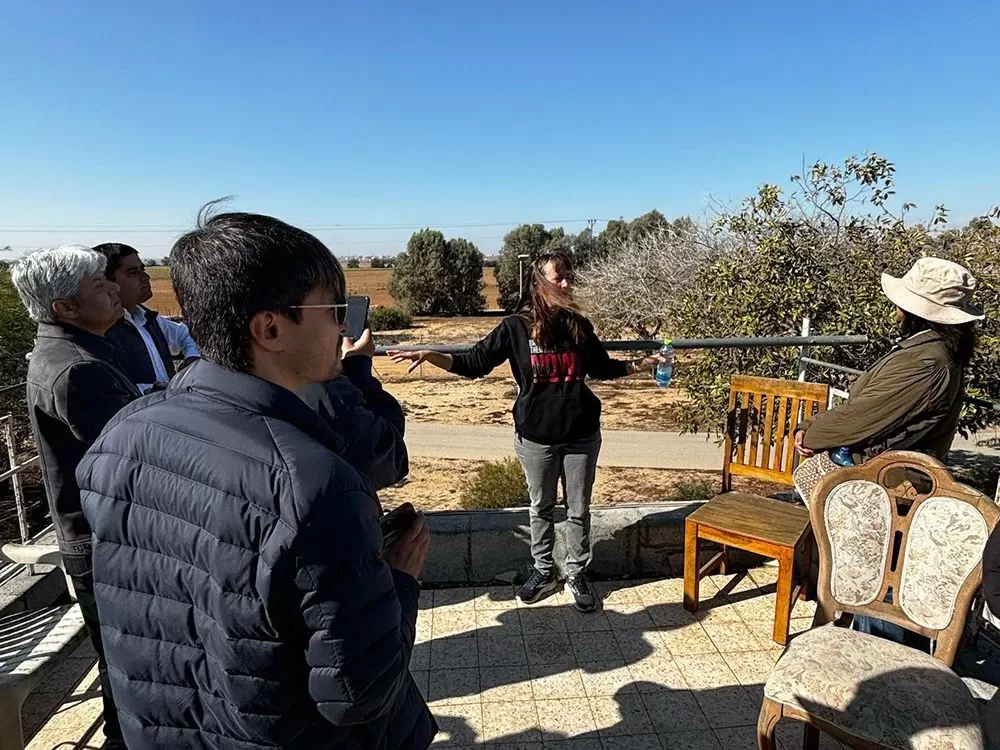 Irit Lahav describes her experience surviving the October 7 attack at Nir Oz kibbutz
Irit Lahav, a survivor and daughter of a kibbutz founder, shared her account of hiding in a safe room with her daughter for nearly 12 hours during the attack. She described communicating via text messages to avoid detection. Lahav noted that she and other residents had previously advocated for peace and assisted Gazan children requiring medical treatment in Israel. Following the attack, she stated her feelings about this work had changed, reporting that she felt the attackers had intended to kill her despite past goodwill. The sound of explosions from Gaza was noted during the visit.
Nova Music Festival Site
The site of the Nova music festival, located in a desert area, became a scene of mass casualties on October 7. The location has since been transformed into a memorial.
Hundreds of people were killed during the attack on the festival. Photographs and biographies of the victims, predominantly young people, are displayed at the site, surrounded by flowers and Israeli flags.
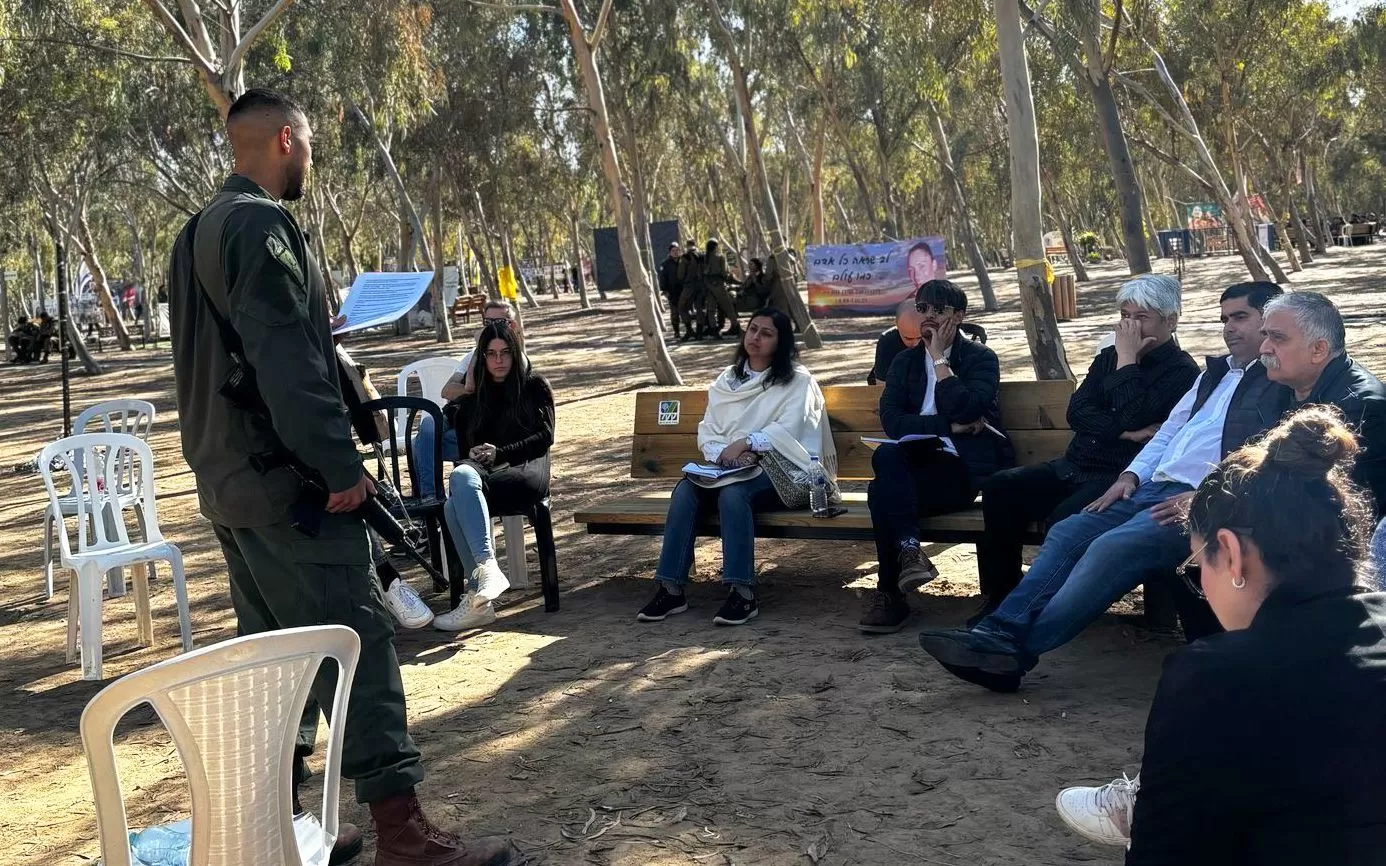 Tomer Hava, an IDF reservist, speaks at the Nova music festival site about his escape from the Hamas attack
Tomer Hava, a 24-year-old reservist in the Israel Defense Forces, recounted his experience of narrowly escaping the attack at the festival. He hid in nearby fields for hours. Hava also shared that his younger brother was killed fighting in Gaza. When asked if he had killed civilians in Gaza, he denied doing so, and described tactics reportedly used by Hamas, such as using civilian homes.
Religious Sites in Jerusalem
Jerusalem holds deep religious significance for Muslims, Jews, and Christians, containing major holy sites.
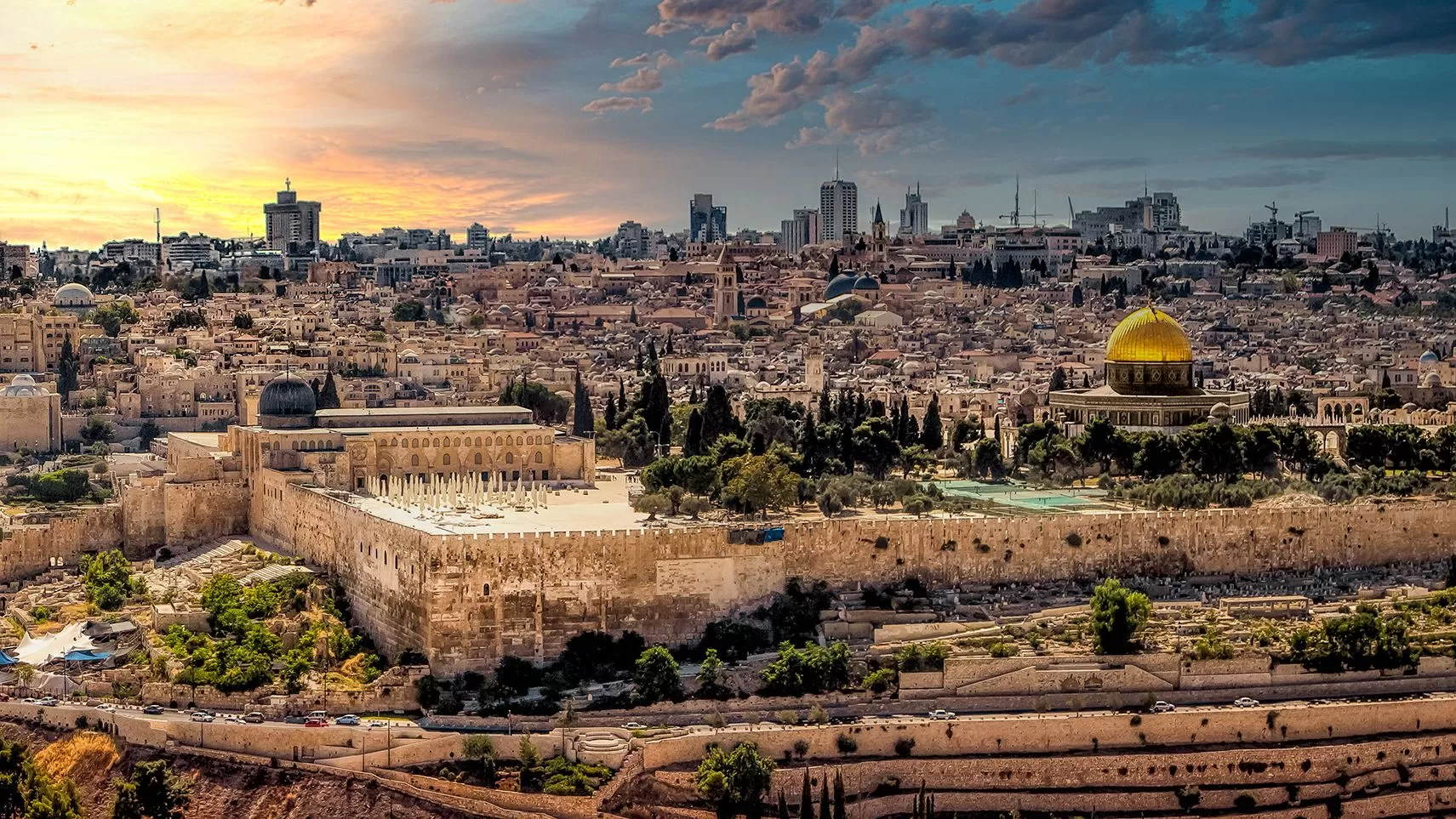 Overhead view of Jerusalem showing the Dome of the Rock and Al-Aqsa Mosque on the Temple Mount compound
The journalist visited the Al-Aqsa Mosque, the Western Wall, and the Church of the Holy Sepulchre. Al-Aqsa Mosque, located on the Temple Mount/Haram al-Sharif, is one of the most important sites in Islam. Access involves Israeli security checks at the entrance, with administrative duties inside handled by Jordanians and Palestinians.
Overhead view of Jerusalem showing the Dome of the Rock and Al-Aqsa Mosque on the Temple Mount compound
During the visit to Al-Aqsa Mosque, the journalist reported being questioned about their faith by Palestinians inside. This included demands to recite the Shahada (Islamic oath) despite presenting a passport from a Muslim-majority country.
Imam Mohammad Tawhidi of the Global Imams Council commented on this type of interaction, stating it is “unacceptable and has no basis in Islamic law.” He added that Islam does not require testing individuals’ faith for mosque entry and that a person’s declaration of faith is sufficient. He noted that demanding the Shahada could be seen as inappropriate, especially for non-Muslims, as faith should be embraced willingly.
At the Western Wall, a key Jewish holy site in the Old City, non-Jewish male visitors are typically required to wear a kippah. The Church of the Holy Sepulchre, important in Christianity, was reported to welcome visitors of all faiths.
Observations in Tel Aviv
The visit also included time in Tel Aviv, where the impact of the conflict was visible in different ways.
Hostages Square in Tel Aviv serves as a focal point for families and supporters of those taken hostage by Hamas on October 7. Families have set up tents in the square, waiting for news.
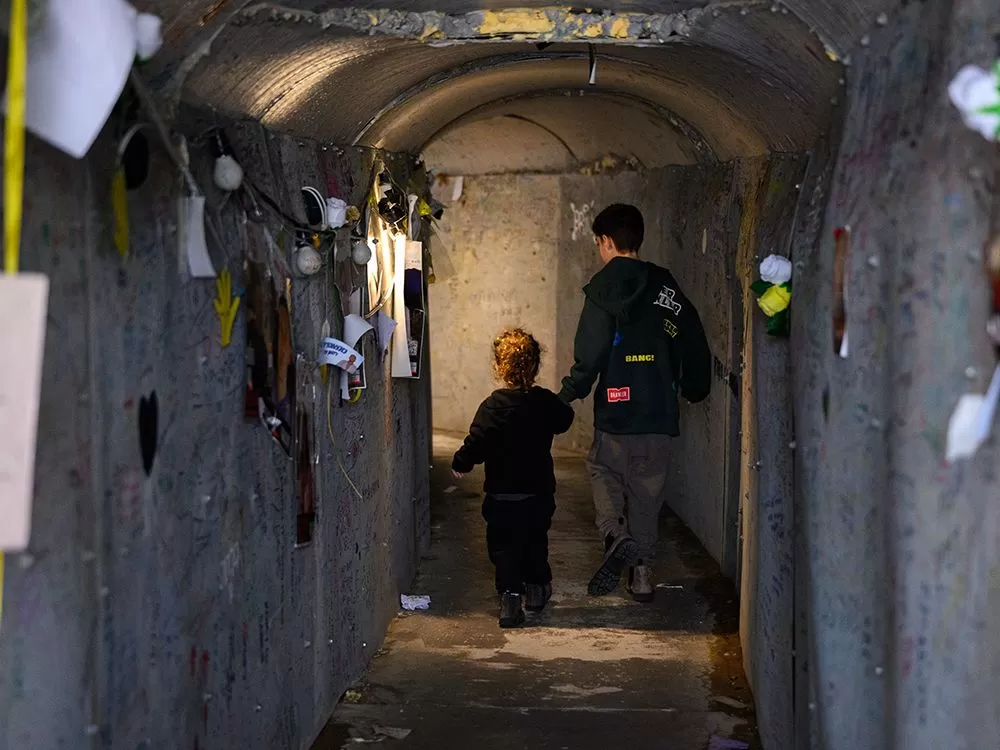 Children walk through a tunnel installation at Hostages Square in Tel Aviv representing conditions of Hamas captivity
Families of victims gathered, displaying portraits and singing songs. A mock tunnel installation, designed to represent conditions of Hamas captivity, was open to the public, featuring sounds of explosions and messages written on the walls by visitors. Relatives of hostages described the profound disruption to their lives and constant worry.
Save A Child’s Heart, a hospital located in Tel Aviv, treats children from various countries with complex heart conditions, including those from the Middle East and Africa, many of whom are Muslim. The hospital has reportedly provided care for several Afghan children over the years.
Hebron and the Cave of Patriarchs
A visit to Hebron (Al-Khalil) in the West Bank highlighted the complexities of coexisting holy sites and security concerns. Travel to the area involves navigating routes with visible security measures, including concrete barriers and armored buses.
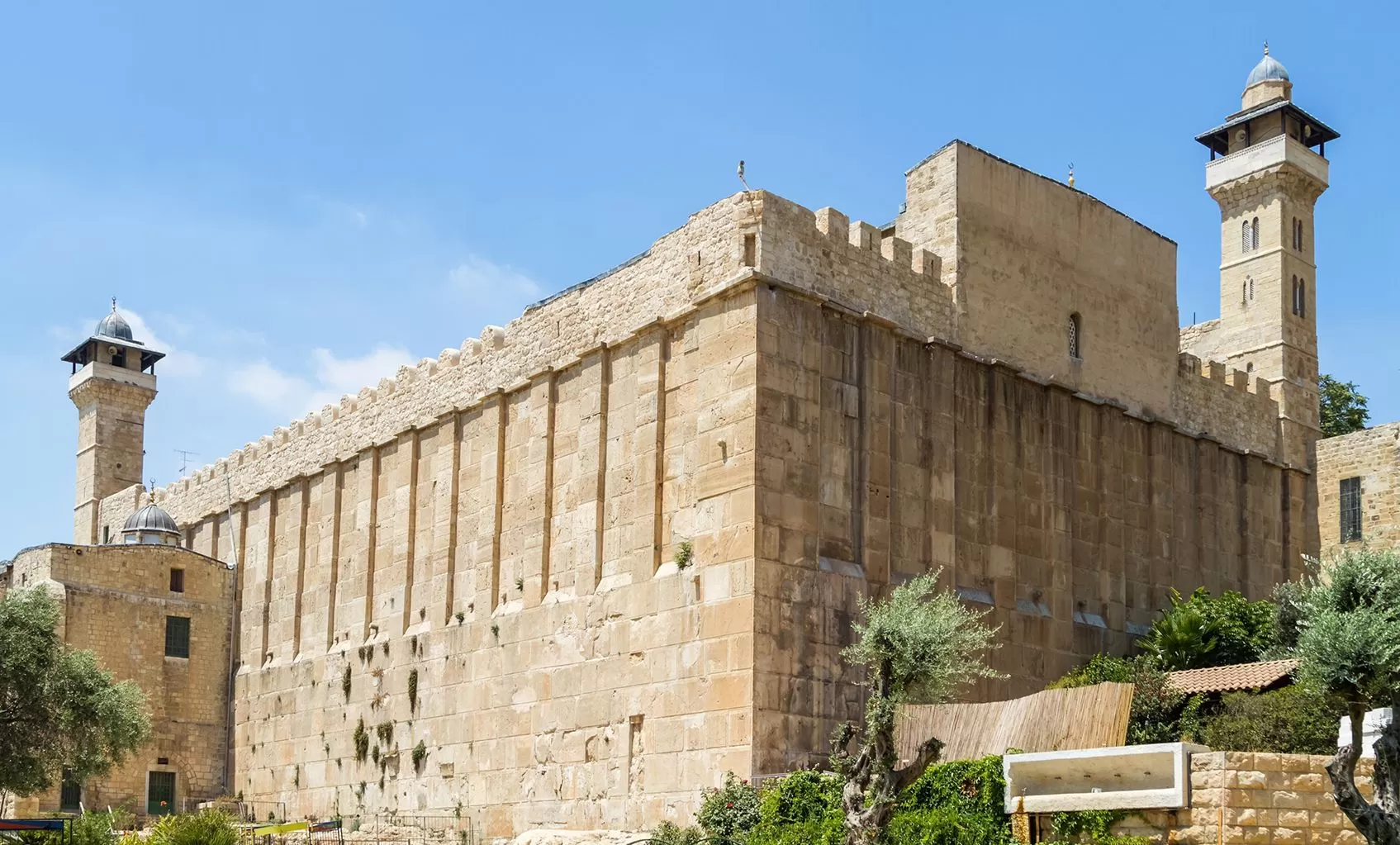 Exterior view of the Cave of the Patriarchs and Matriarchs (Cave of Machpelah) in Hebron
Hebron is one of the oldest cities in the Levant and is sacred to Muslims, Jews, and Christians. The Cave of the Patriarchs and Matriarchs (Cave of Machpelah) is a burial site revered by all three faiths, containing tombs associated with Abraham, Isaac, Jacob, Sarah, and others. The site is housed within a structure used as both a synagogue and a mosque.
Observations at the site included Jewish worshippers in the synagogue section and Muslim worshippers in the Ibrahimi Mosque section. During the Islamic call to prayer (adhan), access to certain areas is restricted, and Jewish worshippers are held inside until it concludes. Israeli soldiers are present in and around the site for security.
A local resident was reported as expressing the hope for peace, noting that both Jews and Muslims trace their ancestry back to Abraham.
Diversity Within Israel
The journalist noted the presence of various communities within Israel. This includes approximately 1.2 million Arab Israelis, as well as Bedouins and Druze populations, who are reported to have equal rights and some of whom have lost family members in attacks.
The visit provided a view of the ongoing impact of the October 7 attacks and the subsequent conflict across different regions of Israel, highlighting the human cost, the complexities of shared holy sites, and the diverse populations living within the country.
Explore related articles to learn more about the history of the Israeli-Palestinian conflict, the Abraham Accords, and the aftermath of the October 7 attacks.