Russia is constructing power lines to integrate the occupied Zaporizhzhia Nuclear Power Plant in Ukraine into its own electricity grid, a move protested by Kyiv as an effort to solidify annexation and control energy resources. The United Nations and the International Atomic Energy Agency (IAEA) have stated there is no immediate nuclear safety threat from this action, but the IAEA notes clear preparations to connect the plant to the Russian grid, not indications of plans to restart the facility itself. This development highlights the ongoing weaponization of energy infrastructure in the conflict.
Contents
- Situation at Zaporizhzhia Nuclear Plant
- Russia’s Grid Connection Plan
- International Oversight and Safety Concerns
- Broader Energy and Geopolitical Implications
- Other Global Energy & Geopolitical Updates
- China Challenges Russia in Kazakhstan Nuclear Sector
- US Court Ruling Impacts China Tariffs
- Potential Israel-Hamas Ceasefire Proposal
- Syria Secures Major Energy Investment from Qatar
- Saudi Arabia and Kuwait Announce Oil Discovery
- Bacalhau Field Development in Brazil Advances
- Sinopec Launches Hydrogen Energy VC Fund
- BP Reviews Castrol Business Sale
- US Approves New Small Modular Reactor Design
- US Cancels Sunnova Clean Energy Loan
- Conclusion
Situation at Zaporizhzhia Nuclear Plant
Located in southeastern Ukraine, the Zaporizhzhia Nuclear Power Plant is Europe’s largest atomic energy facility. Since being occupied by Russian forces early in the conflict, its operational status has been uncertain and a subject of international concern. Currently, all six of its reactors are shut down, primarily due to safety concerns and damage to external power lines caused by fighting.
Russia’s Grid Connection Plan
Ukrainian officials report that Russia is actively building power transmission lines aimed at connecting the plant to the Russian national grid. Kyiv views this construction as a clear attempt by Moscow to seize Ukrainian energy assets permanently and to integrate the occupied territory’s infrastructure into Russia’s. They describe it as “stealing Kyiv’s power.”
Russia could potentially justify the construction as necessary to provide reliable external power supply to the plant, which is crucial for cooling nuclear fuel and maintaining safety systems even when reactors are shut down. However, Ukraine and many international observers interpret the action as a political and economic maneuver linked to annexation claims.
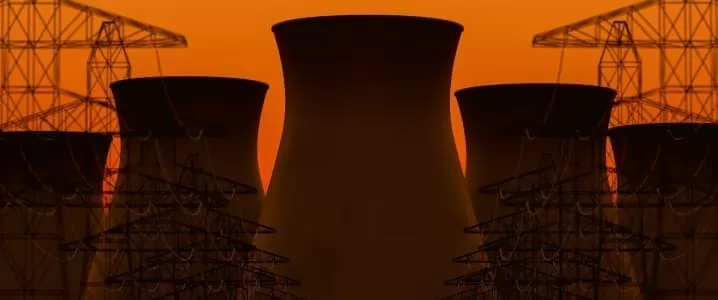 Aerial view of a large nuclear power plant complex in Ukraine
International Oversight and Safety Concerns
The United Nations has consistently called for demilitarization of the area around the plant to reduce risks. The IAEA, which has a presence at the site, monitors the situation closely. The agency has reported seeing preparations for connecting the plant to the Russian grid but has stated it has seen no indications that Russia is preparing to restart the nuclear reactors themselves. Both the UN and IAEA have reassured that, as of now, there is no immediate nuclear threat from the situation, though the security of the plant remains precarious due to the conflict.
Broader Energy and Geopolitical Implications
The move to connect the Zaporizhzhia plant to the Russian grid is seen within the broader context of energy infrastructure becoming a key point of contention and weaponization in the ongoing conflict and geopolitical shifts. Control over major energy assets provides leverage and resources.
Other Global Energy & Geopolitical Updates
Beyond the situation in Ukraine, several other significant developments are shaping the global energy and geopolitical landscape.
China Challenges Russia in Kazakhstan Nuclear Sector
China is reportedly making aggressive moves to secure the contract for Kazakhstan’s first nuclear power plant, potentially displacing Russia’s long-favored state-owned Rosatom. Beijing is leveraging financial offers and infrastructure development diplomacy as it expands its influence in Central Asia, a traditional sphere of Russian dominance now facing economic pressures.
US Court Ruling Impacts China Tariffs
A recent US court ruling that declared Trump-era tariffs on certain goods from China unlawful has introduced uncertainty into US trade policy. The current administration is evaluating its response, with pressure from industries seeking tariff relief but no immediate changes announced. This development could lead to further legal challenges and impacts global supply chains.
Potential Israel-Hamas Ceasefire Proposal
Reports indicate a US-brokered proposal for a ceasefire between Israel and Hamas is nearing finalization. The alleged terms involve a 60-day truce, exchange of Israeli hostages for Palestinian prisoners, and facilitation of humanitarian aid into Gaza, where conditions remain critical. Both sides have reportedly shown cautious responses to the framework.
Syria Secures Major Energy Investment from Qatar
Syria has signed a $7 billion agreement with a Qatari-led consortium for major energy infrastructure projects, including gas turbine and solar plants totaling 5,000 MW capacity. This marks the largest energy investment in Syria since the civil war began and reflects a shift in Qatar’s strategic engagement from supporting opposition groups to partnering with the current government in reconstruction efforts.
Saudi Arabia and Kuwait Announce Oil Discovery
Saudi Arabia and Kuwait have jointly announced a “highly significant” oil discovery within their shared Neutral Zone. While specific reserve figures were not disclosed, the find is expected to boost future production capacity from the area and highlights ongoing exploration in the region.
Bacalhau Field Development in Brazil Advances
Portugal’s Galp Energia, in partnership with Equinor and ExxonMobil, is progressing with the development of the Bacalhau field in Brazil’s Santos Basin, estimated to hold over 1 billion barrels. A key floating production, storage, and offloading (FPSO) vessel has arrived, with first oil expected in the third quarter of 2025.
Sinopec Launches Hydrogen Energy VC Fund
China’s Sinopec has established a 5 billion yuan ($690 million) venture capital fund dedicated to investments across the hydrogen energy value chain, focusing on early-stage technologies and equipment. This represents China’s largest such fund for hydrogen.
BP Reviews Castrol Business Sale
Energy major BP is reportedly conducting a strategic review of its Castrol lubricants business, which could potentially lead to a sale valued between $8 billion and $10 billion. This move aligns with BP’s wider strategy to divest assets to streamline operations and reduce debt.
US Approves New Small Modular Reactor Design
The U.S. Nuclear Regulatory Commission has approved NuScale Power’s updated 77 MW small modular reactor (SMR) design. This approval is seen as a step towards potential SMR deployment later this decade, with growing interest from industries like data centers facing increasing power demands.
US Cancels Sunnova Clean Energy Loan
The US Department of Energy has canceled a $2.92 billion loan guarantee intended for Sunnova Energy’s Project Hestia, which aimed to finance rooftop solar systems, including for low-income households. This decision follows legislative moves proposing cuts to clean energy subsidies.
Conclusion
The situation at the Zaporizhzhia Nuclear Power Plant remains a critical point of international attention, highlighting the complex interplay of conflict, energy security, and sovereignty. Russia’s move to connect the facility to its grid underscores the strategic importance of the plant beyond immediate safety concerns, framing it as part of a broader effort to control Ukrainian infrastructure. Meanwhile, global energy and geopolitical dynamics continue to evolve rapidly, with significant developments in nuclear energy competition, trade policy, regional conflicts, infrastructure investment, and fossil fuel exploration.
Stay informed on these and other developing global events by exploring related reports.