Spain has rejected a proposal for NATO member states to commit to spending 5% of their gross domestic product (GDP) on defence, calling the target “unreasonable” ahead of the alliance’s summit next week. The decision by Prime Minister Pedro Sánchez, communicated in a letter to NATO Secretary General Mark Rutte, introduces uncertainty into discussions on future defence spending among allies.
Contents
Key Takeaways:
- Spain opposes NATO’s proposed 5% GDP defence spending target.
- Prime Minister Sánchez cited the target as unreasonable and incompatible with Spain’s welfare state.
- Spain is currently one of NATO’s lowest defence spenders.
- The decision could impact the upcoming NATO summit and discussions on collective defence spending goals.
Spain’s Position on Defence Spending
In a letter sent on Thursday, Spanish Prime Minister Pedro Sánchez informed NATO Secretary General Mark Rutte that Spain “cannot commit to a specific spending target in terms of GDP” at the upcoming summit in The Hague. Sánchez stated that committing to 5% would be “unreasonable” and “counterproductive” for Spain.
He argued that such a commitment would divert Spain from “optimal spending” and hinder the European Union’s ongoing efforts to strengthen its own security and defence capabilities. Spain believes meeting the 5% target would require cuts to public services and other spending areas, including green transition initiatives, making it incompatible with the country’s “welfare state and world vision.”
Spain was the lowest spender among NATO’s 32 members last year, dedicating less than 2% of its GDP to defence. While the government had previously committed in April to increase defence spending to meet NATO’s former target of 2% of GDP in 2025, Sánchez now suggests Spain’s military needs estimate spending closer to 2.1% of GDP.
Sánchez proposed a “more flexible formula” for any new spending target, suggesting it should be optional or exclude Spain. Despite this stance on the new target, Spain affirmed its full commitment to the NATO alliance.
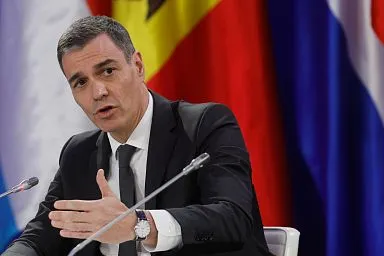 Spanish Prime Minister Pedro Sanchez speaks at a press conference, representing Spain's position on defence
Context of the Proposed NATO Target
The proposal for a 5% defence spending target emerges from discussions among NATO allies following Russia’s full-scale invasion of Ukraine in 2022. While allies initially agreed to spend 2% of GDP on military expenditure, alliance plans for defending Europe and North America reportedly require investments of at least 3%.
The new 5% proposal is understood to potentially break down into a 3.5% target for core defence spending (equipment like tanks, warplanes, air defence) and 1.5% for improving military mobility and societal resilience (infrastructure like roads, ports, airfields, civil preparedness).
US President Donald Trump is expected to attend the upcoming summit and has previously pushed for higher defence spending from allies. Most allies are reportedly on track or aiming to endorse the new target, including Sweden and the Netherlands. Poland and the Baltic states (Estonia, Latvia, Lithuania) have publicly committed to 5%.
However, Spain is not alone among NATO’s lower spenders; Belgium, Canada, and Italy may also face challenges in significantly increasing their security budgets to meet a 5% target. A key question remains the timeframe given to countries to reach any agreed-upon new goal.
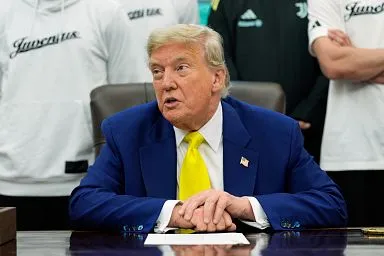 Former US President Donald Trump, who is expected to attend the NATO summit discussing defence spending
Domestic Factors in Spain
Prime Minister Sánchez is facing domestic political pressure, partly due to corruption scandals involving individuals close to him. This pressure could influence his stance on potentially unpopular measures like increasing military spending, which has met resistance from some of his coalition partners on the left. When Sánchez announced plans to reach the 2% target in April, it reportedly caused friction within the government.
Impact on the NATO Summit
Any agreement on a new defence spending guideline requires consensus among all 32 NATO member states. Spain’s public rejection risks creating a last-minute challenge for the upcoming summit in The Hague and could have lasting repercussions for alliance spending commitments. Discussions among allies regarding the new defence spending plan are ongoing.
Spain’s decision highlights the differing national priorities and capacities within NATO as the alliance seeks to strengthen its collective defence posture in response to evolving security challenges.
For more context on NATO’s defence spending discussions and member contributions, explore related articles.