Following a phone call with Russian President Vladimir Putin, former U.S. President Donald Trump reportedly acknowledged that the Kremlin does not seek peace in Ukraine, believing Russia is winning the conflict. This assessment, shared during a subsequent call with European leaders, contrasts with some of Trump’s previous statements and highlights differing views on the ongoing war.
Contents
This development comes as Russia continues its military campaign in Ukraine, with President Putin publicly asserting confidence in Russia’s position, despite analysis suggesting slow and costly territorial gains.
Trump’s Reported Shift
According to a report by the Wall Street Journal on Wednesday, Mr. Trump made his admission about Putin’s position during a call with European leaders on Monday. This marked the first time the former U.S. President reportedly acknowledged the Russian leader’s apparent belief that Russia is prevailing and therefore not interested in peace negotiations on terms favorable to Ukraine.
The report also indicated that Mr. Trump reportedly retreated from earlier suggestions that he would consider imposing further sanctions on Russia if it did not pursue peace.
Putin’s Assertions and Territorial Ambitions
During a visit to Russia’s Kursk region on Tuesday, President Putin reiterated his view that Russia was winning the war. He reportedly outlined plans to potentially seize and annex Ukraine’s Sumy region, adjacent to Kursk.
However, analysis by the Institute for the Study of War (ISW) on Wednesday assessed that such a move to capture and annex Sumy Oblast is currently unachievable for Russian forces.
At talks between Russian and Ukrainian representatives in Istanbul on May 16, Russia’s continued demands included Ukraine ceding full control over the four partially occupied regions – Luhansk, Donetsk, Zaporizhzhia, and Kherson – which Russia unilaterally claimed to annex in 2022. Russian officials have maintained their objective of securing these territories.
Military Reality vs. Official Rhetoric
Despite the official confidence expressed by President Putin and other Russian officials, a Bloomberg report on Wednesday, citing DeepState analysis, suggested that battlefield statistics do not fully support this optimism. The report indicated that, despite numerical advantages, Russian forces remain far from achieving Moscow’s stated territorial goals in Ukraine.
Since January, Russian forces have reportedly gained control over a relatively small amount of Ukrainian territory, estimated at around 0.15% of the country. Data cited shows a significant slowdown in the pace of advance compared to the end of 2024, decreasing from approximately 125 square kilometers per week to 41 square kilometers per week.
Bloomberg sources, reportedly close to Russia’s Ministry of Defense, suggested that even within the Russian military, there are doubts about the feasibility of the Kremlin’s set goals. These sources reportedly described recent successes as only “minor tactical success” despite leadership claims. Ukraine’s extensive use of multi-level defenses and drones is viewed by Western military analysts as contributing to slow Russian advances and significant personnel and equipment losses.
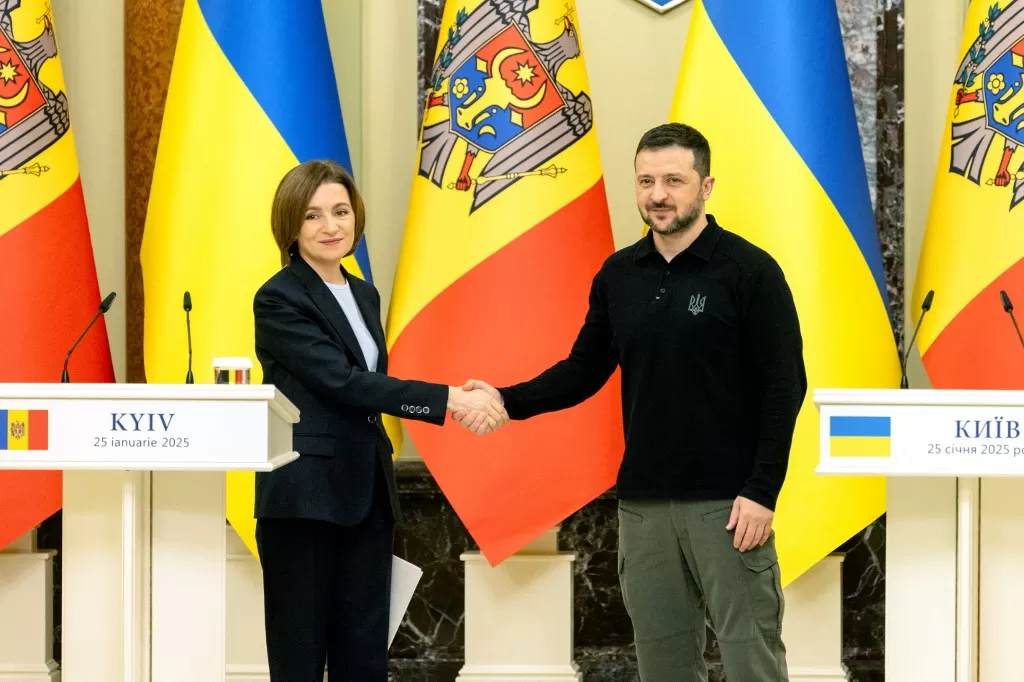 Ukrainian President Volodymyr Zelensky meets with Moldovan Prime Minister Maia Sandu
During the May 16 Istanbul talks, the head of Russia’s delegation, Vladimir Medinsky, not only demanded Ukraine withdraw troops from the territories Russia claims but also stated that Russia was prepared to “fight endlessly” to achieve its objectives.
According to ISW analysis, Russia currently occupies less than 20% of Ukraine’s internationally recognized territory, including Crimea and parts of the Donbas regions held since 2014. This figure is notably less than the nearly 30% captured in the initial months of the 2022 full-scale invasion.
This limited territorial gain has reportedly come at a significant cost. The ISW estimates Russia has suffered over 400,000 casualties (killed and wounded). In the last three months, Russia is estimated to have achieved over half of its territorial gains for the year at the cost of more than 125,000 troops.
Conclusion
Reports indicate a potential shift in former U.S. President Trump’s public assessment of Vladimir Putin’s stance on the Ukraine war, acknowledging the Russian leader’s belief in a path to victory and lack of interest in peace talks. Simultaneously, while Russian officials maintain confidence and outline further territorial ambitions, analysis suggests their military advances are slow and costly compared to the scale of the conflict. This contrast between political rhetoric and battlefield reality continues to define the trajectory of the war.
Explore more reporting on the ongoing conflict in Ukraine and international diplomatic efforts.