Washington and Beijing have reached a trade agreement designed to facilitate access for American firms to rare earth minerals and magnets sourced from China. These materials are crucial for manufacturing and microchip production. U.S. Treasury Secretary Scott Bessent confirmed the deal on Friday, stating it follows previous high-level discussions. The agreement aims to de-escalate tensions stemming from earlier trade disputes, which had impacted the flow of these critical resources.
Contents
Agreement Details
What the Deal Entails
The core of the agreement involves making it easier for U.S. companies to obtain rare earth minerals and magnets from China. According to U.S. Treasury Secretary Scott Bessent, these materials are essential for various American industries and manufacturing processes, forming a significant part of the industrial base. The deal follows a period where the flow of these resources had slowed.
Official Confirmations
U.S. Treasury Secretary Scott Bessent announced the agreement on Friday, stating confidently, “I am confident now that we, as agreed, the magnets will flow.” He added that the agreement includes tariffs coming down and rare earth magnets starting to flow back to the U.S. U.S. Commerce Secretary Howard Lutnick separately confirmed the deal was signed earlier in the week. China’s Commerce Ministry also acknowledged the framework, stating that China would review and approve eligible export applications for controlled items in accordance with the law, while the U.S. would lift a series of restrictive measures it had imposed on China.
Background and Negotiation Process
The agreement follows President Donald Trump’s earlier announcement two weeks prior regarding a pact with China aimed at easing the export of magnets and rare earth minerals. This earlier pact paved the way for subsequent trade discussions. The latest agreement stems from talks that included a phone call between Trump and Chinese President Xi Jinping, followed by team meetings in London where the details were ironed out. Initial discussions in Geneva in early May had led both countries to postpone significant tariff hikes.
Context of US-China Trade Relations
Previous Tensions and Retaliation
The trade agreement comes after a period of heightened tension between the two global powers. China had previously implemented measures to slow the export of rare earth minerals and magnets in response to steep import tariffs placed on Chinese goods by the Trump administration. The U.S. had also suspended some sales to China of critical technologies, such as components for jet engines and semiconductors, and considered revoking visas for Chinese nationals on U.S. college campuses.
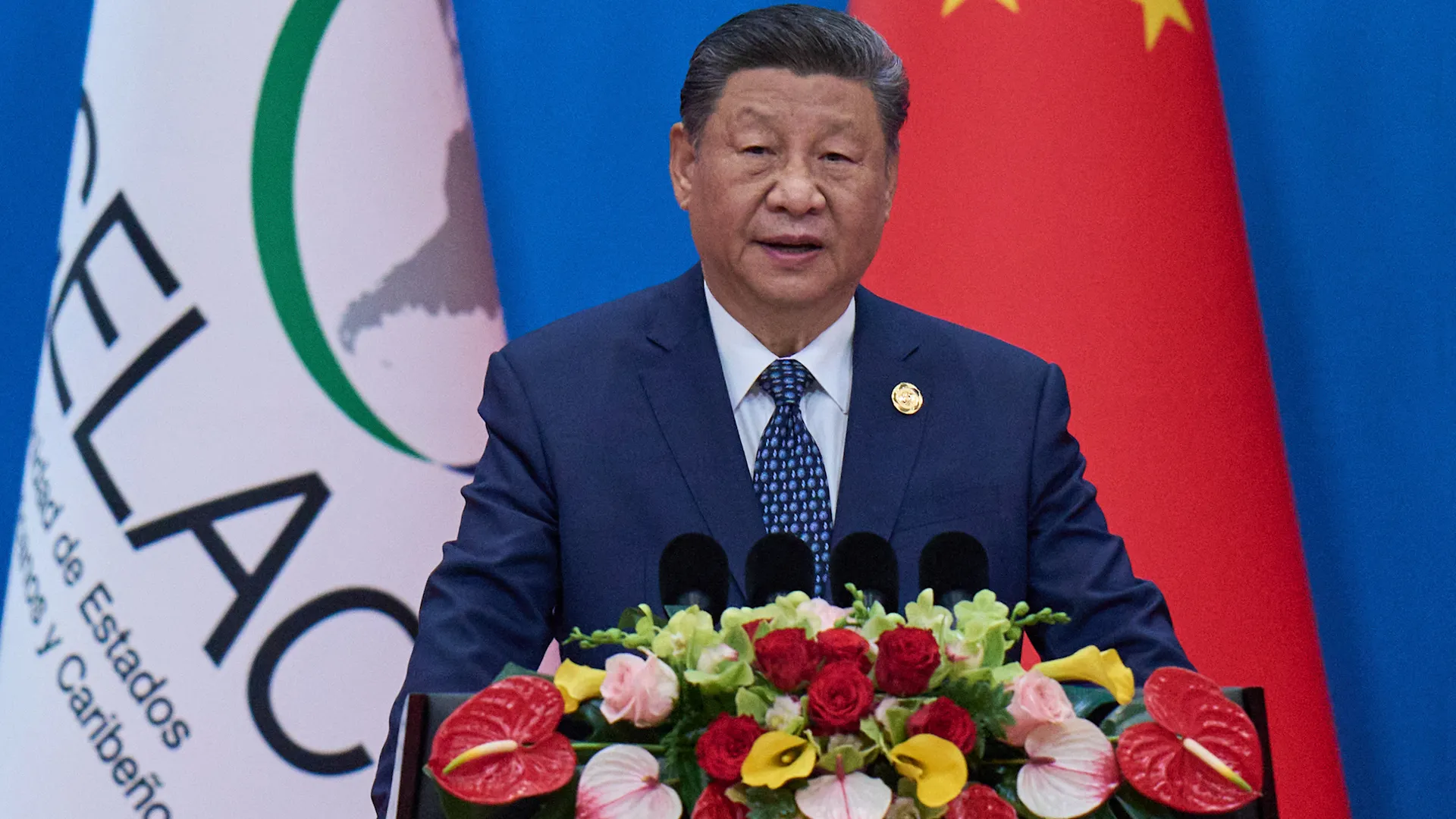 Chinese President Xi Jinping, focus of analysis on the US-China trade war.
De-escalation and Remaining Issues
U.S. Treasury Secretary Scott Bessent described the latest development regarding critical mineral exports as a “de-escalation.” However, the agreement does not remove China’s permitting requirement on rare earths but allows flexibility in the approval process. This flexibility gives China discretion in how quickly permits are issued, potentially influenced by the overall state of Washington and Beijing relations, such as U.S. arms sales to Taiwan, according to Sun Yun, director of the China program at the Stimson Center think tank. While some tariffs have been scaled back since the May talks, certain higher tariffs, including those related to the trade in fentanyl and duties on aluminum and steel, remain in place. China has also taken steps regarding fentanyl precursor chemicals, designating two more substances for stricter regulation, an area previously targeted by U.S. tariffs.
Economic Impact and Outlook
Impact on Both Economies
The ongoing trade tensions have impacted both the U.S. and Chinese economies. The U.S. economy saw a 0.5% annual contraction in the first quarter, partly attributed to a surge in imports as companies purchased goods before potential tariffs. In China, factory profits declined more than 9% year-on-year in May, with automakers particularly affected, and were down over 1% in the first five months of the year.
 Analyst discussing implications of the US-China trade agreement for the Canadian economy.
Future Trade Deals
Looking ahead, U.S. officials, including Commerce Secretary Howard Lutnick, have indicated expectations for reaching trade agreements with other countries, such as India. Lutnick stated, “We’re going to have deal after deal after deal.”
The recent US-China agreement marks a step toward easing restrictions on the export of critical rare earth minerals and magnets, essential for U.S. industries. While seen as a de-escalation in a specific area, broader trade issues and geopolitical factors continue to influence the relationship.
Explore related stories for more context on the ongoing trade dynamics between the U.S. and its global partners.