The United States government announced on May 28th, through the State Department, new measures to revoke visas for certain Chinese students and increase scrutiny on future applicants, citing concerns about connections to the Chinese Communist Party and sensitive fields of study. This policy shift impacts Chinese nationals seeking to study in the US and reflects growing geopolitical tensions between the two countries.
Contents
The Policy Change
The US State Department, in collaboration with the Department of Homeland Security, stated its intention to “aggressively revoke visas” for Chinese students, particularly those linked to the Chinese Communist Party (CCP) or pursuing studies in critical technological and scientific areas. Additionally, the criteria for future visa applications from mainland China and Hong Kong are being revised to enhance scrutiny.
Stated Reasons and Broader Context
The stated rationale for these new measures includes concerns about national security and the potential for knowledge transfer deemed detrimental to US interests. This action occurs within a broader context of increased economic and political competition between the United States and China. It aligns with certain policy directions seen in recent years, including efforts to impose sanctions on technology sectors and intensify scrutiny of Chinese influence within the US.
Historical Background
Concerns regarding individuals of Chinese descent in the United States and potential links to foreign governments have historical precedents. During periods of heightened tension, such as the McCarthy era’s “Red Scare” linked partly to the “loss of China,” individuals were scrutinized and sometimes persecuted based on perceived connections. Cases involving Chinese-American scientists facing espionage accusations, often later exonerated, are part of this historical pattern. This current policy is viewed by some observers as the latest manifestation of historical anxieties related to perceived foreign threats.
Impact on Universities and Students
The new visa rules pose challenges for both US educational institutions and Chinese students. US universities rely significantly on international student enrollment, including substantial numbers from China, for tuition revenue and academic diversity. Stricter visa policies and revocations can lead to decreased enrollment, impacting university budgets and programs subsidized by international student fees.
For Chinese students, the policy creates uncertainty, potentially disrupting their educational plans and career paths. There have been recent public incidents that highlight changing perceptions and scrutiny surrounding Chinese students at elite US universities, adding complexity to the situation.
 Reports suggest that the number of Chinese international students in the US had already declined by 25% from its peak in 2019 before this latest policy was announced. Factors cited include the rising cost of US education, increasing opportunities within China, and evolving perceptions of US universities among some Chinese employers and families, who may prioritize rigor demonstrated by performance on exams like China’s gaokao.
Comparing US and Chinese Universities
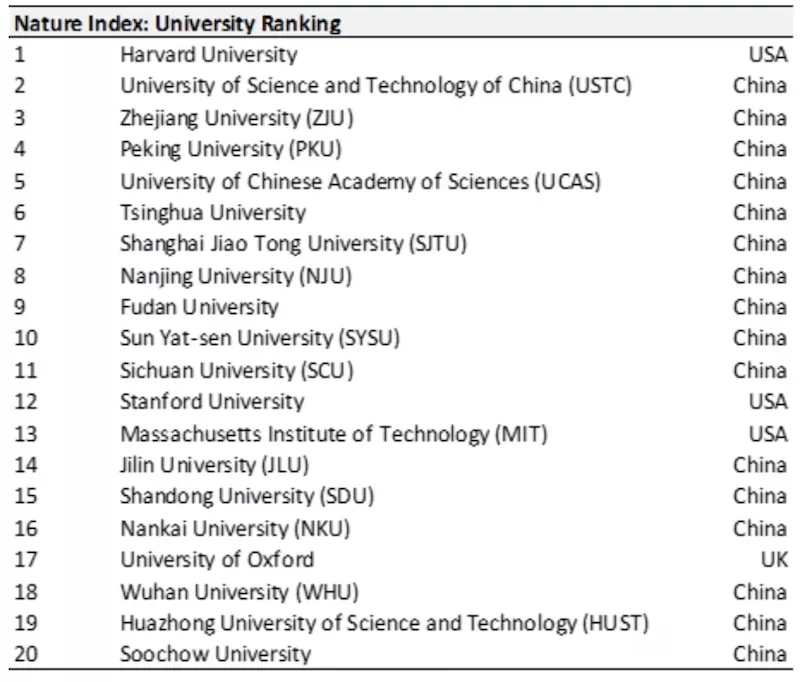
Global university rankings offer varying perspectives on the academic landscape in the US and China. The Nature Index, which tracks research output in leading scientific journals, shows a significant presence of Chinese universities among the top institutions globally.
In contrast, rankings like the Times Higher Education list, which incorporate a broader range of factors including subjective measures like “reputation,” continue to show a strong presence of US universities at the top.
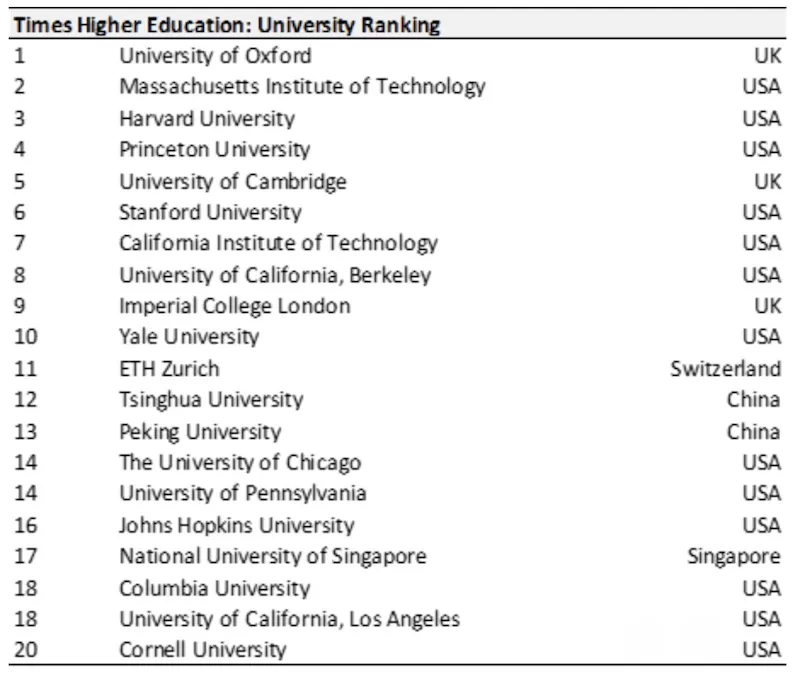
Some analysis suggests that research output is a leading indicator, and the dominance of Chinese institutions in metrics like the Nature Index may indicate a future shift in global scientific leadership as research strength translates into overall academic standing over time.
Future Implications
The tightening of US visa policies for Chinese students could have long-term implications for US scientific research and innovation. Limiting access for international graduate students, historically a key component of the US research pipeline, could potentially slow scientific progress in critical fields. As China’s research output continues to grow, access to cutting-edge research and collaboration may increasingly shift towards institutions within China.
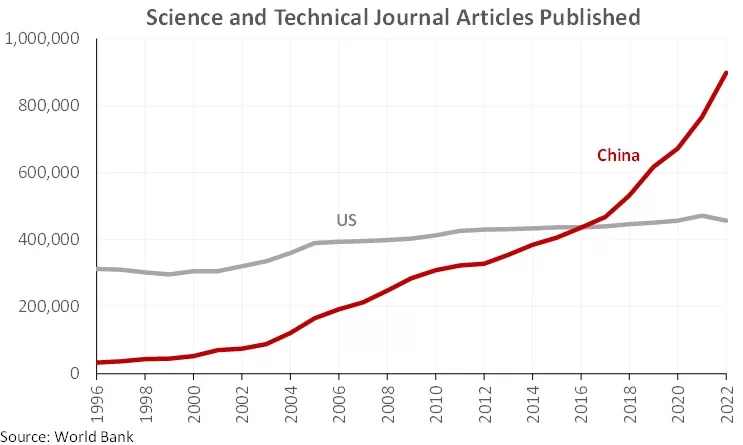 Trend lines suggest China is rapidly increasing its share of global research output. Future scientists seeking to be at the forefront of certain fields may find it increasingly necessary to engage with Chinese academic institutions.
Conclusion
The recent US decision to tighten visa restrictions for Chinese students is a significant development driven by stated security concerns and broader geopolitical tensions. This action has historical parallels and impacts both US universities and the academic trajectories of Chinese students. As global research output shifts, the long-term consequences for the US role in international science and education remain a key area of observation.
Explore related coverage on US-China relations and the global academic landscape on Asia Times:
- America is in Asia, but not of Asia
- Open letter to Chinese American high school students