The U.S. National Guard was deployed to downtown Los Angeles on Sunday, June 8, 2025, on orders from President Donald Trump, leading to confrontations with protesters gathered outside a federal complex where tear gas was reportedly fired. This deployment followed several days of protests against federal immigration enforcement operations in the city and surrounding areas. Key takeaways include the federal government’s direct intervention overriding local objections, the use of force during protests, and the heightened political tensions surrounding immigration policy.
Contents
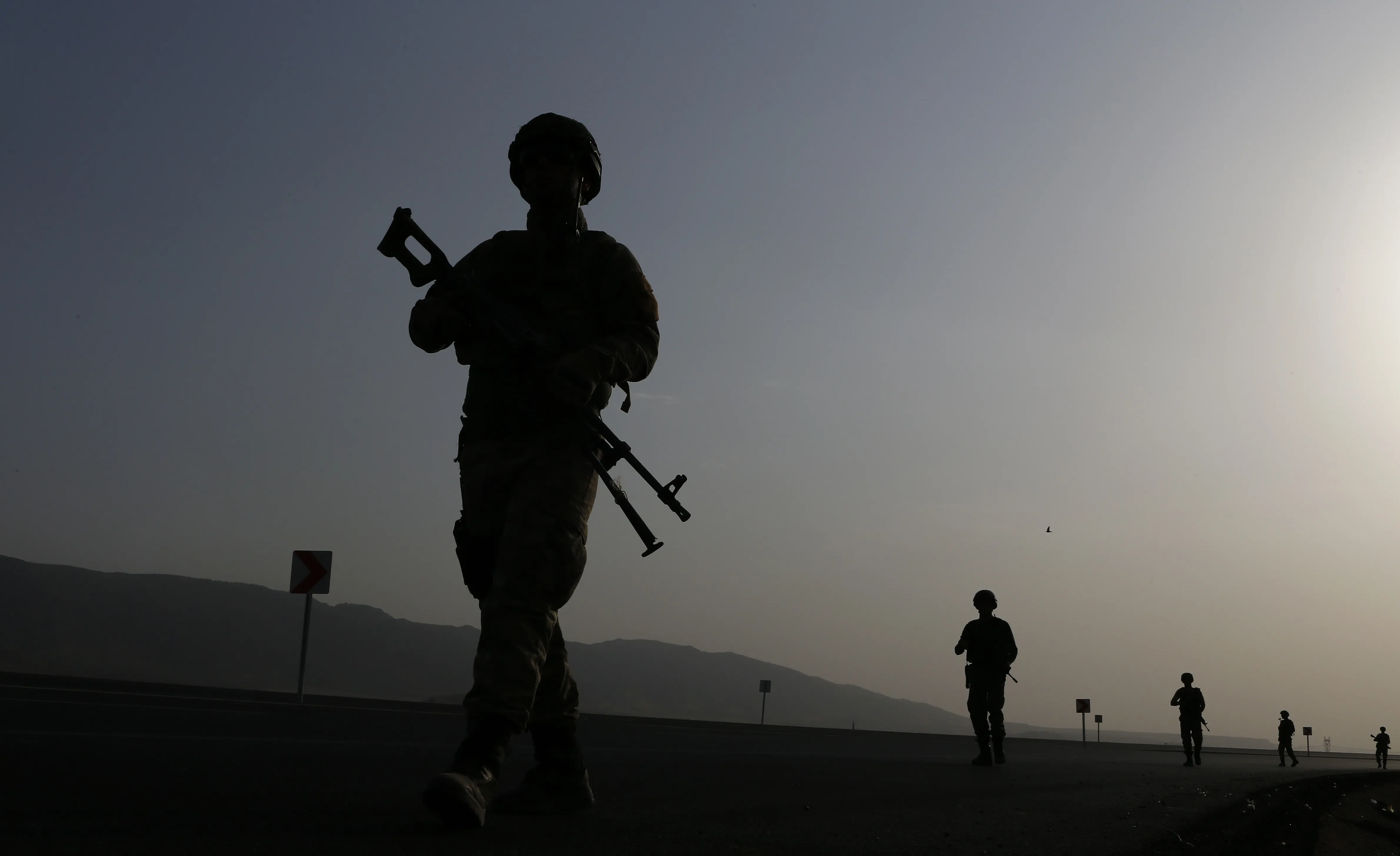
Members of the National Guard faced off with demonstrators near the Metropolitan Detention Center in downtown Los Angeles. Protesters reportedly exchanged shouted insults with the Guard members, who stood in a line behind riot shields. There were no immediate reports of arrests during this specific confrontation. Other law enforcement agencies were present, and the source of the tear gas was not immediately confirmed. Approximately 300 National Guard troops arrived in the city early Sunday.
Deployment Details and Background
The arrival of the National Guard followed two days of protests. These demonstrations began in downtown Los Angeles on Friday and expanded on Saturday to areas like Paramount and Compton, heavily Latino communities south of the city.
In Paramount on Saturday, federal agents established a staging area near a Home Depot. Demonstrators attempted to impede border patrol vehicles, with some throwing objects like rocks and concrete. Federal agents in riot gear responded by deploying tear gas, flash-bang explosives, and pepper balls against the crowd.
Tensions had risen due to a series of immigration enforcement sweeps conducted by federal authorities throughout the week. These operations had resulted in over 100 immigrant arrests in the Los Angeles area. A notable incident included the arrest of a prominent union leader during a protest, who was accused of obstructing law enforcement activities. For more context on federal immigration policies, explore related reporting.
Political Reactions and Authority
The deployment of the National Guard occurred despite objections from California Governor Gavin Newsom. Newsom publicly criticized the decision, calling it a “complete overreaction” intended to create a show of force.
The scale of these protests in Los Angeles has been smaller than other major demonstrations, such as the widespread 2020 protests against police brutality, which led Governor Newsom to request National Guard assistance.
President Trump defended his order, framing it as a necessary response to what he described as the failure of Governor Newsom and Los Angeles Mayor Karen Bass to control the unrest. In a directive issued Saturday, President Trump invoked a legal provision that allows the president to deploy federal service members in situations involving “a rebellion or danger of a rebellion against the authority of the government of the United States.” He stated he had authorized the deployment of 2,000 National Guard members.
 A protester faces a line of National Guard troops in downtown Los Angeles near the Metropolitan Detention Center
Speaking to reporters Sunday, Trump described participants in Los Angeles as “violent people” and stated they would face consequences, promising “very strong law and order.” When asked about potentially sending U.S. troops, he indicated, “We’re going to have troops everywhere. We’re not going to let this happen to our country. We’re not going to let our country be torn apart.”
Trump also suggested that California officials hindering deportations could face legal charges, referencing a recent case where a Wisconsin judge was arrested for allegedly assisting someone evade immigration authorities.
There was some confusion regarding the timing of the National Guard’s arrival. Late Saturday night, President Trump posted online congratulating the National Guard, but Mayor Bass stated less than an hour later that troops had not yet arrived in the city.
Official Statements and Further Threats
Assistant Homeland Security Secretary Tricia McLaughlin issued a statement Sunday criticizing California politicians and protesters. She accused them of “defending heinous illegal alien criminals” at the expense of public safety and suggested they should thank Immigration and Customs Enforcement (ICE) officers.
The deployed troops reportedly included members of the California Army National Guard’s 79th Infantry Brigade Combat Team. Signifying a potentially escalating federal response, Defense Secretary Pete Hegseth also reportedly threatened to deploy active-duty U.S. Marines to the region if the violence continued.
The presidential order drew sharp reactions from politicians. Vermont Senator Bernie Sanders viewed the move as indicative of “a president moving this country rapidly into authoritarianism” and “usurping the powers of the United States Congress.” In contrast, House Speaker Mike Johnson, a Republican ally of Trump, supported the president’s actions, blaming Governor Newsom for failing to manage the situation.
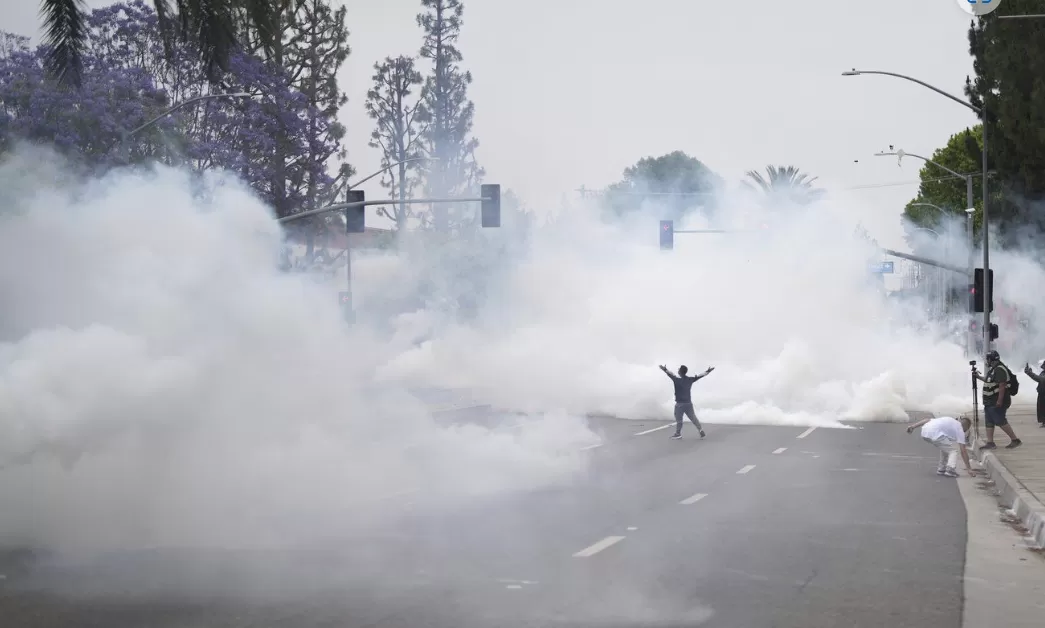 Smoke rises as protesters confront federal Border Patrol personnel during a demonstration in Paramount, Los Angeles
Historically, deploying the National Guard without a governor’s permission is rare. According to the Brennan Center for Justice, the last instance before this was in 1965 when President Lyndon B. Johnson sent troops to protect a civil rights march in Alabama.
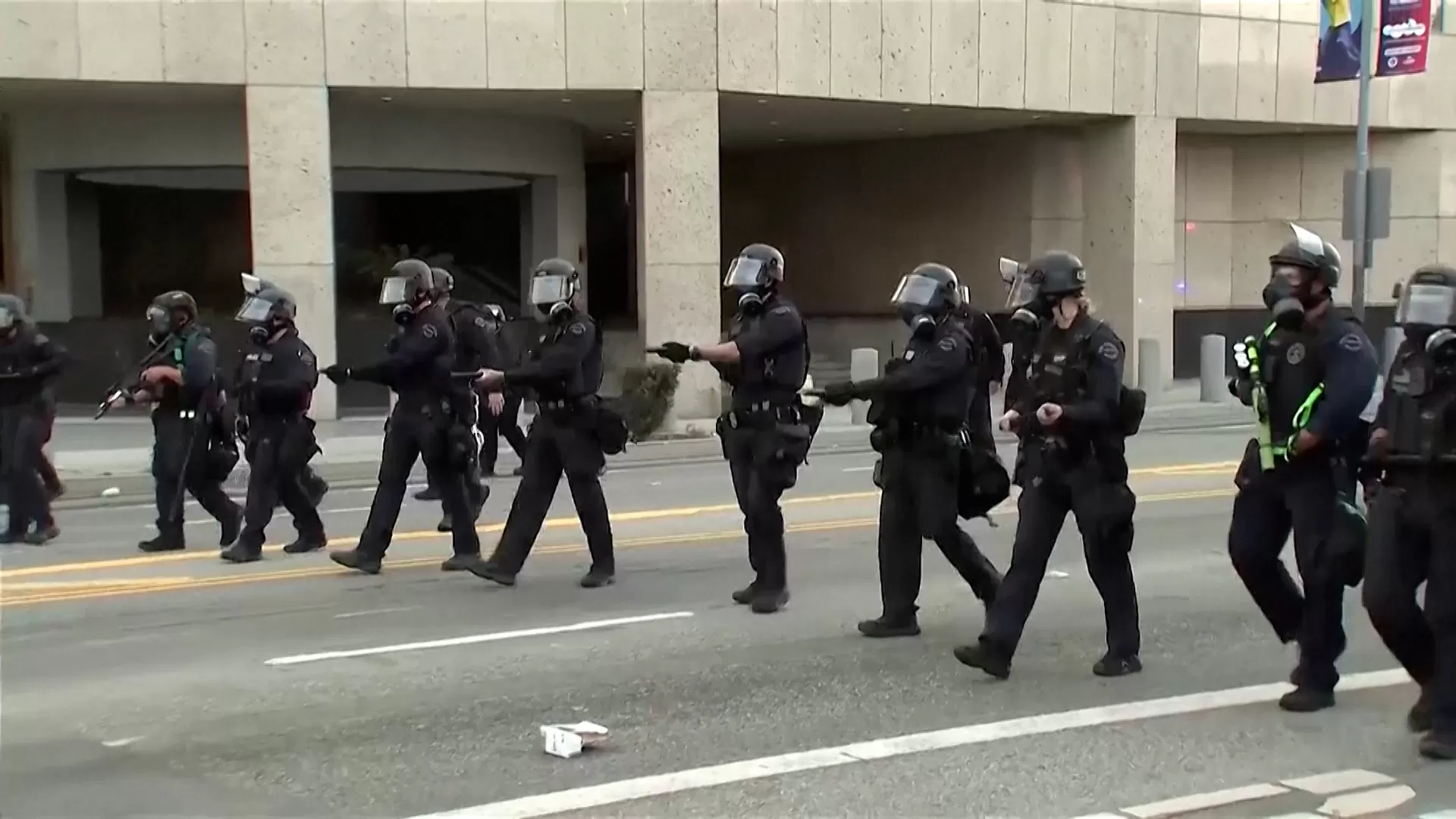 Protesters gather during a rally in Los Angeles following immigration enforcement raids
The situation in Los Angeles highlights ongoing tensions between federal immigration enforcement actions, local and state authorities, and public protests. The deployment of the National Guard under presidential authority marks a significant escalation in the federal response to civil unrest related to immigration policy.
To understand the broader context, explore more stories on federal-state relations, U.S. immigration enforcement, and the use of federal forces in domestic situations.