The US Supreme Court on June 23, 2025, issued an emergency order allowing the Trump administration to deport immigrants to countries they were not born in, known as “third countries,” without immediate opportunity for them to challenge the destination. This 6-3 decision overturns a lower court ruling that had required notice and challenge time, despite concerns about the safety and stability of potential destination countries like South Sudan and Libya.
Contents
- Supreme Court Issues Emergency Ruling
- Dissenting Justices Raise Concerns
- Background: The Challenge and Lower Court Blocks
- Judge Murphy’s Previous Orders
- Destination Concerns: South Sudan and Libya
- South Sudan’s Instability and Dangers
- Libya’s Unstable Environment and Risks for Migrants
- Looking Ahead: Seeking More Destination Countries
- Conclusion: Immediate Impact and Future Questions
Supreme Court Issues Emergency Ruling
The Supreme Court’s 6-3 decision, delivered in a brief emergency order on June 23, grants the Trump administration temporary permission to carry out deportations of immigrants to countries other than their birth country. The order does not include a detailed legal justification for the ruling.
Dissenting Justices Raise Concerns
The court’s three liberal justices, Sonia Sotomayor, Elena Kagan, and Ketanji Brown Jackson, dissented from the decision. Justice Sotomayor wrote in a 19-page dissent, joined by the other two liberal justices, that the court seemed to find the potential suffering of deportees in dangerous locations “more palatable” than the possibility that a lower court judge might have overstepped his authority in blocking the deportations.
Background: The Challenge and Lower Court Blocks
The Supreme Court’s decision follows months of effort by the Trump administration to deport immigrants to third countries, including South Sudan, Libya, and El Salvador, which are often described as dangerous with weak rule of law and human rights violations.
In late May, the administration specifically asked the Supreme Court to allow the rapid deportation of eight men, who had been convicted of crimes, to South Sudan. Of these eight immigrants, only one is originally from South Sudan. The others are from Cuba, Mexico, Laos, Myanmar, and Vietnam.
Judge Murphy’s Previous Orders
A federal judge in Massachusetts, Brian Murphy, had previously blocked the deportation of these specific eight men to South Sudan on May 21. Judge Murphy stated that the planned deportation violated his April 2025 court order, which mandated that immigrants facing deportation to third countries must be given time and opportunity to contest the destination if it poses a danger to them.
The flight intended to take the men to South Sudan was redirected to an American military base in Djibouti, East Africa. Reports indicate the men are currently being held there, waiting for a decision on their deportation.
Judge Murphy had also ruled in April that the Trump administration could not deport immigrants to Libya if they were not Libyan nationals.
Destination Concerns: South Sudan and Libya
The Trump administration has not publicly provided specific reasons for selecting South Sudan or Libya as deportation destinations. However, a May federal court filing indicated that administration officials had attempted to negotiate agreements with the governments of Libya and South Sudan, potentially offering money or other benefits in exchange for them accepting immigrants deported from the U.S.
South Sudan’s Instability and Dangers
South Sudan gained independence from Sudan in 2011 but has since been plagued by civil conflict, particularly since 2013. The country is led by President Salva Kiir, who has faced international criticism as authoritarian. In March 2025, tensions escalated with the arrest of Vice President Riek Machar, an opposition leader.
The conflict has resulted in a significant humanitarian crisis. Over 2.3 million South Sudanese have fled to neighboring countries, and in 2025 alone, more than 130,000 people have been internally displaced. Fighting continues, with concerns about a potential full-scale civil war, prompting Uganda to deploy troops and the U.N. to extend an arms embargo in May 2025. The conflict also hinders the delivery of lifesaving aid, leaving about 57% of the population facing food insecurity.
The U.S. State Department in March 2025 ordered non-emergency U.S. government personnel to leave South Sudan. The State Department has also documented “significant human rights issues” in the country, including restrictions on freedom of expression and instances of arbitrary arrests and detentions.
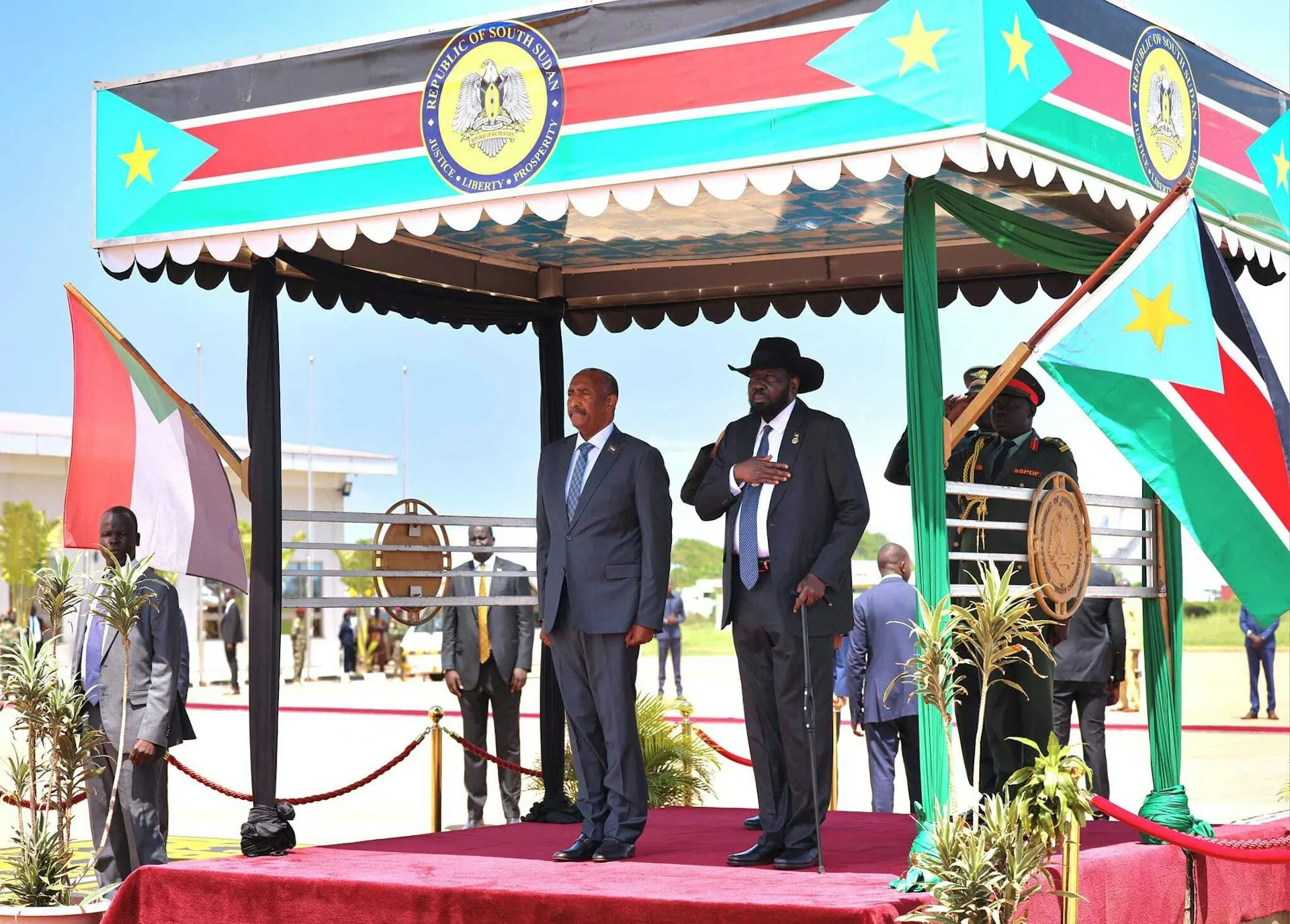 South Sudanese President Salva Kiir meets with Sudanese General Abdel Fattah in Juba, South Sudan, September 2024, amidst ongoing regional instability.
Libya’s Unstable Environment and Risks for Migrants
Libya has lacked a stable central government since the overthrow of Muammar Gadhafi in 2011, supported by the U.S. and other countries. The country is currently governed by two rival administrations. Due to the unpredictable security situation, the U.S. has not maintained an embassy in Libya since 2014.
Large areas of the country are controlled by armed militias, some of which are reportedly integrated into the government structures.
Libya serves as a major transit point for migrants from across Africa and the Middle East traveling towards Europe. However, it is a highly dangerous environment for these migrants. A 2023 U.N. fact-finding mission documented widespread abuses. Migrants frequently face risks including being held for ransom by traffickers, subjected to enslavement, and enduring arrest and torture in detention centers, some of which have received funding from European sources. Mass graves containing bodies of both locals and migrants have been discovered, with some migrant bodies showing signs of gunshot wounds.
A court declaration by Secretary of State Marco Rubio in May 2025 suggested that the injunction blocking rapid third-country deportations threatened a “significant commercial deal to expand activities of a U.S. energy company in Libya.” Libya possesses Africa’s largest oil reserves, and U.S. energy companies are reportedly seeking to restart partnerships there.
Despite the efforts to deport individuals to Libya, the country was included in a June 2025 expansion of the U.S. travel ban list. The White House cited concerns about the ability to “safely and reliably vet and screen” citizens from Libya and other banned countries.
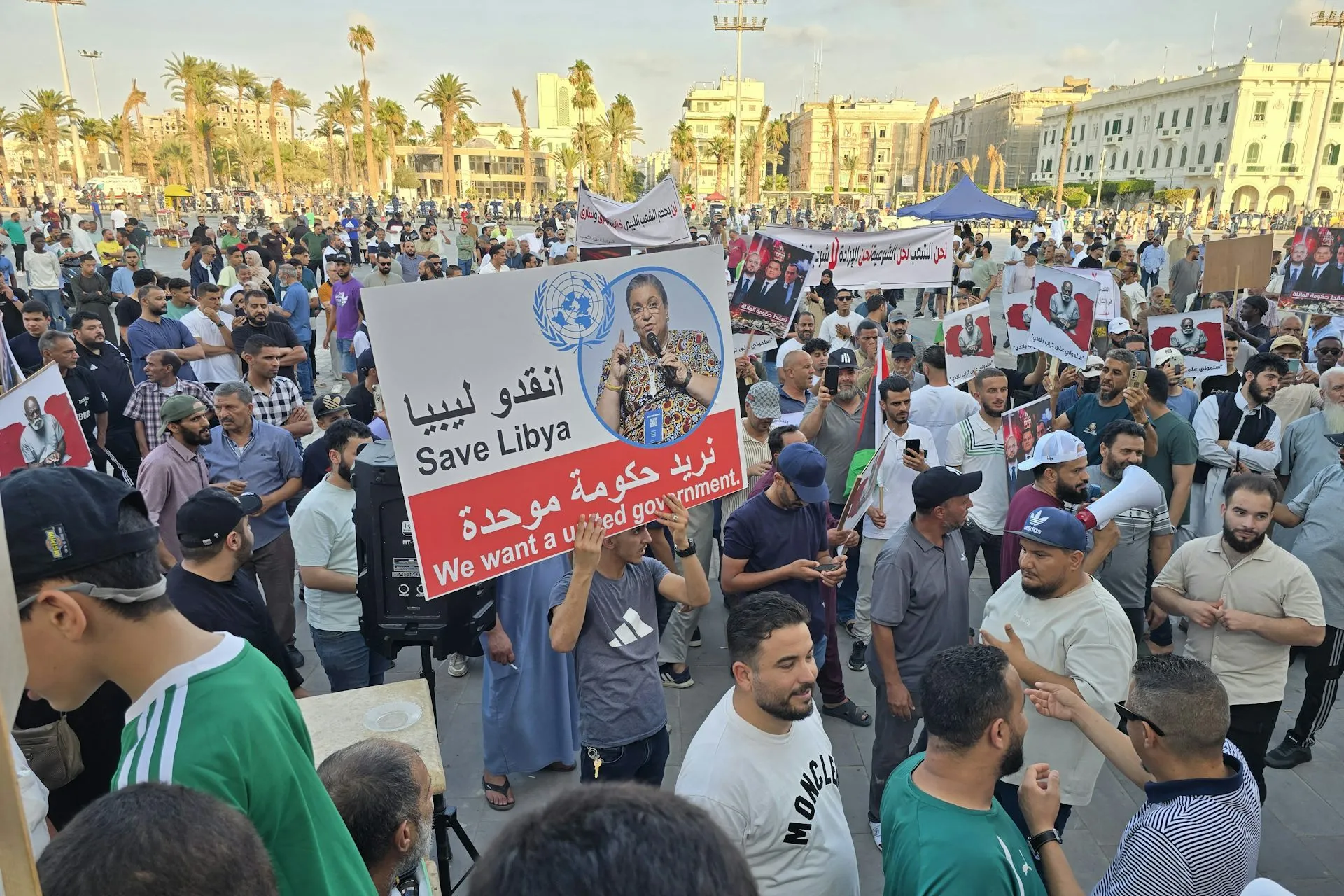 People demonstrate against the Government of National Unity in Tripoli, Libya, June 2025, protesting political instability.
Looking Ahead: Seeking More Destination Countries
The practice of deporting immigrants to a third country when their country of origin refuses repatriation is rare, though not unprecedented. Former President Joe Biden’s administration, for instance, deported individuals from Cuba, Haiti, Nicaragua, and Venezuela to Mexico when direct repatriation was difficult. However, the Trump administration is reportedly the first to pursue expedited removal of immigrants to countries outside of Latin America.
The U.S. government is actively exploring additional countries that might be willing to accept immigrants deported from the United States who are not nationals of those countries. A June 14 memo from Secretary of State Marco Rubio discussed expanding the existing travel ban list, which already includes Libya. The memo noted that 36 additional countries, primarily in Africa including South Sudan, could potentially mitigate the impact of the policy by agreeing to accept deported immigrants from other nations.
Conclusion: Immediate Impact and Future Questions
The US Supreme Court’s emergency ruling allows the Trump administration, for the time being, to deport immigrants to third countries without affording them the customary opportunity to contest the destination. This decision comes amidst significant documented concerns regarding the safety, stability, and human rights situations in potential destination countries like South Sudan and Libya. The administration’s stated interest in securing agreements with these nations and seeking additional third countries suggests this approach to deportation may expand, raising further questions about the well-being of affected immigrants and the geopolitical implications of such arrangements.