More than 400 writers and cultural figures, including prominent authors like Zadie Smith and Ian McEwan, have signed an open letter demanding an immediate ceasefire in Gaza. The letter describes Israel’s ongoing military actions in the territory as “genocidal” and urges an end to what they call collective silence regarding the humanitarian situation.
Contents
This collective statement adds a significant voice from the international literary community to the global calls for de-escalation and humanitarian access in Gaza amidst the continuing conflict.
Authors Demand Ceasefire and Aid
The letter, titled “Writers Demand Immediate Gaza Ceasefire,” was organized by writers Horatio Clare, Kapka Kassabova, and Monique Roffey. It specifically calls for several key actions:
- An immediate, unrestricted distribution of food and medical aid throughout Gaza via the United Nations.
- A ceasefire aimed at ensuring safety and justice for all Palestinians.
- The release of all Israeli hostages taken by Hamas.
- The release of Palestinian prisoners held in Israeli jails.
The signatories also suggest that sanctions should be imposed on the Israeli government if it does not comply with these demands.
Context of the Conflict
The current military campaign in Gaza began after Hamas militants conducted a cross-border attack on Israel on October 7, 2023. That attack resulted in approximately 1,200 deaths and the taking of 251 hostages. Israel responded with a comprehensive military operation targeting Hamas in Gaza.
According to Gaza’s Hamas-run health ministry, over 54,056 people have been killed in the territory since October 7. The humanitarian situation is dire, with a UN-backed assessment indicating that half a million people could face starvation in the coming months. The European Union has commented that Israeli strikes in Gaza “go beyond what is necessary” to fight Hamas. Aid distribution has faced significant challenges; for example, dozens were reportedly injured by Israeli gunfire at an aid site, and crowds have overrun aid distribution points. The difficulty in delivering aid has led to severe consequences, with reports highlighting the struggles of children left hungry by blockades.
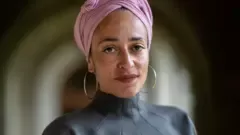 Author Zadie Smith, a signatory of the open letter calling for a Gaza ceasefire
Allegations of Genocide and Israel’s Response
A central point of the writers’ letter is the use of the term “genocidal” to describe Israel’s actions. The letter states that human rights organizations like Amnesty International and Human Rights Watch, along with UN experts, have identified “genocide or acts of genocide” in Gaza.
Israel has vehemently denied these accusations. Following a report by Amnesty International in December, Israel’s foreign ministry called the claims “entirely false and based on lies.” The Israeli military also stated that the claims were “entirely baseless and fail to account for the operational realities” it faces. The allegations of genocide are currently being examined by the International Court of Justice (ICJ). Read more about Israel’s denial of genocide allegations.
The writers emphasize that the term “genocide” is not a slogan but carries significant legal, political, and moral weight, referencing the 1948 Genocide Convention which defines the act as committed “with intent to destroy, in whole or in part, a national, ethnical, racial or religious group.”
 Bestselling author Ian McEwan, who signed the letter demanding a ceasefire in Gaza
Letter’s Tone and Origin
While taking a strong stance on the situation in Gaza, the letter also explicitly asserts “absolute opposition to and loathing of antisemitism, of anti-Jewish and anti-Israeli prejudice.” The signatories reject hate and violence against Palestinian, Israeli, and Jewish people and express solidarity with resistance to the policies of the current Israeli government.
The letter was reportedly developed with input from British writers and inspired by a similar letter signed by 300 French-speaking writers published earlier. It begins with a quote from Palestinian poet Hiba Abu Nada, who was killed in an Israeli airstrike in 2023, highlighting the human impact of the conflict.
The core message underscores that Palestinians are not abstract victims and critiques the use of language to justify or deny events, stating, “Too often, words have been used to justify the unjustifiable, deny the undeniable, defend the indefensible.”
For more reporting on the conflict and related developments, explore our coverage of aid delivery challenges in Gaza.