
NASA’s incredible journey of discovery, bringing us images of distant worlds and secrets of our own planet, could face a sudden slowdown. A proposed new budget for Fiscal Year 2026 suggests significant cuts that would dramatically impact NASA’s science programs, potentially cancelling dozens of ongoing and planned space missions and threatening U.S. leadership in exploring the cosmos. The Planetary Society has called these proposed reductions “staggering,” highlighting the potential loss of scientific progress and jobs.
Contents
What’s Happening to NASA’s Budget?
The proposal outlines a substantial reduction in NASA’s overall funding, decreasing the agency’s budget by approximately 24% compared to the previous year’s funding. This is the sharpest proposed year-over-year cut NASA has seen in decades, adjusted for inflation, bringing funding levels back to those not seen since the early 1960s.
But the impact is even more severe for the science programs that fuel our understanding of the universe. Within NASA’s Science Mission Directorate, funding could be slashed by a shocking 47%. This isn’t just a minor trim; for planetary science – the exploration of planets, moons, asteroids, and comets in our solar system and beyond – it represents a nearly half reduction in resources.
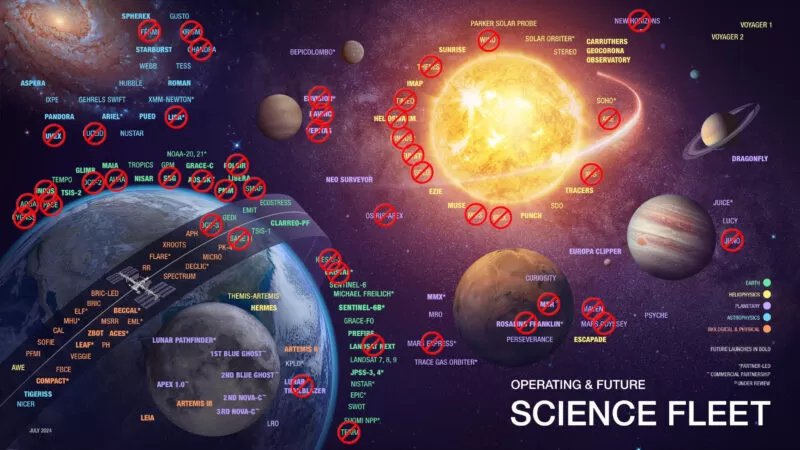 Chart showing proposed cuts to various NASA science missions, with red markers highlighting cancellations.
Such a drastic cut is described by advocates as an “extinction-level event” for Earth and space sciences conducted by NASA. It means missions currently operating, those under construction, and even future projects in the planning stages could be abruptly terminated.
Which Missions Could Be Affected?
Many missions that have captured the public’s imagination or are poised to make groundbreaking discoveries are now facing the chopping block. Think of the spacecraft that have expanded our horizons:
- New Horizons: This intrepid probe gave humanity its first close-up view of Pluto and is now exploring the distant Kuiper Belt. Learn more about New Horizons’ journey beyond Pluto. Its continued mission could end prematurely.
- OSIRIS-APEX: Following the success of OSIRIS-REx returning samples from asteroid Bennu, the mission is now repurposed to study the potentially hazardous asteroid Apophis up close. Discover the OSIRIS-APEX mission to asteroid Apophis. This vital asteroid defense mission is at risk.
- Juno: Orbiting Jupiter, Juno provides stunning images and data about the giant planet and its turbulent atmosphere and moons. See Juno’s latest findings on Io’s volcanoes. Its extended mission phases are threatened.
These are just a few examples. Dozens of other missions studying Earth’s climate, the sun, distant galaxies, and the fundamental physics of the universe could also be cancelled.
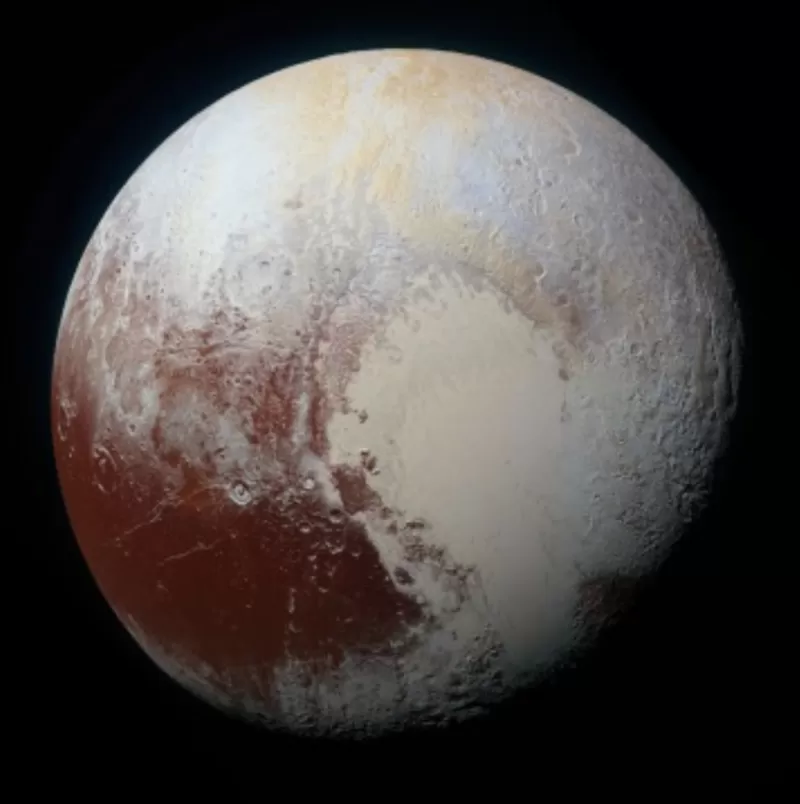 Image of Pluto with its prominent heart-shaped feature, taken by the New Horizons mission.
Cutting these programs wouldn’t just stop the flow of new data and images; it would lead to significant job losses among scientists, engineers, and support staff – potentially thousands of positions across NASA and related industries. It risks eroding the specialized teams and infrastructure built over decades, setting back progress for years.
Why Does This Matter?
Space science isn’t just about pretty pictures. It drives innovation, creates new technologies, inspires future generations in STEM fields, and provides critical insights into our place in the universe and the challenges facing Earth. Investments in space exploration often yield returns far beyond the initial cost, fostering new industries and applications.
The proposed cuts are just that – a proposal. The U.S. Congress must approve the final budget. This means there is a window for those who care about space exploration and scientific discovery to voice their concerns.
What Can Be Done?
Advocacy groups like The Planetary Society are urging action. Anyone, anywhere in the world, can sign their petition to express support for NASA science funding. Sign The Planetary Society’s petition to protect NASA science.
For U.S. citizens, contacting elected representatives is a powerful way to influence the budget process. Let them know how much you value NASA’s contributions to science, innovation, and inspiration.
- Find your representative in the House of Representatives: House.gov
- Find your senators: Senate.gov
- Or use the comprehensive U.S. Congress member finder: Congress.gov
The Future of Discovery Hangs in the Balance
The proposed cuts to NASA’s science budget represent a significant threat to our ability to explore the cosmos and gain vital scientific knowledge. Halting missions mid-stream or cancelling planned projects means losing potential discoveries and surrendering the global leadership the U.S. has held in space science. The coming months will be crucial in determining whether this proposed slowdown becomes a reality or if public support can help steer the budget towards continued exploration and scientific advancement.





