
Imagine a pest that’s been bothering humans since the Stone Age. New research reveals that bed bugs are likely humanity’s oldest pest, tracing their unwelcome companionship back some 60,000 years to our cave-dwelling days. This surprising discovery helps explain why these tiny bloodsuckers are so incredibly persistent, having survived ice ages, thrived in cities, and even bounced back from powerful pesticides. Understanding their ancient history offers perspective on the ongoing battle to keep them out of our homes today.
Contents
From Cave Dwellers to City Dwellers: The Long Saga of Bed Bugs
For decades, scientists believed bed bugs hitched a ride with humans much more recently. But researchers at Virginia Tech have traced the lineage of bed bugs specifically associated with humans. Their findings suggest a subset of these insects, originally linked to bats, made the jump to our ancestors living in caves alongside those bats, roughly 60,000 years ago.
As humans moved out of caves and spread across the globe, bed bugs followed. They survived major environmental shifts, like the intense cold of the Last Glacial Maximum around 20,000 years ago, which saw populations of many other species decline. While bat-following bed bugs struggled, the human-following branch not only survived but thrived, especially as human populations grew and clustered in settlements and eventually large cities.
Why Bed Bugs Love Us (and Always Have)
This ancient history highlights the bed bug’s remarkable adaptability and their primary motivation: feeding on human blood. They are tenacious survivors, evolving alongside us, learning our habits, and finding ways to persist in every environment we create. From simple cave floors to modern mattresses, they’ve found a way to stick around. This makes the question of “how to get rid of bed bugs” a challenge rooted deep in our shared past. While global eradication seems unlikely given their resilience, keeping them out of your home is a different story.
Battling Our Ancient Foe: Effective Strategies for Your Home
Despite their long history with us, modern methods can effectively control bed bug infestations. Vigilance and consistent practices are key to protecting your personal space.
1. The Hot Wash Hero: Regular Laundry
One of the most effective ways to tackle bed bugs and their eggs lurking in your bedding is through heat. Bed bugs are extremely sensitive to high temperatures. Making a habit of washing your sheets regularly – ideally once a week – in hot water is a powerful preventative measure.
Use a wash cycle of at least 140°F (60°C) for a minimum of 90 minutes. Follow this with a hot drying cycle in a machine or even lay items out in direct sunlight for several hours. This heat treatment is often enough to kill both bugs and their eggs. When your bedding is off, allowing your mattress to air out can also help, reducing the moisture and human scent that might attract pests.
 Person making a bed with fresh white sheets in a bright room, demonstrating a step in preventing bed bug infestations through hygiene.
2. Decluttering for Defense
Bed bugs are master hiders. They are small, fast, and prefer dark, protected spaces. While mattress seams and crevices are prime real estate, piles of clothes, stacks of books, or clutter on the floor near your bed provide equally attractive hiding spots. Reducing clutter eliminates many potential refuges, making it harder for bed bugs to establish a population and easier to spot them if they do appear. A tidy space gives them fewer places to lurk unseen.
3. Vacuuming: A Key Inspection Tool
It’s a myth that bed bugs are only attracted to dirt. They are attracted to humans for food, regardless of how clean your space is. However, regular cleaning, especially vacuuming your mattress and surrounding areas, is a vital tool for detection and physical removal.
Vacuuming can directly suck up visible bed bugs, nymphs, and eggs from the surface and edges of your mattress and the surrounding floor. More importantly, it provides a chance to inspect these areas closely. Bed bugs are excellent at hiding, and you might not notice an infestation until it’s significant. As you vacuum, look for tell-tale signs like small reddish-brown stains (excrement), pale yellow skins shed by growing nymphs, or tiny white eggs, particularly along seams and tufts.
 Vacuum cleaner attachment cleaning the surface of a mattress, highlighting mattress vacuuming as a method to remove bed bugs and allergens.
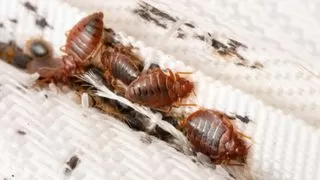 Close-up showing bed bugs and their waste marks on a mattress seam, illustrating signs of an infestation.
4. Stay Vigilant When Traveling
Bed bugs didn’t just follow us out of caves; they’ve continued to travel with us around the world. Hotels, motels, and even public transport can be potential pick-up points. If you travel frequently, you are at higher risk of bringing bed bugs home as unwanted souvenirs.
Make it a habit to quickly inspect your hotel room bed, especially seams and behind headboards, upon arrival. Keep your luggage on a rack away from the bed and walls. When you return home, unpack directly into the washing machine if possible, washing clothes in hot water immediately, even if they haven’t been worn. This simple step can prevent a hitchhiker from establishing a new home in your mattress.
5. Modern Pest Control Methods
While bed bugs famously developed resistance to early powerful pesticides like DDT, modern chemical treatments have proven effective. Products specifically designed for bed bugs, sometimes only available to professionals, can eradicate infestations. For a less toxic approach, substances like diatomaceous earth can be used. This natural powder works by damaging the bed bug’s outer layer, leading to dehydration.
 Diatomaceous earth powder in a container with a spoon, a common natural substance used for bed bug pest control.
Sticky traps placed near bed legs can also help detect bed bug activity and intercept them as they try to climb onto your mattress. For severe infestations, however, calling a professional pest control service is often the most reliable solution.
While the global war against these ancient pests may continue for another 60,000 years, keeping them out of your personal space is a fight you can win with knowledge, vigilance, and the right strategies.