
Imagine a world millions of years ago, ruled by giant creatures. Now, imagine finding something that connects their health struggles to ours today. Researchers studying a fossil from a small, cow-sized dinosaur believe they’ve found evidence of a tumor, suggesting that cancer might be an ancient adversary that life has faced for eons.
Contents
This isn’t just a fascinating peek into prehistoric ailments. The discovery could potentially unlock new doors in our understanding of soft tissue preservation in fossils and, critically, offer novel insights into human cancer research by studying how these ancient creatures were affected.
A Prehistoric Puzzle: The Dinosaur Tumor
The discovery centers on the fossilized remains of a dinosaur that lived almost 70 million years ago. Within the bone structure, researchers identified what appears to be a tumor, a type still seen in animals and humans today. Even more remarkably, they believe they’ve found structures resembling red blood cells linked to this ancient growth.
This suggests that cancerous growths were not just a recent development in life’s history but potentially existed far back in time, long before humans walked the Earth.
Fossils as Time Capsules: Preserving More Than Just Bones
For a long time, scientists primarily focused on the mineralized bones of fossils. The idea of soft tissue like blood cells or tumors surviving millions of years seemed improbable. However, this new finding challenges that assumption.
The methods used in this study were key to identifying these subtle details within the fossil structure. This suggests that soft tissue preservation might be more common than previously thought, potentially turning many existing fossils into even richer “time capsules” of ancient life, holding clues beyond just skeletal structure.
Why a Dinosaur Tumor Matters for Human Health
Finding cancer in a dinosaur isn’t just a curiosity for paleontologists. It has significant implications for modern medicine, particularly human cancer research. By studying diseases that affected creatures millions of years ago, scientists can gain a deeper understanding of how cancer originates, evolves, and interacts with different biological systems over vast timescales.
New cancer treatments are constantly being developed, and understanding the deep history of the disease could provide entirely new angles for research. For example, examining ancient tissues might reveal natural biological mechanisms that some creatures developed to resist cancer, potentially offering clues for developing new therapies. This contrasts with animals known for their cancer resistance today, like elephants or whales, who have their own unique biological defenses (learn more about elephant cancer resistance).
Unlike delicate DNA, proteins found in calcified tissues like bone are surprisingly stable over long periods, offering another potential avenue for unlocking ancient biological secrets.
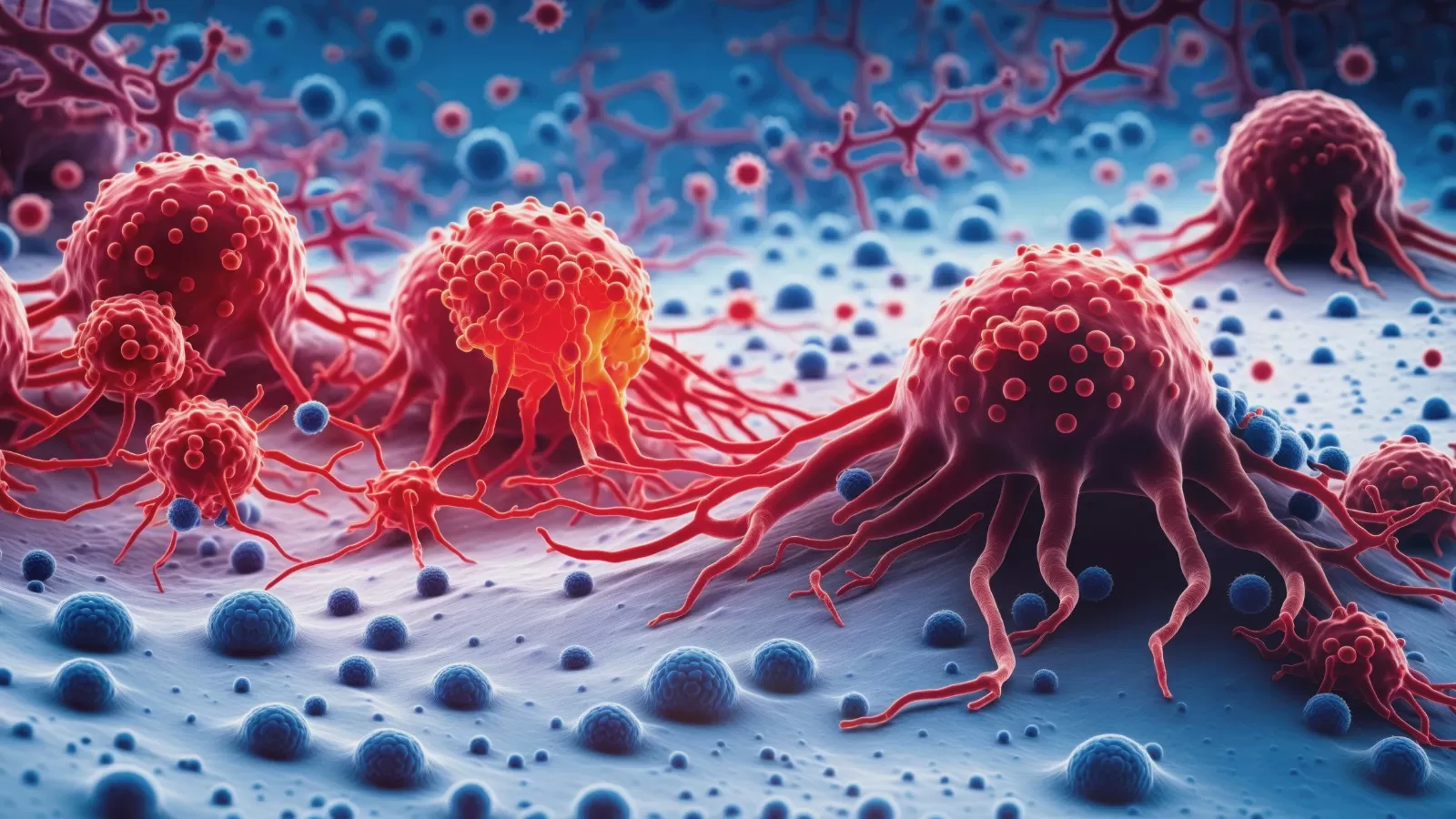 Illustration depicting the irregular shape and growth of human cancer cells
The Path Forward: Challenges and Hope
While incredibly exciting, finding more well-preserved dinosaur tissues or biological material won’t be easy. There’s no guaranteed way to know if tissue will still be present in a fossil until it’s carefully examined.
However, this discovery provides strong motivation for continued exploration and the application of advanced analytical techniques to fossil finds. Each new piece of preserved tissue, whether a tumor or other cellular structure, adds to our understanding of ancient life and its health challenges. This ongoing scientific journey, looking into the deepest past, holds the potential to shed light not only on the lives of dinosaurs but also on our ongoing fight against diseases like cancer today.





