
For decades, many scientists pictured the Arctic Ocean and Nordic Seas completely locked away under a massive, kilometer-thick ice shelf during Earth’s extreme ice ages. It was a picture of a frozen, lifeless world. But a new study is challenging that long-held view, suggesting that even in the deepest freezes of the last 750,000 years, this polar region might have been surprisingly dynamic, characterized mostly by seasonal sea ice and even open water.
Contents
This groundbreaking research offers a fresh perspective on the Arctic’s past climate, hinting that it was far less static than previously thought and could help us understand how the region might respond to future temperature shifts.
Unpacking the Arctic’s Frozen Past
Imagine the Arctic during an ice age – vast sheets of ice covering continents, glaciers carving landscapes. Some scientists proposed that a giant, permanent ice shelf extended from land far across the Arctic Ocean and the seas connecting it to the Atlantic. This idea was based on clues found in the shapes of the seafloor and layers of mud laid down over millennia.
But digging deeper into these ancient layers, an international research team discovered something different. They looked at sediment cores from two key locations: the Nordic Seas and the Arctic-Atlantic Gateway – essentially the watery ‘doorway’ between the Arctic and Atlantic Oceans. By analyzing tiny biological markers preserved in these cores and running complex computer climate simulations, they reconstructed what conditions were like hundreds of thousands of years ago.
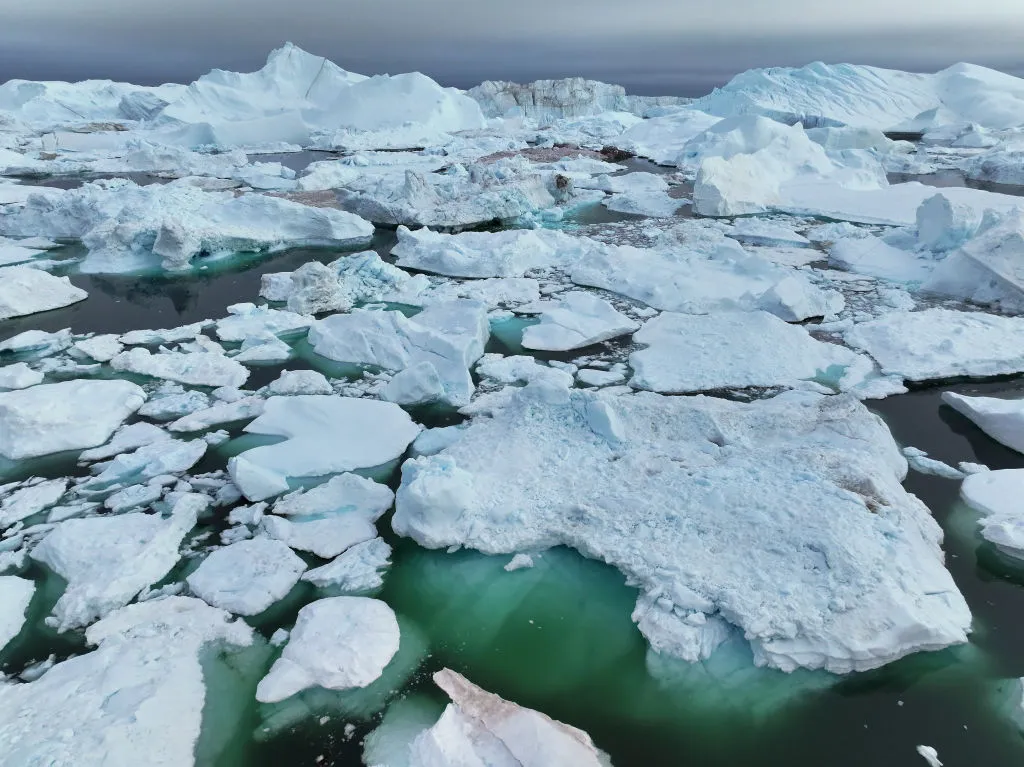 Large icebergs calved from the Greenland Ice Sheet crowd the Ilulissat Icefjord.
The New Picture: Seasonal Ice and Open Water
The data told a surprising story. Instead of a continuous, colossal ice shelf, the evidence pointed to a region largely dominated by sea ice that came and went with the seasons. Even during the most frigid periods of the ice ages, there were times and places where the water remained open.
Crucially, they found markers indicating that phytoplankton – the microscopic plants that form the base of the marine food web – were blooming in these open waters. This wouldn’t be possible under a thick, permanent ice shelf that blocks out sunlight.
Think of the difference like covering a lake with a thick lid versus covering it with a thin layer of ice that melts in the spring. The lid blocks everything out, but the seasonal ice still allows life to flourish when conditions are right.
| Ice Shelves | Sea Ice |
|---|---|
| Massive, floating ice sheets | Forms on the ocean’s surface |
| Attached to land (part of glaciers) | Floats freely |
| Hundreds of meters thick | Usually only a few meters thick |
| Can last for thousands of years | Forms and melts seasonally or yearly |
| Blocks light and marine life below | Allows seasonal light & life below |
The study suggests that if a massive ice shelf ever existed in these areas over the last 750,000 years, it must have been much more limited than previously imagined – perhaps only partial, confined to certain areas, or very short-lived during the absolute peak of a freeze.
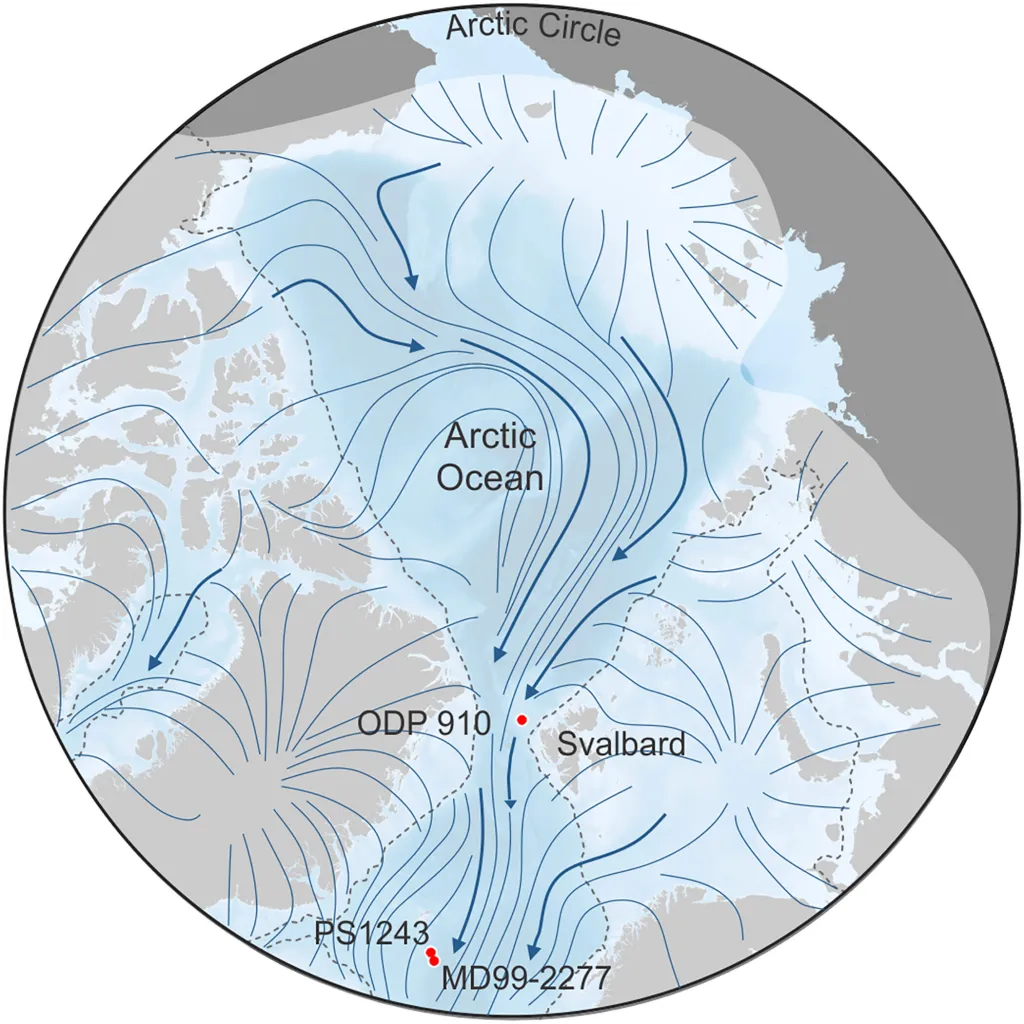 Map showing research site locations in the Arctic-Atlantic gateway and Nordic Seas and possible past ice coverage.
Looking Closer at Past Cold Snaps
The researchers examined a particularly cold period between 621,000 and 676,000 years ago. During this deep freeze, the biological markers dropped significantly, suggesting marine life struggled. This could potentially be a time when more extensive ice shelves formed, but the study emphasizes that even then, the evidence doesn’t support a continuous ice shelf covering the entire region. Any such shelf would likely have been brief and localized.
Evidence does exist for more widespread ice shelves earlier in Earth’s history, specifically between 950,000 and 790,000 years ago. However, the new research focusing on the last 750,000 years found that if a pan-Arctic ice shelf existed during this more recent period, its presence was fleeting and left very little trace.
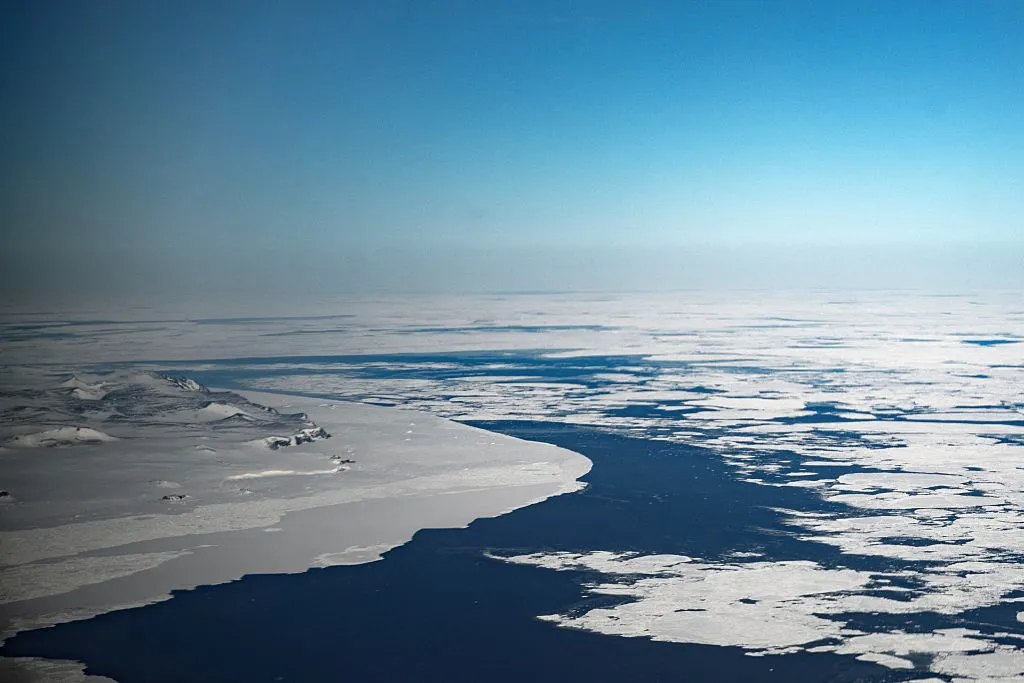 Sea ice melting near Ittoqqortoormiit in Eastern Greenland during spring.
Why This Matters
Understanding exactly how the Arctic behaved during past climate cycles – especially during extreme cold – is crucial for predicting how it will respond to warming temperatures today. If the Arctic was more dynamic and less permanently locked in ice than thought during ice ages, it changes our baseline for how this sensitive region operates.
This study highlights that the Arctic’s past climate was complex and varied, even during glacial periods. It opens the door for future high-resolution studies using even more detailed data and sophisticated climate models to refine our understanding of this critical part of our planet’s history and its future.





