
Looking down at Earth or out at the vastness of the cosmos from orbit offers a humbling perspective, revealing both the delicate beauty of our home planet and the incredible scale and power of the universe around us. These striking views from space, captured by satellites, rovers, and astronauts, highlight everything from fleeting weather patterns on Earth to ancient geological features on distant worlds, providing a window into the dynamic nature of space exploration and the celestial bodies we share the cosmos with.
Contents
These images remind us that science isn’t just about complex formulas; it’s about exploring, discovering, and seeing the world – and other worlds – in ways never before possible, constantly pushing the boundaries of our understanding and revealing breathtaking sights.
Our Dynamic Home: Earth from Orbit
From space, Earth is a swirling marble of blue, white, and green. Satellites constantly monitor our planet, capturing moments like rapidly changing weather systems.
Beyond just pretty pictures, these Earth observation satellites are crucial for tracking hurricanes, monitoring climate change, managing resources, and even observing human activity on a global scale. The contrast between areas is sometimes starkly visible from above, such as the difference in light emitted at night by different regions.
 Satellite view at night of the Korean Peninsula showing South Korea brightly illuminated and North Korea mostly dark, highlighting disparity in light
Geographical features that seem immense to us on the ground take on a different scale from orbit. Vast mountain ranges like the Himalayas appear as wrinkles on the planet’s surface, and entire continents or large bodies of water, like Florida or the Pacific Ocean, fit into a single frame.
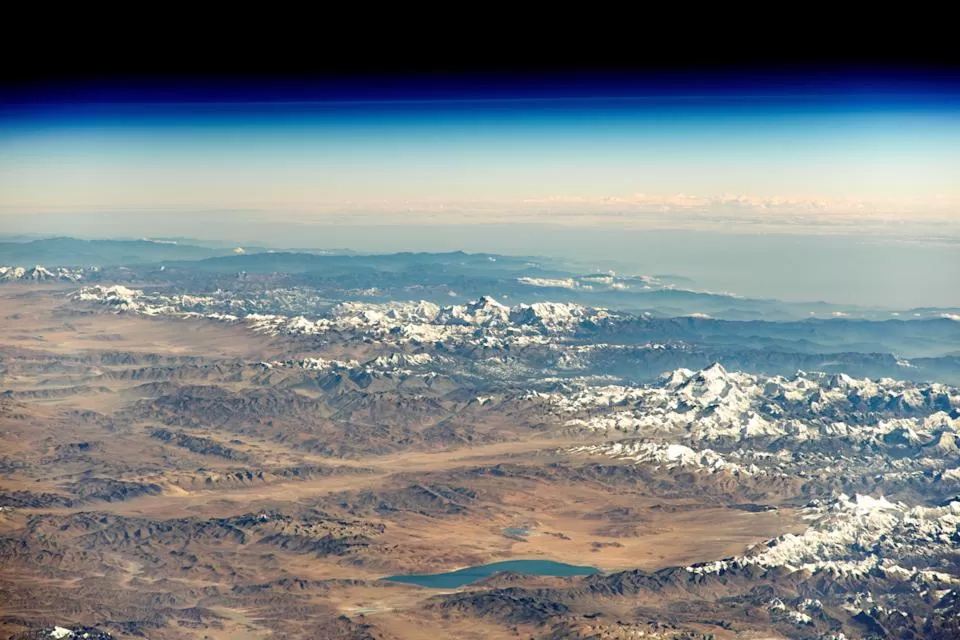 Aerial view from space showing a vast mountain range with snow-capped peaks under a clear sky, likely the Himalayas
Even dramatic events, like a volcano erupting or a massive typhoon, become visible geological or meteorological phenomena when viewed from this vantage point, demonstrating the raw power shaping our planet.
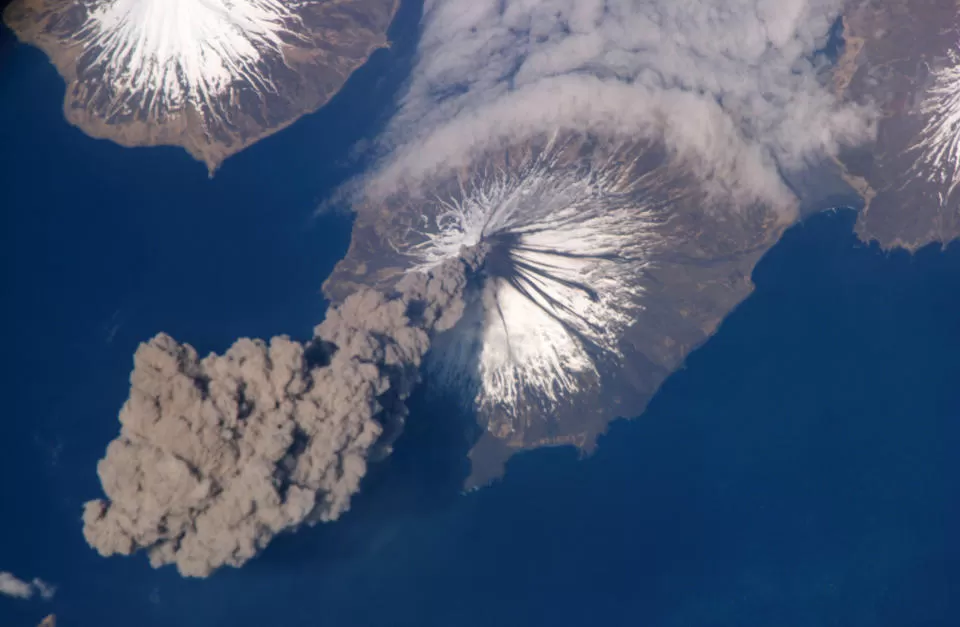 Aerial view from space of a volcanic eruption with a large ash plume rising from snow-capped peaks and surrounding ocean
Seeing a solar eclipse from space offers a unique perspective – the Moon’s shadow races across the Earth’s surface, a dark circle consuming continents.
Exploring Our Neighbors: Views of Other Planets
Space exploration gives us unprecedented views of other worlds in our solar system. Mars, our dusty red neighbor, has been a prime target for exploration, with rovers sending back incredible images of its surface.
Sometimes, rovers even capture fleeting atmospheric phenomena, like the delicate hues of a Martian sunset. The color is different than on Earth because of the way Mars’s atmosphere scatters sunlight reflecting off fine dust particles.
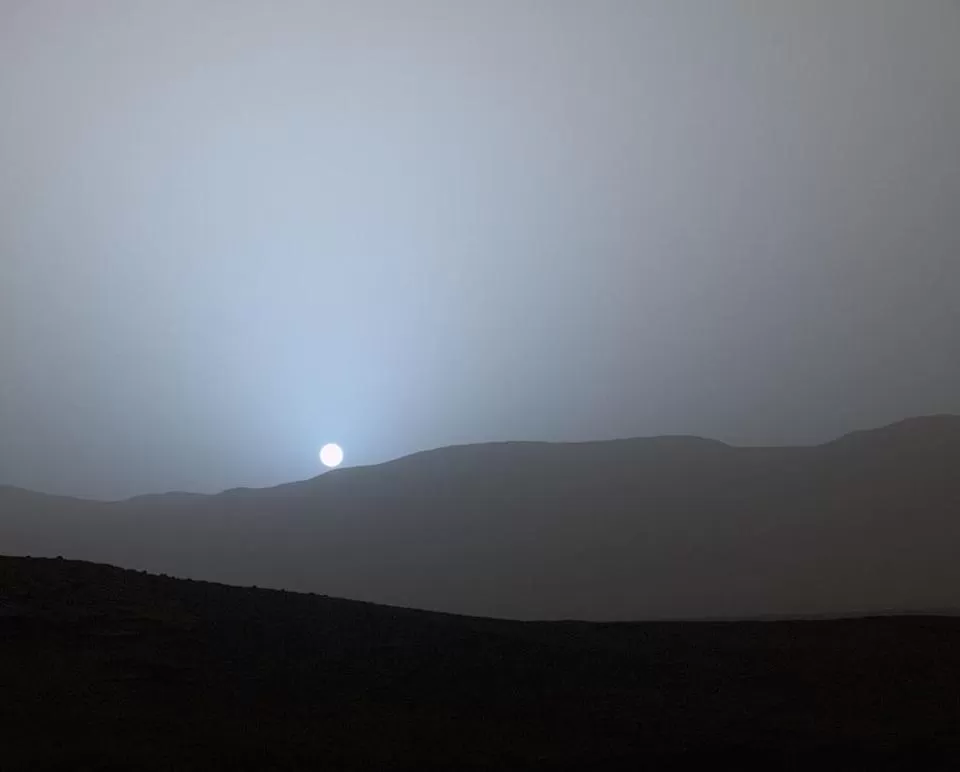 A misty, foggy view of the sun just visible over a slightly hilly Martian landscape, showing a sunset on the red planet
We’ve even sent missions to the outer solar system. The New Horizons probe gave us our first detailed look at Pluto in 2015, revealing icy mountains and surprising geological activity on the distant dwarf planet. This was a monumental leap in resolution compared to earlier, blurry images.
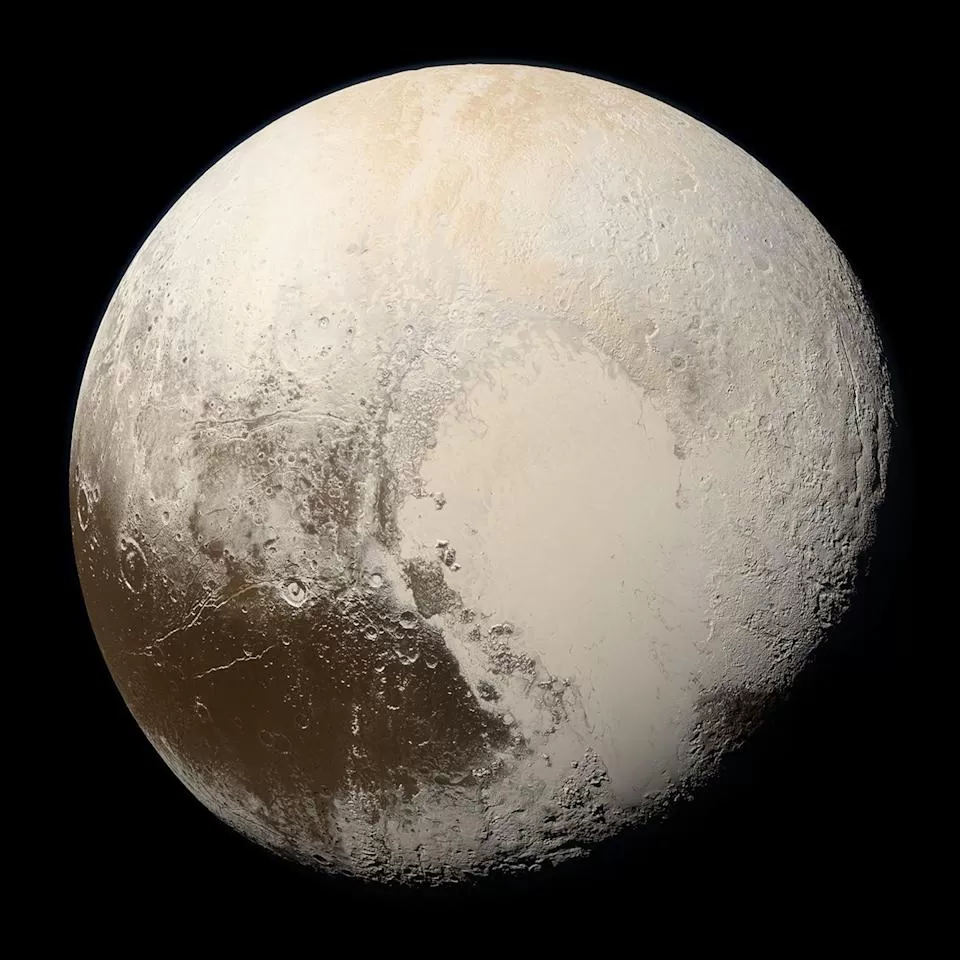 A detailed color image of Pluto, showcasing its diverse surface features, including large, smooth plains like Sputnik Planitia and rugged, mountainous terrain
From the smallest dwarf planets to the largest gas giants, probes have captured the true colors of our solar system neighbors, revealing vibrant blues, swirling oranges, and rocky grays.
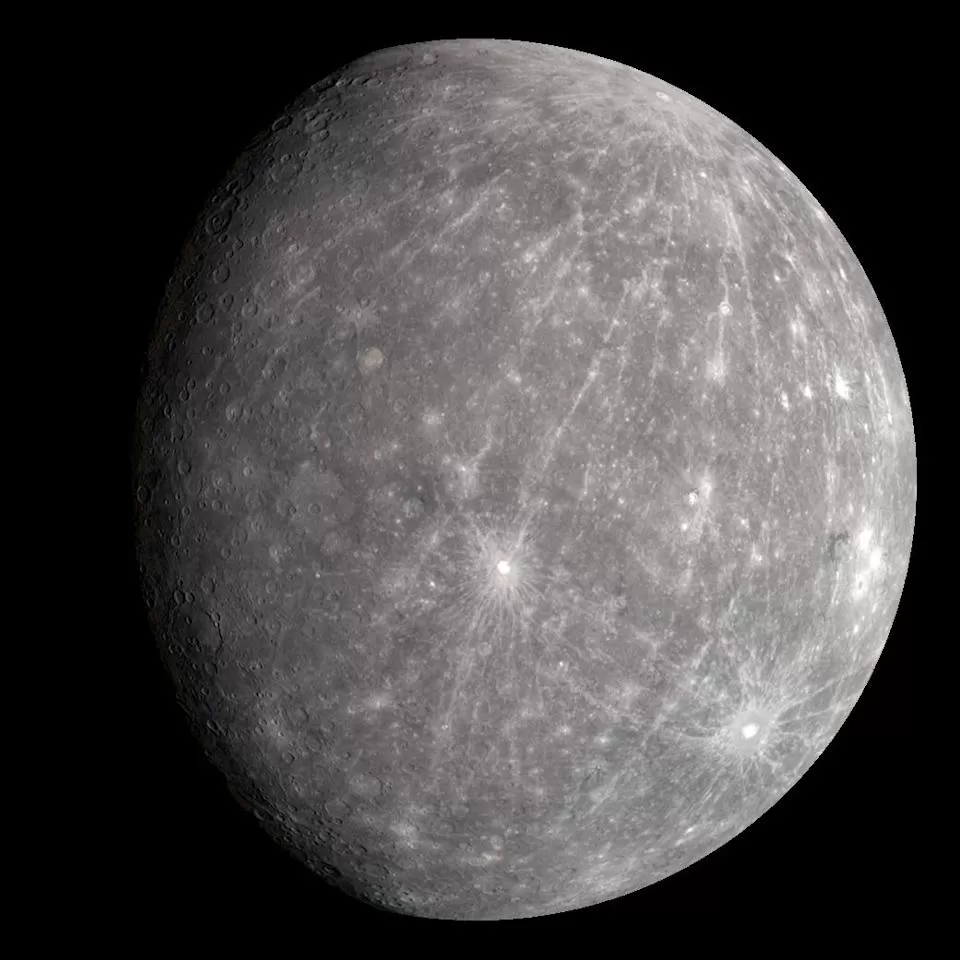 Image of the planet Mercury showing its heavily cratered, gray, rocky surface viewed from space in true color
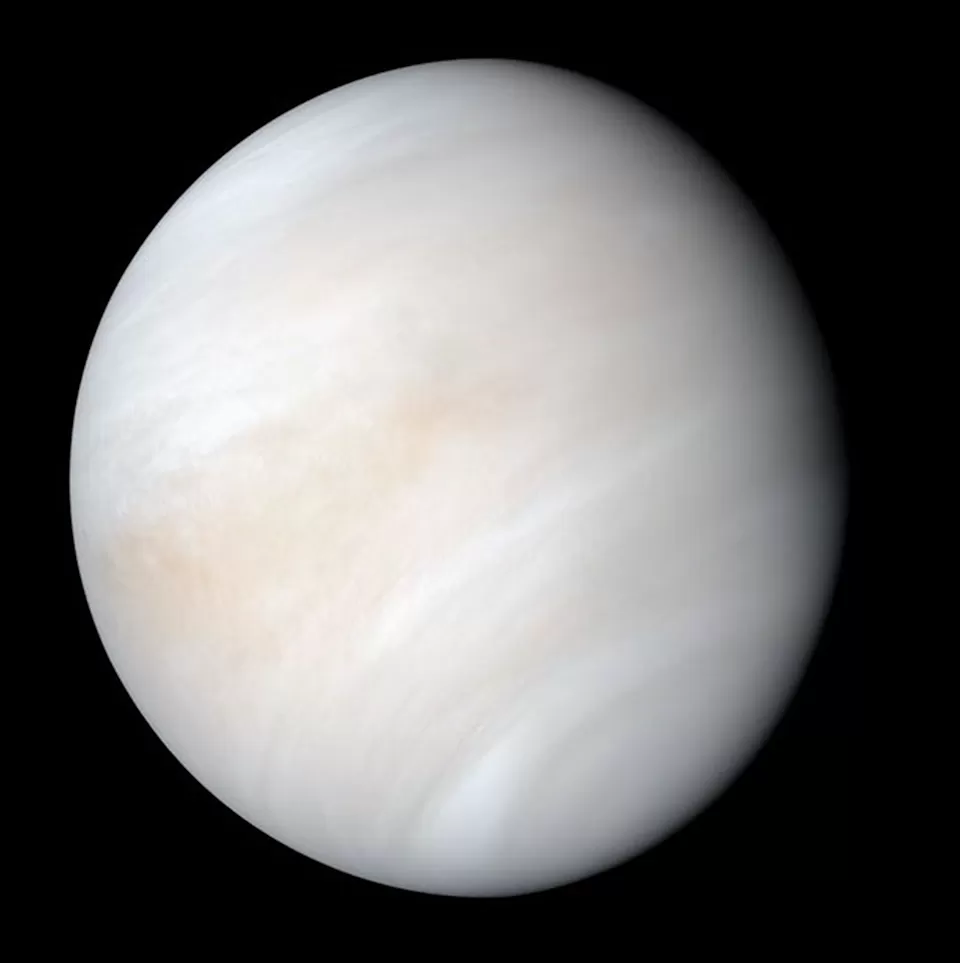 A detailed image of the planet Venus in true color, showing its swirling cloud patterns across the surface which hide the view below
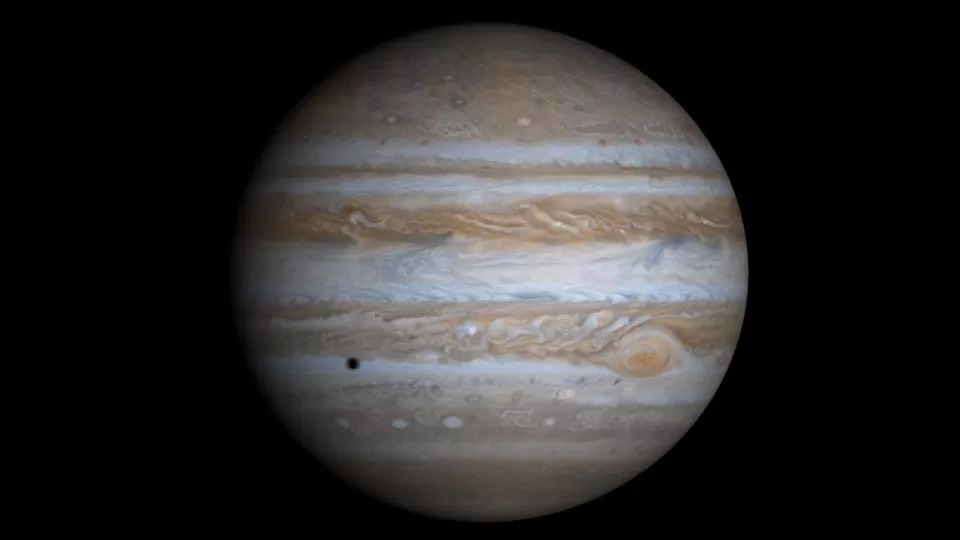 Image of Jupiter in true color, displaying its distinct atmospheric bands and the iconic Great Red Spot with high detail
Jupiter’s Great Red Spot, a storm larger than Earth, is a famous feature, but observations over decades show it is actually shrinking, a puzzle for planetary scientists.
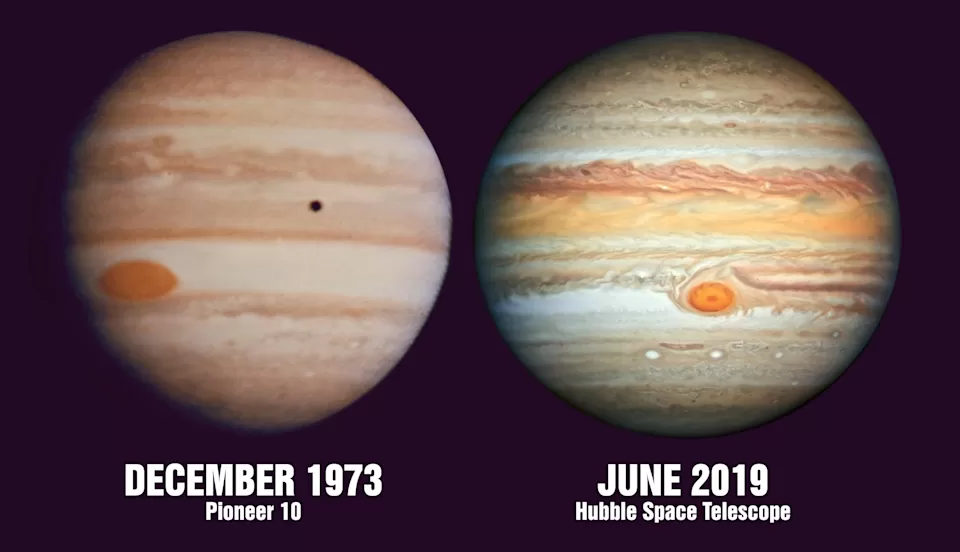 Side-by-side comparison images of Jupiter from 1973 and 2019 showing the apparent shrinking of the Great Red Spot over time
The Scale of Things
Space photography often forces us to confront immense scale. Comparing Earth to gas giants like Jupiter or Saturn shows just how small our planet is. Saturn is roughly 9 times wider than Earth, and Jupiter is about 11 times wider.
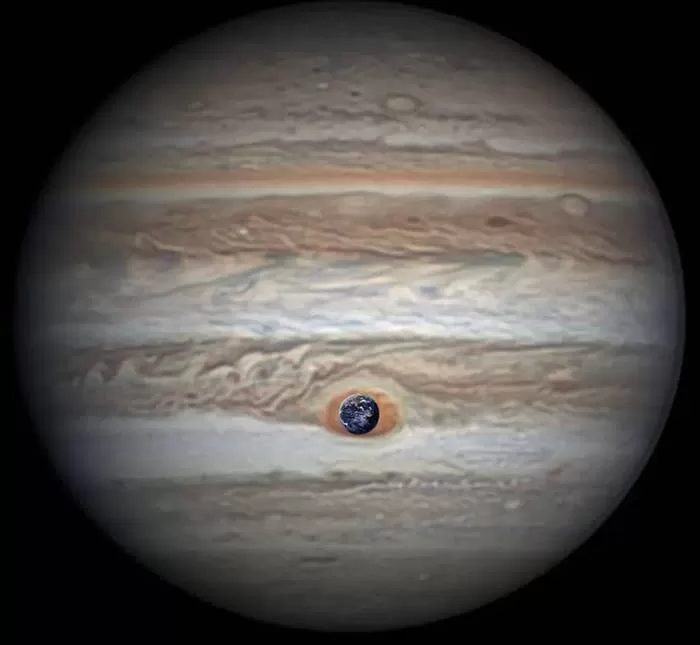 Image comparing the size of Earth against Jupiter's Great Red Spot, illustrating the immense scale of the storm
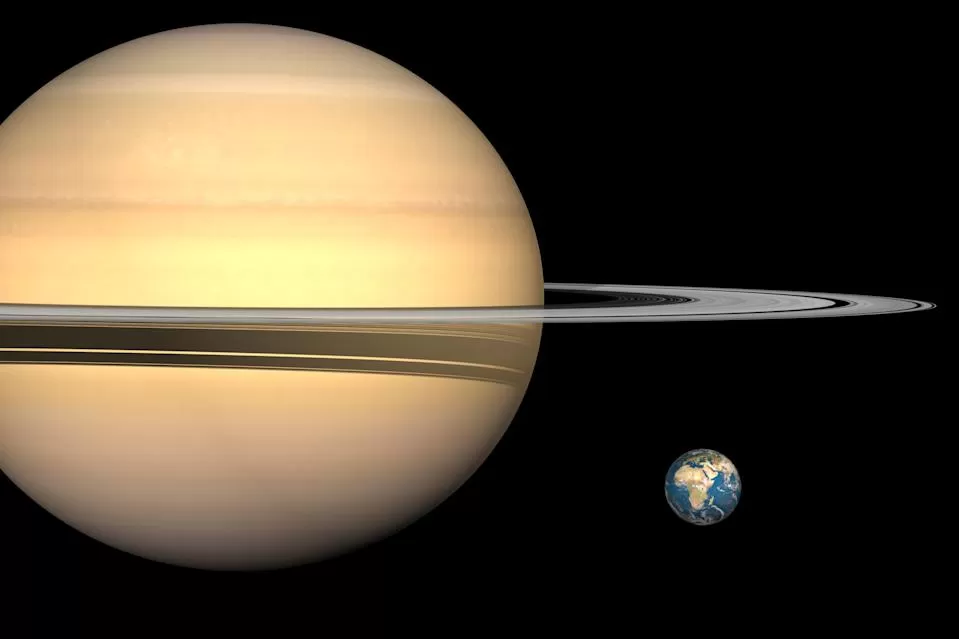 Saturn with its prominent rings is shown next to a small depiction of Earth, emphasizing the significant size difference between the two planets
Even comparing the Moon or Pluto’s moon Charon to Earth shows a striking difference in size, although our Moon is unusually large relative to Earth compared to other moon-planet pairings in the solar system.
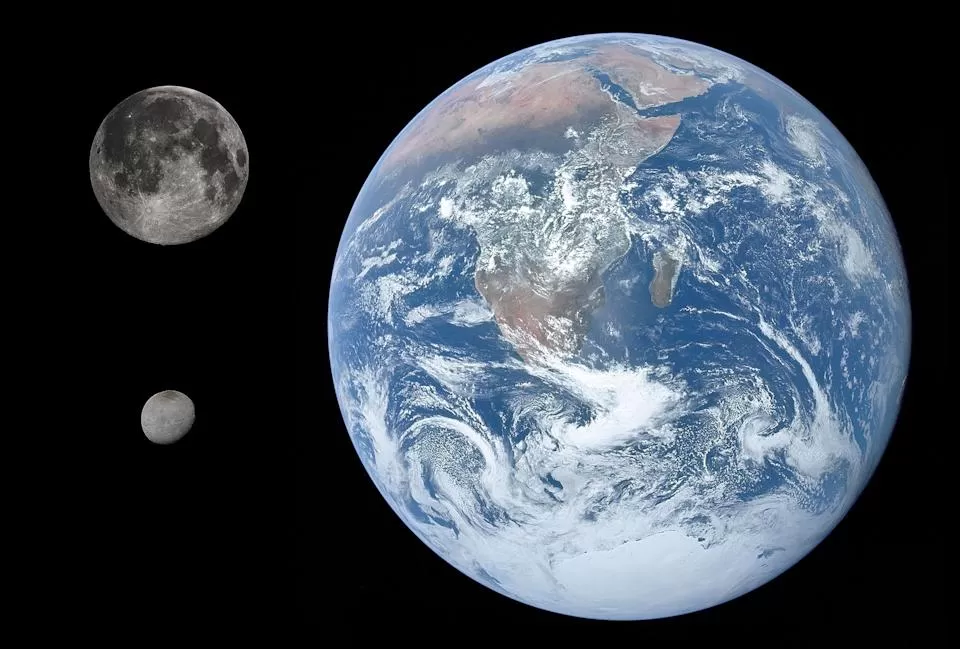 Composite image showing Earth, the Moon, and Pluto's moon Charon against a black space background, illustrating their relative sizes
Comparing the size of a typical comet to a city like Paris grounds the cosmic scale in human terms, showing that even relatively small celestial bodies can be significant in size from our perspective.
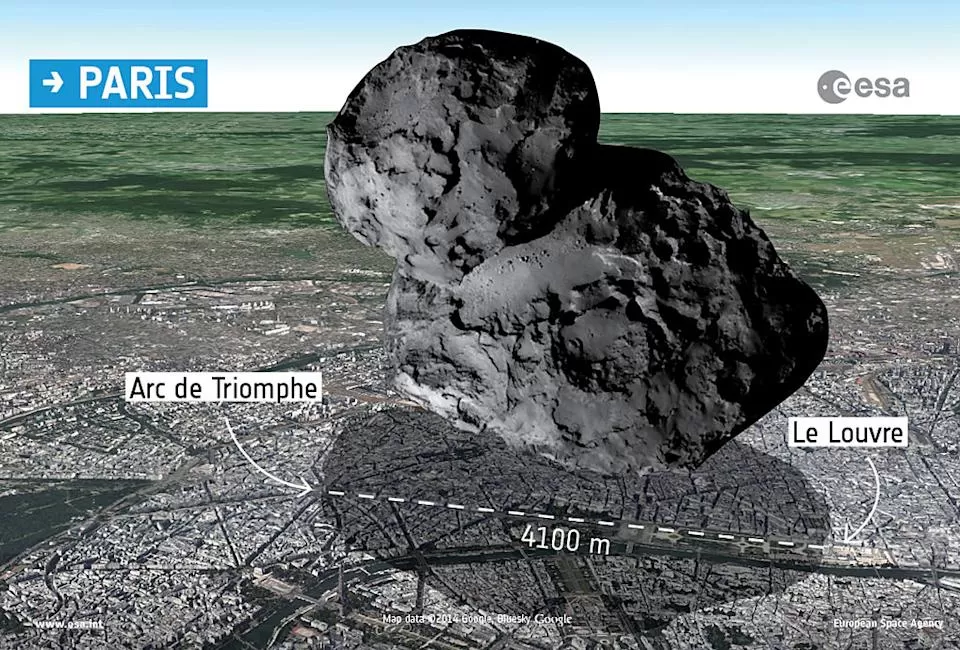 Comparison image showing the size of a comet, Churyumov-Gerasimenko, overlaid onto a map of Paris for scale
Beyond our solar system, the distances become truly mind-boggling. The image below attempts to visualize the vast distance between our Milky Way galaxy and our nearest large galactic neighbor, Andromeda, even though both are immense cosmic structures.
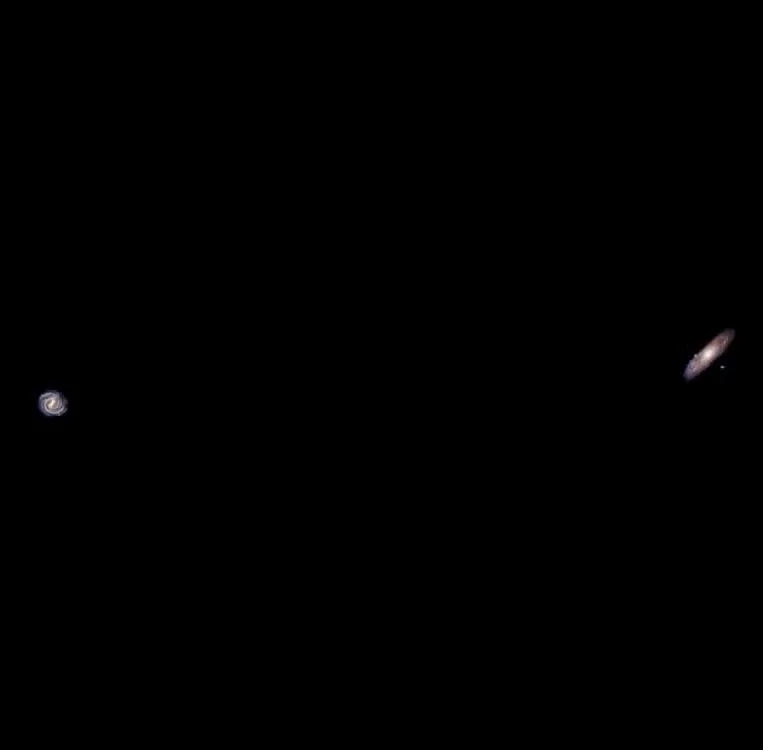 Image depicting two galaxies, the Andromeda galaxy and the Milky Way galaxy, separated by a vast empty space to scale visually
Human Footprints in Space
Space isn’t just about planets and stars; it’s also about humanity’s journey outwards. Images capture key moments in space history, like the first untethered spacewalk, where an astronaut floated freely with a jetpack – a simultaneously exhilarating and terrifying concept.
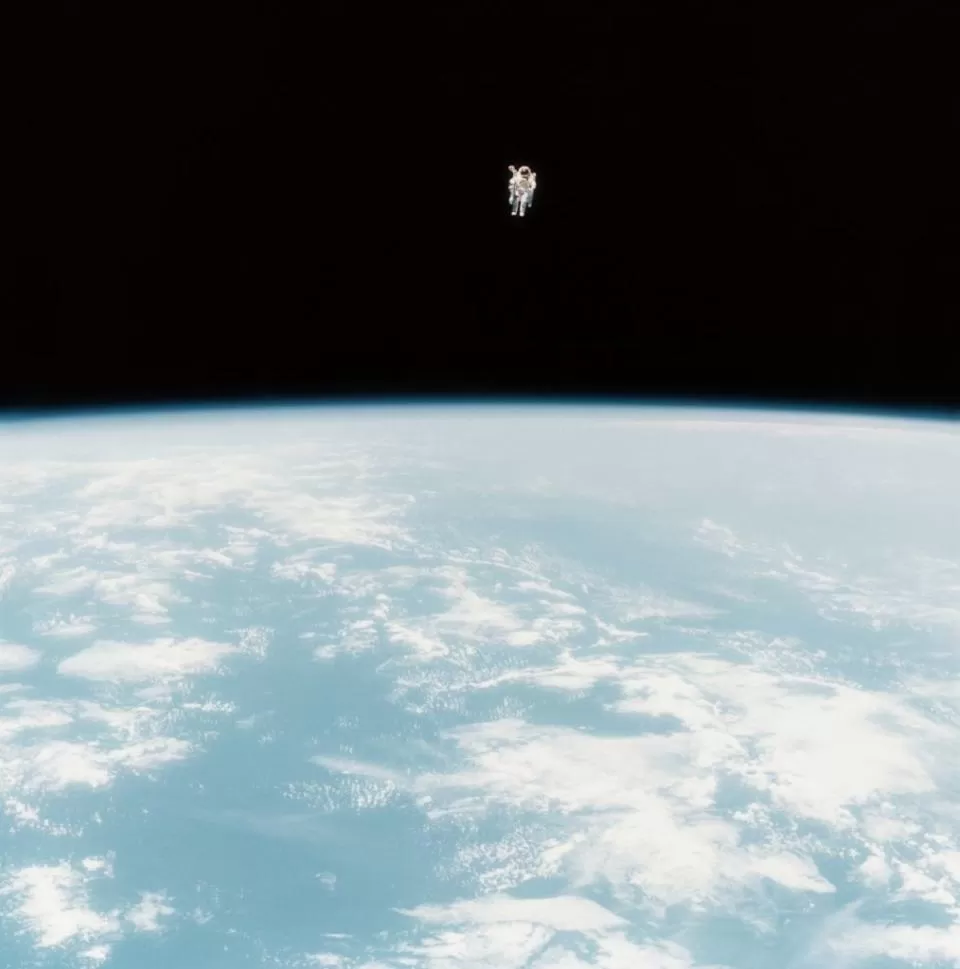 An astronaut in a bulky spacesuit floating freely above the Earth in the vast darkness of space during an untethered spacewalk
We’ve left traces of our presence on other worlds. Astronauts on the Moon left behind equipment, flags, and even personal items like a family photo, a poignant reminder of the human connection to exploration.
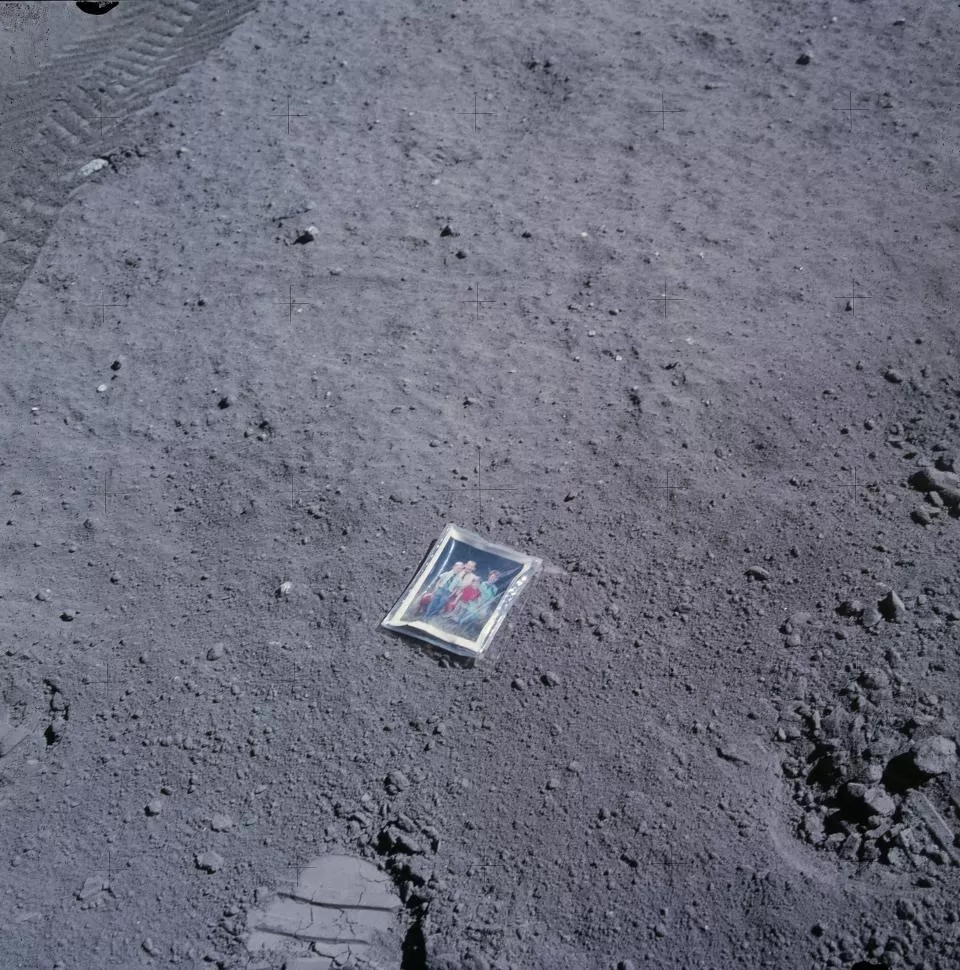 A small framed family photograph in a protective clear case left on the dusty ground of the Moon's surface
From the early days of rocketry capturing the first blurry images of Earth from space to modern rovers exploring Mars, these photographs document our persistent drive to understand what lies beyond our atmosphere. Even something as mundane as a piece of Moon rock or Martian meteorite held in a hand connects us directly to these distant places.
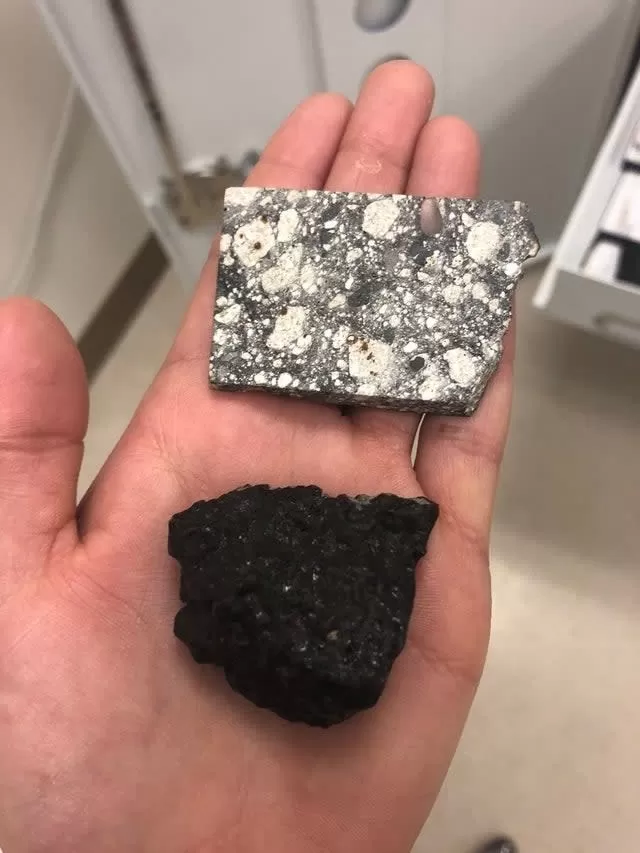 A hand is holding two extraterrestrial rocks: one has a speckled, light grey appearance (Moon rock) and the other is dark and rough (Mars meteorite)
And perhaps most ambitiously, humanity has sent messages outwards. President Jimmy Carter’s statement placed aboard the Voyager 1 spacecraft in 1977, part of the Golden Record, is a time capsule meant for potential extraterrestrial civilizations, a hopeful introduction from “a small distant world.”
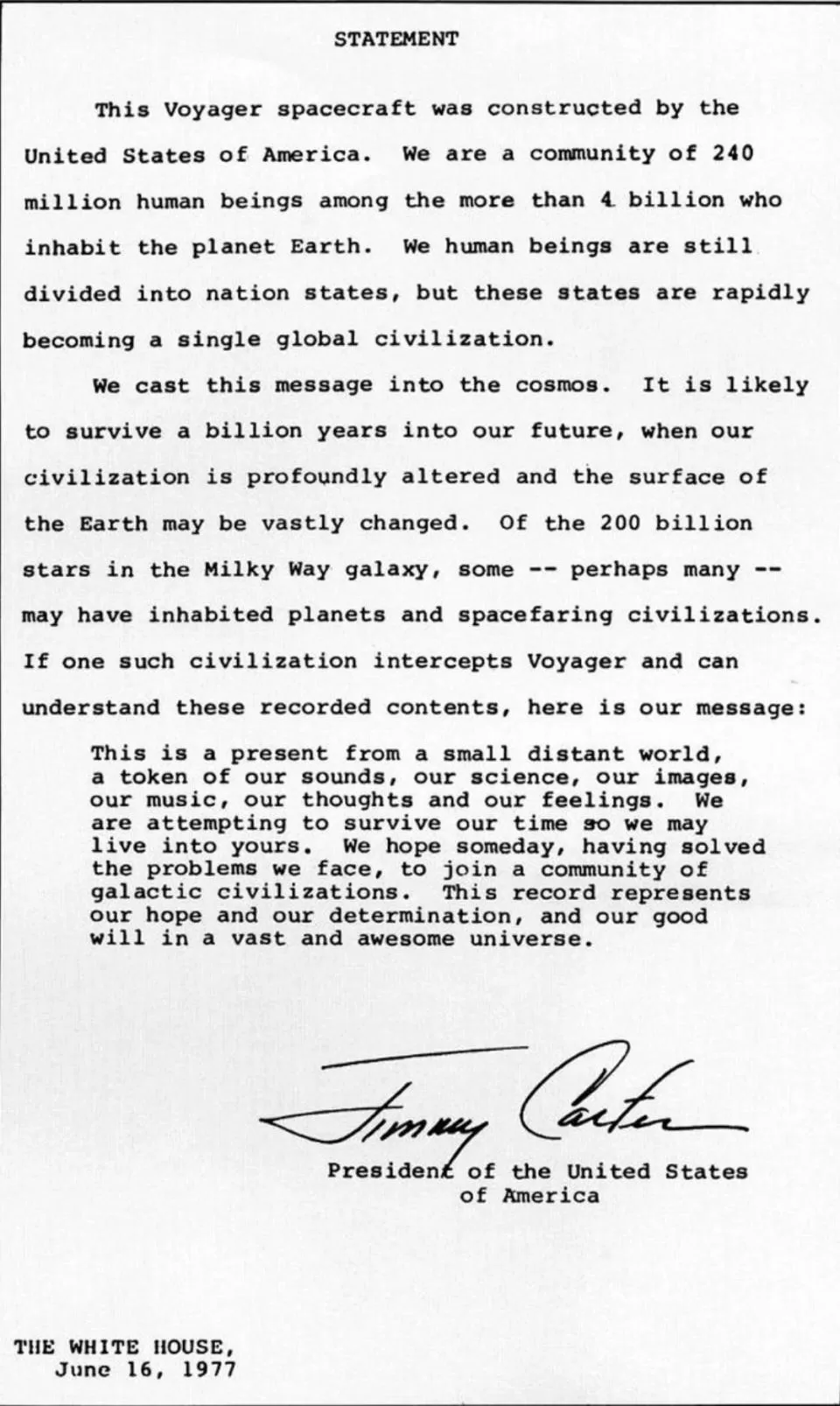 A scanned image of the statement written by President Jimmy Carter for the Voyager Golden Record, dated June 16, 1977
Conclusion: A Universe of Wonder
These images offer more than just visual appeal; they are snapshots of scientific discovery, technological achievement, and humanity’s innate curiosity about the universe. They remind us of our place on a beautiful, dynamic planet within a vast cosmos teeming with wonders yet to be fully understood. Every image is a testament to the missions, the technology, and the human ingenuity dedicated to exploring the unknown, pushing the boundaries of what we can see and comprehend.





