
Andy Weir’s story “The Martian” captured imaginations with its vision of humans tackling the Red Planet, but ten years after the movie adaptation, the real pioneers on Mars aren’t people, they’re robots. While human missions face shifting timelines and hurdles, robotic explorers have dramatically rewritten our understanding of Mars’ deep past, revealing a dynamic world that might once have been suitable for life. These discoveries aren’t just expanding our knowledge of a distant planet; they’re yielding surprising benefits here on Earth and shaping the future of space exploration.
Contents
Here’s the real story of Mars exploration today: robots are uncovering evidence of ancient water and organic building blocks, missions are planned to bring Martian rocks back to Earth for deeper study, and the technological and inspirational impact of these robotic missions is immense, even as the path for human boots on Mars remains complex.
The Robot Revolution on Mars
Over the past decade, robotic workhorses like the Curiosity and Perseverance rovers, along with orbiting satellites, have acted as tireless geologists, meticulously studying the Martian landscape. They’ve driven miles across dusty plains and rocky craters, examining layered rock formations that tell the story of Mars’ history, much like reading layers in a cake reveals its ingredients and how it was made.
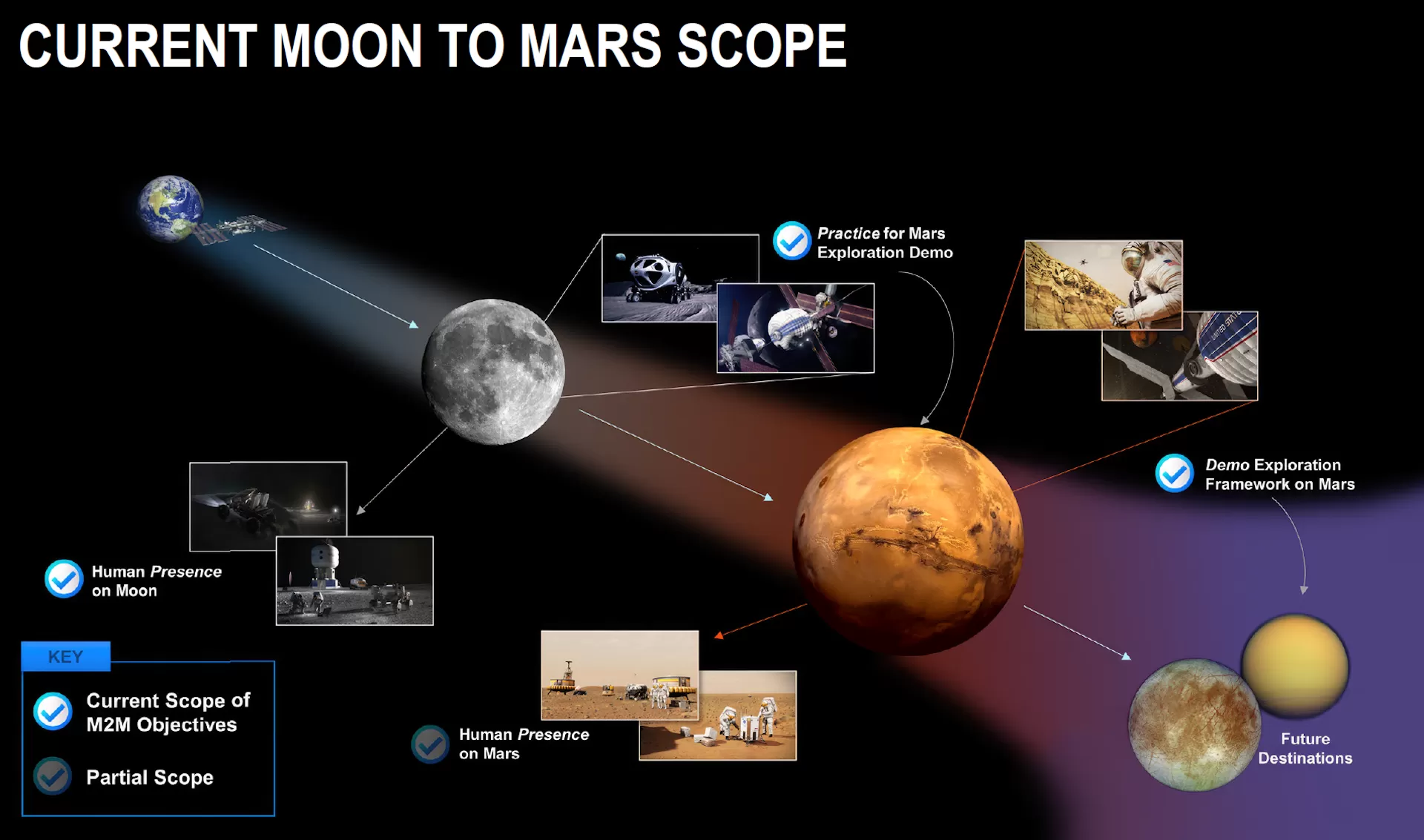 A diagram showing the multi-step strategy for NASA's Moon to Mars program, detailing planned phases starting with lunar missions.
These rocky layers show that Mars was once a vastly different place. Billions of years ago, it hosted erupting volcanoes, giant glaciers, and possibly even lakes and flowing rivers – conditions not so different from early Earth. However, unlike Earth, Mars lost its protective magnetic field, its core cooled, and its atmosphere thinned dramatically. The evidence of this dramatic environmental shift is preserved in the planet’s geology, waiting for robots to find it.
By studying these ancient terrains, scientists are trying to answer profound questions: Where did we come from? Are we alone? Understanding Mars’ climate evolution provides crucial context for Earth’s own history and the potential for life beyond our planet.
Unlocking Arabia Terra’s Ancient Secrets
One fascinating region under intense study is Arabia Terra, a vast, cratered area on Mars familiar to fans of “The Martian” as part of Mark Watney’s challenging journey. While the book didn’t delve into its deep history, recent robotic observations are revealing its past secrets.
Using data from orbiters like the Mars Reconnaissance Orbiter, scientists, including the author, have conducted detailed analyses of the layered deposits in Arabia Terra. By examining the rock structures and using infrared light to understand their composition, researchers have linked different layered areas to the same periods of formation.
 Detailed view from orbit showing distinct horizontal layers of rock formations exposed within a crater on Mars, resembling stacked geological records.
Their findings suggest that around 3.5 billion years ago, Arabia Terra experienced a drying climate. The widespread crumbling nature of the rock layers there today indicates a lack of the cementation that water typically provides, pointing to a significant environmental shift long ago. This kind of detailed geological detective work is only possible thanks to our robotic explorers. The research even led to naming some craters in the region after places mentioned in “The Martian,” like Kozova Crater.
Searching for Life’s Ingredients
The search for signs of past life on Mars is a major driver of robotic exploration. The Perseverance rover is currently exploring Jezero Crater, an ancient lakebed, specifically looking for biosignatures.
Recently, Perseverance drilled into a set of rocks and discovered organic compounds – molecules containing carbon. These compounds are often called the “building blocks of life” because they are essential to all known life forms on Earth. While finding organic compounds on Mars doesn’t automatically prove that life existed there, it’s a hugely significant step. More detailed analysis is needed to determine if these specific organics were created by biological processes or through non-living chemistry.
Bringing Mars Home: The Sample Return Mission
To truly understand what these discoveries, like the organic compounds, mean, scientists need to examine the Martian rocks and soil with the most powerful tools available – those in laboratories here on Earth. This is the ambitious goal of the in-development Mars Sample Return mission.
Perseverance is already collecting and sealing rock and soil samples in special tubes on the Martian surface. Future missions will need to land, retrieve these cached samples, and launch them back to Earth. Once the samples are home, scientists can study them with instruments far more sensitive and complex than anything that can currently be sent to Mars. This mission promises to provide unprecedented insights into the planet’s habitability, its geological past, and potentially reveal signs of ancient life, offering a deeper understanding than robotic analysis alone can provide.
Beyond Science: Real-World Impact
The investment in robotic Mars exploration, totaling billions of dollars over decades, has yielded staggering returns far beyond scientific papers. The technological challenges of sending robots millions of miles away and operating them autonomously have spurred incredible innovation.
This research has led to rapid advancements in fields like robotics, telecommunications, and materials science. The technologies developed for Mars missions have had surprising spinoffs that benefit us here on Earth, from improving sutures for heart surgery to contributing to the development of cars that can drive themselves.
Moreover, successful robotic exploration has significantly bolstered the international standing of space agencies like NASA and the countries that support them, positioning them as leaders in modern exploration and technology. Crucially, the stunning images and discoveries sent back by rovers and orbiters have inspired millions of students to pursue studies in science, technology, engineering, and math.
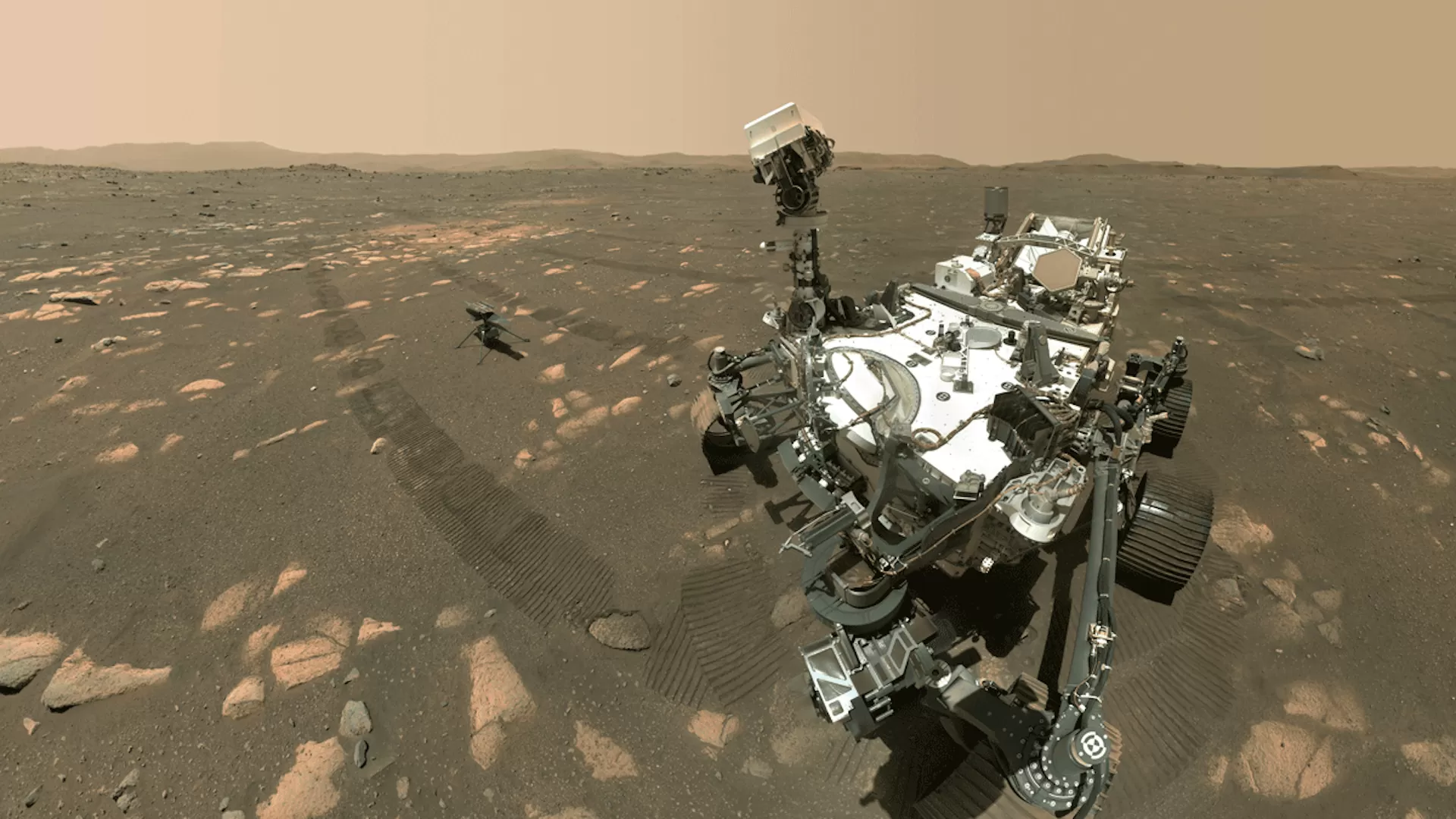 A selfie image taken by the Perseverance Mars rover, showing the rover's head-like camera mast and the small Ingenuity helicopter on the Martian surface.
Human Dreams vs. Robotic Reality
The idea of humans walking on Mars, perhaps even establishing a colony, holds a powerful, almost romantic appeal. It’s the adventurous spirit that “The Martian” tapped into, and it’s a vision championed by figures like Elon Musk and his company SpaceX, with the goal of making humanity a multi-planetary species.
However, the reality of sending humans to Mars is incredibly complex and fraught with immense technical, physiological, and financial challenges. Establishing a sustainable presence is even more difficult, leading many experts to question the viability of Mars colonization as a near-term goal or a refuge.
Currently, the path to putting humans on Mars remains uncertain, particularly with potential budget cuts threatening the very robotic programs that have been the engine of discovery. While there’s political support for human space exploration, the funding challenges could ironically sideline the science-driven robotic missions that have provided all the foundational knowledge we have about the Red Planet.
The Enduring Power of Robot Pioneers
While the dream of humans on Mars captures headlines and imagination, it is the relentless, methodical work of robotic explorers that has truly revolutionized our understanding of the Red Planet over the past decade. These missions have peeled back the layers of Martian history, hinted at the possibility of ancient life, provided technological benefits here on Earth, and inspired a new generation of scientists and engineers. The knowledge gained by these robot pioneers is indispensable, providing the essential foundation for any future human endeavors on Mars and reminding us that exploration, in all its forms, yields incredible rewards.





