
The Star’s Temper Matters for Alien Life
When searching for planets where life might exist, scientists often focus on the “habitable zone” – the sweet spot around a star where temperatures allow for liquid water. But new research reveals that a star’s violent outbursts, like flares and eruptions, might be just as crucial, dramatically changing a planet’s atmosphere and climate. This means the search for life needs to consider not just how far a planet is from its star, but also how well-behaved the star is. The activity level of a star can fundamentally alter the conditions on orbiting exoplanets, making stellar weather a key factor in habitability.
Contents
- The Star’s Temper Matters for Alien Life
- Key Takeaways:
- More Than Just Distance: The Star’s Temper
- What Happens When a Star Sneezes?
- Simulating Alien Weather
- Atmospheres Under Attack
- Hurricane-Force Winds on Distant Worlds?
- Losing the Planetary Shield
- The Rhythm of Destruction and Renewal
- Why This Matters for Finding Life
- The Future of Exoplanet Weather Reports
Key Takeaways:
- Stellar flares trigger complex chemical reactions in exoplanet atmospheres.
- Flares can create hurricane-force winds on distant worlds.
- Repeated flares can destroy a planet’s protective ozone layer.
- Even moderately active stars can cause significant climate swings.
- Understanding stellar weather is vital for finding life, especially around common red dwarf stars.
More Than Just Distance: The Star’s Temper
For years, the primary focus in finding potentially habitable exoplanets has been the goldilocks zone – not too hot, not too cold, just right for water to be liquid on the surface. Think of it like setting a comfortable thermostat. But stars aren’t static heat lamps; they can be violent and unpredictable. Our own Sun occasionally unleashes powerful solar flares and storms that affect Earth, causing auroras and sometimes disrupting technology. Now, scientists are discovering similar stellar temper tantrums around other stars can have far more profound effects on their planets.
What Happens When a Star Sneezes?
Stellar flares are sudden bursts of energy from a star’s surface. While our Sun is relatively calm, many stars, especially smaller, cooler ones called red dwarfs, are much more active. These red dwarfs are also the most common type of star in our galaxy, and many have rocky planets orbiting them, some within their habitable zones. This new research focuses on how frequent, powerful flares from stars like the red dwarf TRAPPIST-1 could impact the atmospheres of their planets, specifically looking at a world similar to TRAPPIST-1e, which is considered potentially Earth-like.
Simulating Alien Weather
To understand these effects, researchers built detailed 3D computer models, like complex virtual planet simulators. They tested different scenarios for a TRAPPIST-1e-like planet, ranging from orbiting a perfectly quiet star to one experiencing frequent, intense flares. These models allowed them to see how the planet’s entire atmosphere would respond to the energy dumped into it by these stellar outbursts.
Atmospheres Under Attack
The simulations revealed a surprising and complex atmospheric dance triggered by stellar flares. When the flare energy hits, it sets off a chain reaction of chemical changes in the planet’s atmosphere. Think of it like throwing a jumble of ingredients into a pot and watching them react. These reactions caused the upper atmosphere to cool down by radiating energy away, while simultaneously warming the middle and lower layers by creating molecules that trap heat, similar to greenhouse gases here on Earth.
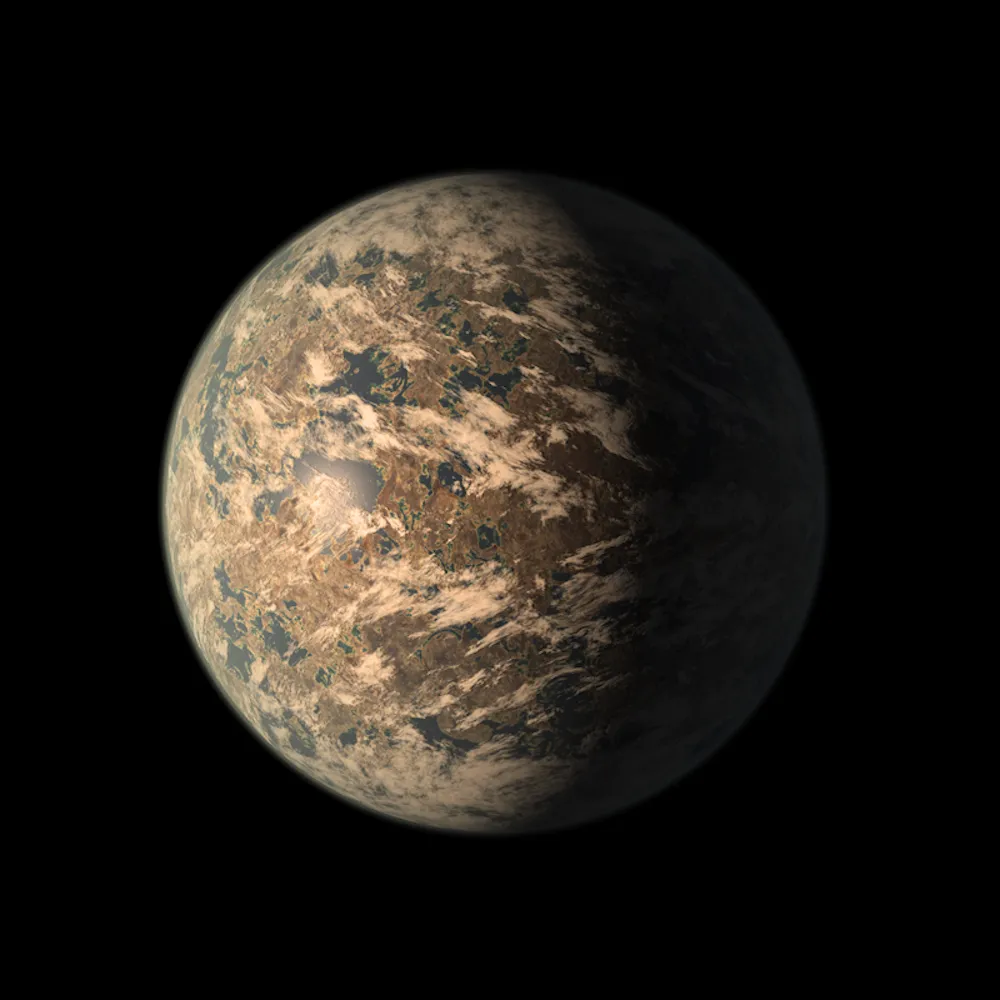 Artist's impression of the exoplanet TRAPPIST-1e, a rocky world studied for its potential habitability
Hurricane-Force Winds on Distant Worlds?
Perhaps one of the most dramatic findings was the impact of flares on atmospheric movement. The simulations showed that intense flares could whip up incredibly strong winds in the planet’s middle atmosphere, reaching speeds of up to 40 meters per second – stronger than a major hurricane on Earth. These powerful gusts occurred particularly on the planet’s night side, high above the surface. Imagine perpetual hurricane-force winds driven by stellar explosions!
Losing the Planetary Shield
Another critical finding concerns the planet’s protective shield: the ozone layer. Just like Earth’s ozone layer guards us from harmful ultraviolet (UV) radiation from the Sun, a planet’s ozone can protect its surface. However, the research showed that repeated stellar flares can severely deplete or even completely destroy this vital shield over time. The fate of the ozone layer depends heavily on how often and how powerfully the host star erupts. Without this protection, life on the surface would be exposed to deadly radiation.
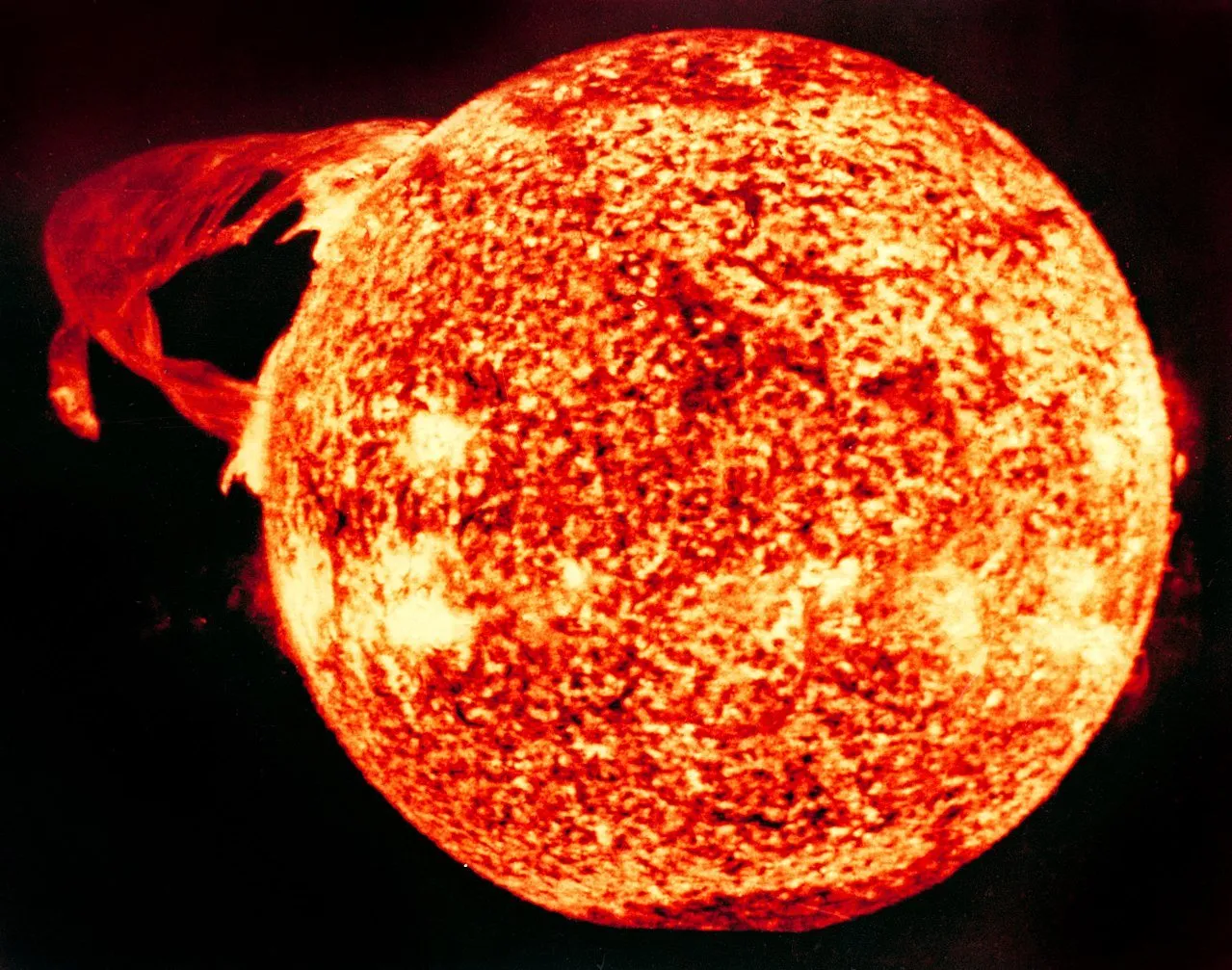 Spectacular image of a massive solar flare erupting from the Sun, demonstrating the power of stellar outbursts
The Rhythm of Destruction and Renewal
Interestingly, the models showed that planets orbiting stars that flare moderately (not constantly, but regularly) experienced the most dramatic climate swings. This is because their ozone layers had enough time to recover between flares, only to be zapped again by the next eruption. This cycle of destruction and renewal led to significant shifts in atmospheric chemistry and circulation, creating a highly variable climate. It’s like the atmosphere is constantly recovering from one punch, only to be hit by another.
Why This Matters for Finding Life
These findings have significant implications for our search for life beyond Earth. Since red dwarf stars are the most common stars in our galaxy (about 75%) and can remain active for billions of years, their stellar flares could be a dominant force shaping the conditions on the most common type of potentially habitable worlds. Simply being in the habitable zone isn’t enough; the planet also needs to withstand its star’s temper.
As powerful new space telescopes come online in the coming years, scientists will be able to gather more detailed observations of exoplanet atmospheres. This research provides crucial predictions for what they might see and helps us understand the complex interplay between stars and their planets – a vital step in narrowing down the places where life might actually be able to survive and thrive.
The Future of Exoplanet Weather Reports
Understanding the impact of stellar flares is changing how we think about habitability. It adds a new layer of complexity, moving beyond just distance to consider the star’s dynamic behavior. Future missions will aim to observe these effects directly, giving us real ‘weather reports’ from distant worlds. This research highlights that the search for life isn’t just about finding liquid water; it’s about finding a planet that can survive its star’s stormy personality.
Source: Effects of Transient Stellar Emissions on Planetary Climates of Tidally Locked Exo-Earths





