
The universe is vast and mysterious, a source of wonder that has captivated humanity for millennia. While ancient thinkers pondered creation with poetic imagination, modern scientists use incredible tools like the James Webb Space Telescope (JWST) to explore its depths. The breathtaking images from the JWST don’t just show us distant stars; they fill us with a sense of awe and connect us to something immense and beautiful. Pope Leo XIV recently spoke about this connection, highlighting how these discoveries inspire wonder, benefit everyone, and can even help build a more peaceful world.
Contents
Here’s what these cosmic glimpses mean for science and for all of us:
Seeing the Unseen: The Power of JWST
Imagine having a telescope so powerful it can peer back in time, showing us light that has traveled across the universe for billions of years. That’s the kind of capability the James Webb Space Telescope offers. It’s like having a cosmic time machine and a super-powered microscope rolled into one.
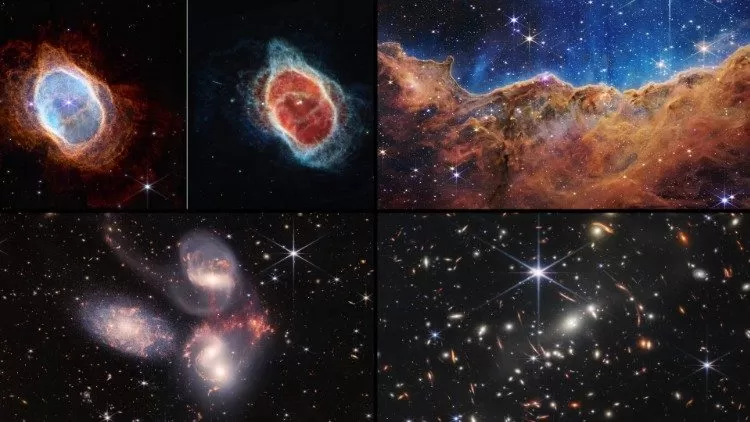
Pope Leo XIV noted that this remarkable instrument allows astronomers to study everything from the atmospheres of planets orbiting other stars (exoplanets) to the glowing clouds of gas and dust where new planetary systems are born (nebulae). Crucially, JWST captures the ancient light from the very first galaxies, offering clues about the universe’s earliest moments. It’s an incredibly exciting time for those dedicated to studying the cosmos.
 The Vatican Observatory building at Castel Gandolfo, where astronomers study the cosmos.
From Science to Wonder: A Glimpse of Creation
The stunning visuals produced by the JWST are more than just data points; they are images of sublime beauty that deeply affect us. Pope Leo XIV described how these images “fill us with wonder, and indeed a mysterious joy.” They tap into that ancient human impulse to look up at the night sky and feel connected to something larger than ourselves.
This sense of wonder is a powerful bridge between scientific exploration and a deeper contemplation of existence. As Saint Augustine put it, there are “seeds” of God sown in the harmony of the universe, and these images help us contemplate them. This joy and amazement born from exploring the universe is something, the Pope suggested, that scientists should not hesitate to share.
Science as a Shared Journey
No scientist works in isolation. Groundbreaking discoveries like those made with the JWST are the result of a vast community effort. This includes not just astronomers, but also engineers who built the telescope, mathematicians who process the data, and countless others who provide support, including family and friends.
Pope Leo XIV addressed participants in the Vatican Observatory’s Summer School, which focuses specifically on using the James Webb Space Telescope data. He emphasized that they are part of this larger community and that their work is meant to benefit everyone. Providing training and making the incredible images publicly available ensures that the insights gained are shared widely.
Building a Better World Through Knowledge
The pursuit of knowledge about the universe might seem distant from everyday life, but the Pope highlighted its potential for broader impact. By generously sharing what they learn and experience, scientists contribute to a more informed and connected world.
The joy and amazement sparked by cosmic discoveries can be a unifying force. Pope Leo XIV concluded that the more joy one shares, the more joy is created. In this way, the pursuit of understanding the universe through instruments like the James Webb Space Telescope can contribute to building a more peaceful and just world. It reminds us that we are all part of the same cosmos.
Stunning deep-space images captured by the James Webb Space Telescope, revealing distant galaxies and nebulae.
The James Webb Space Telescope is more than just a scientific instrument; it’s a source of profound inspiration. Its images invite us to contemplate our place in the cosmos, fostering wonder and reminding us of the shared human journey of discovery. By exploring the universe, we don’t just find new facts; we find new ways to connect with each other and with the beauty of creation itself, contributing to a brighter future for all.





