
Exploring space, especially sending robotic probes to far-off places like Mars, is incredibly expensive. In fact, the cost of sending a spacecraft to Mars has actually increased over the last few decades, even accounting for inflation. This high price tag limits how often and how much science we can do beyond Earth. Blue Origin, the space company founded by Jeff Bezos, believes there’s a better way: let commercial companies handle the heavy lifting and infrastructure, potentially slashing costs dramatically for robotic missions and freeing up government funds for scientific discovery itself.
Contents
The High Cost of Reaching Mars
Building a state-of-the-art robotic probe and sending it millions of miles across the solar system is a monumental task. It requires custom engineering, specialized components, powerful rockets, and years of planning. NASA’s missions, while scientifically invaluable, often cost billions of dollars. This isn’t just due to inflation; the way these complex, often one-off systems are developed contributes significantly to the expense. If this trend continues, ambitious exploration goals for Mars and beyond become increasingly challenging to afford.
Blue Origin’s Vision: Commercial Efficiency
Blue Origin argues that private companies are now capable of providing much of the essential infrastructure needed for space exploration at a lower cost. Think of it like building a house: governments currently pay for bespoke, handcrafted furniture for every room (the science instruments), but also pay for the entire house structure (the rocket, the spacecraft chassis, the transport to orbit). Blue Origin suggests commercial companies can build standardized, mass-produced “houses” and “delivery trucks” for space, allowing governments to simply rent the space or the ride and focus their budget on the specialized science “furniture.”
They envision a future where companies handle the launch services and provide standard “satellite buses” – essentially the body of the spacecraft that provides power, propulsion, and communications – that can be adapted for various scientific instruments. This is where concepts like Blue Origin’s “Blue Ring” platform come into play. By standardizing these components and leveraging the efficiency of private industry, Blue Origin suggests the cost of delivering payloads to destinations like Mars could be drastically reduced – potentially by a factor of 10 or even 100.
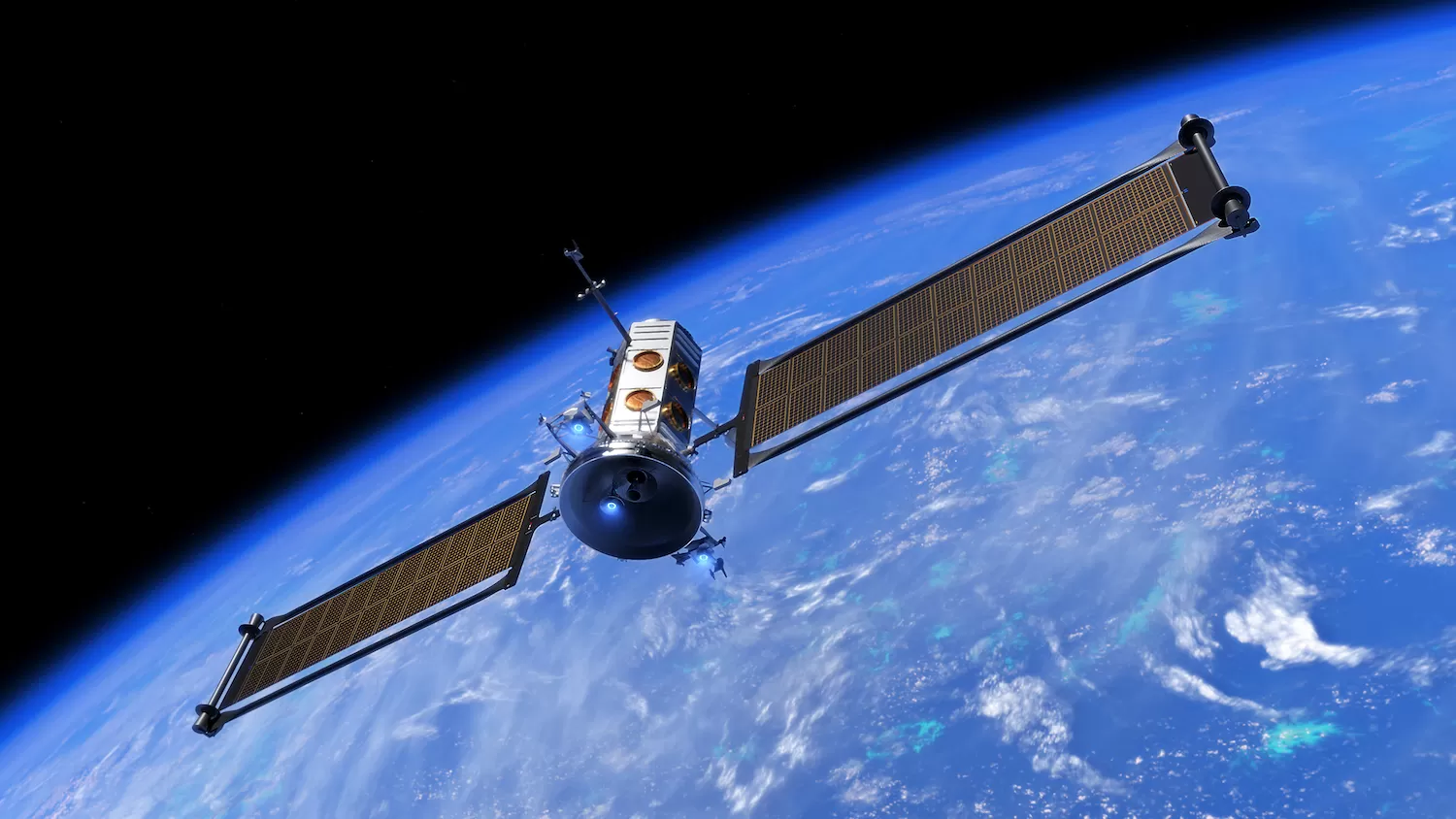 Artist’s concept of Blue Origin’s Blue Ring platform, designed to transport payloads to destinations like Mars and potentially lower mission costs.
This commercial approach, they argue, benefits taxpayers by using capital more efficiently. If companies can provide reliable, lower-cost transportation and basic spacecraft structures, governments and science institutions worldwide would have more resources available to fund more diverse and frequent scientific experiments and instruments, accelerating our understanding of the solar system.
The Nuance: Where Government Still Leads
While the vision for commercial efficiency in robotic missions is compelling, Blue Origin executives also acknowledge the current realities of the space market. There are already robust commercial markets for services like satellite internet (think Starlink) and in-orbit servicing. However, sending humans to the Moon or Mars still requires a strong commitment and significant funding from governments.
Unlike satellite services, there isn’t yet a purely commercial business case that justifies the immense investment and risk of human deep space exploration on its own. Therefore, while commercial companies can build the rockets and habitats, the motivation and initial financial backing for crewed missions beyond Earth orbit still largely depend on national interest, scientific goals, and international collaboration driven by government priorities.
A Collaborative Future for Space Exploration
The future of exploring destinations like Mars likely involves a partnership. Commercial companies can provide the reliable, cost-effective infrastructure – the launches, the transportation platforms, perhaps even basic habitats – enabling governments and scientific organizations to focus on the cutting-edge research, the human element of exploration, and the grand challenges that still require public investment and national vision. By working together, we might just make frequent, affordable trips to Mars a reality sooner than we think, unlocking new eras of discovery.





