
Ecosystems are complex webs of life, and sometimes they reach a critical point where the balance is broken, leading to sudden, dramatic shifts known as ecosystem tipping points. When these systems collapse – like a vibrant kelp forest turning into barren ground – the future state often becomes a mystery, making conservation and recovery efforts incredibly challenging. But what if we could peer into that uncertain future?
Contents
Researchers at the University of California, Santa Cruz (UCSC), and the National Oceanic and Atmospheric Administration (NOAA) have developed a groundbreaking new model that acts like a crystal ball for ecosystems. It can predict what happens after a system crosses a tipping point, offering crucial insights to help scientists and managers intervene before irreversible damage occurs or plan for the new reality. Unlike previous methods, this innovative approach works even with limited data and doesn’t require exhaustive knowledge of every single species, making it applicable to a wide range of natural environments.
Understanding Nature’s Breaking Points
Think of an ecosystem as a delicate balancing act. In a healthy kelp forest, for example, sea urchins eat kelp, and sea otters eat urchins, keeping everything in check. But environmental pressures, like warming oceans, can disrupt this balance. If sea otters disappear or are scarce, the urchin population can explode. These hungry urchins can then devour entire kelp forests, transforming a lush underwater world into an “urchin barren” – a stark, lifeless seafloor. This is an ecosystem tipping point.
Once the system has tipped into this new state, the rules change. The old patterns of species interaction no longer apply, and predicting what comes next using traditional methods becomes incredibly difficult. Existing prediction models often require massive amounts of data or detailed equations for how every species interacts, data that simply doesn’t exist for many real-world ecosystems studied over long periods.
A New Kind of Ecosystem Crystal Ball
The UCSC and NOAA team’s new model offers a different path forward. Instead of needing detailed ‘blueprints’ for every species, it learns from the ecosystem’s past behavior. Imagine it like studying historical weather patterns to predict future climate trends, rather than needing to understand the physics of every single air molecule.
The model uses historical data on simple factors, like how abundant one species is (say, salmon) and how a key pressure affects it (like fishing rates). A clever mathematical technique called “lagged coordinates embedding” then allows the model to infer the dynamics of the entire ecosystem, even though it’s only directly looking at limited information. It’s a bit like seeing the ripples on the surface of a pond and being able to deduce something about what caused them or how the water is moving underneath.
“When you take lags of the prey, you incorporate information of how the predator affected the prey in the past,” explains Lucas Medeiros, the study’s lead author, highlighting how past interactions leave detectable traces in the data.
This data-driven approach means the model is incredibly versatile. It can be applied to vastly different ecosystems, from lakes to marine environments, without needing to be completely redesigned for each one.
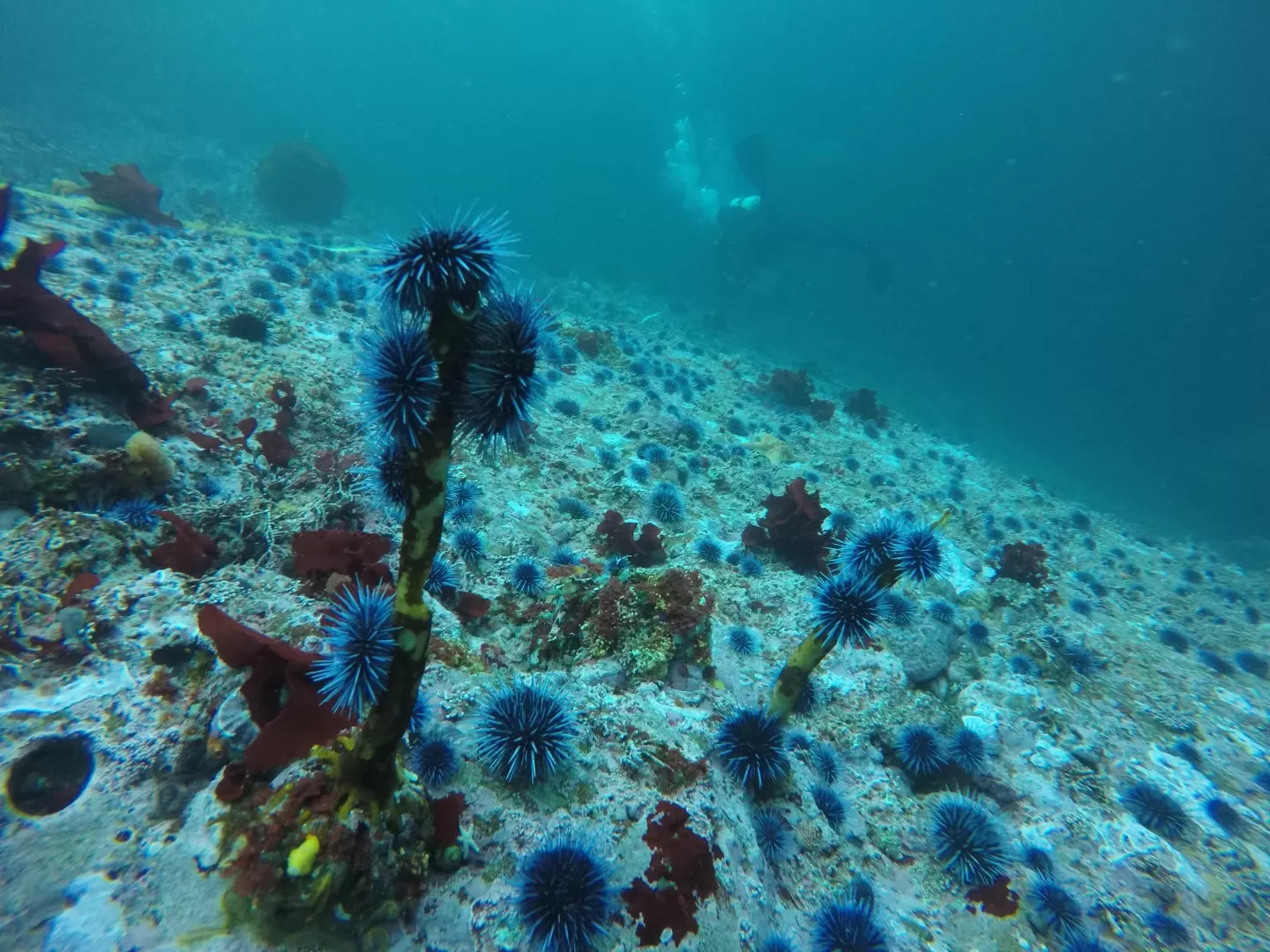 Dense sea urchin population actively consuming attached kelp, illustrating ecosystem overgrazing.
Putting the Model to the Test
To demonstrate the model’s power, the researchers applied it to data from two very different studies:
Predicting Lake Revival
One case involved historical data from Lake Zurich, a lake in Switzerland that suffered from severe pollution decades ago. Increased phosphorus levels from pollution caused massive plankton blooms, which consumed oxygen and harmed other life, pushing the lake past a tipping point. Over time, management efforts reversed the pollution, and the lake eventually recovered.
The model, using only historical data on phosphorus and plankton, was able to accurately predict when the lake would tip back to a healthy state and how the plankton population would respond. This capability is critical for environmental managers today. According to Professor Eric Palkovacs, a senior author, their model could help tackle similar issues elsewhere, such as the persistent algal blooms in California’s Clear Lake. “This would allow us to forecast how much reduction of phosphorus would be needed to restore the lake, how long restoration would take, and what the lake would look like following restoration,” he notes. This provides a roadmap for recovery.
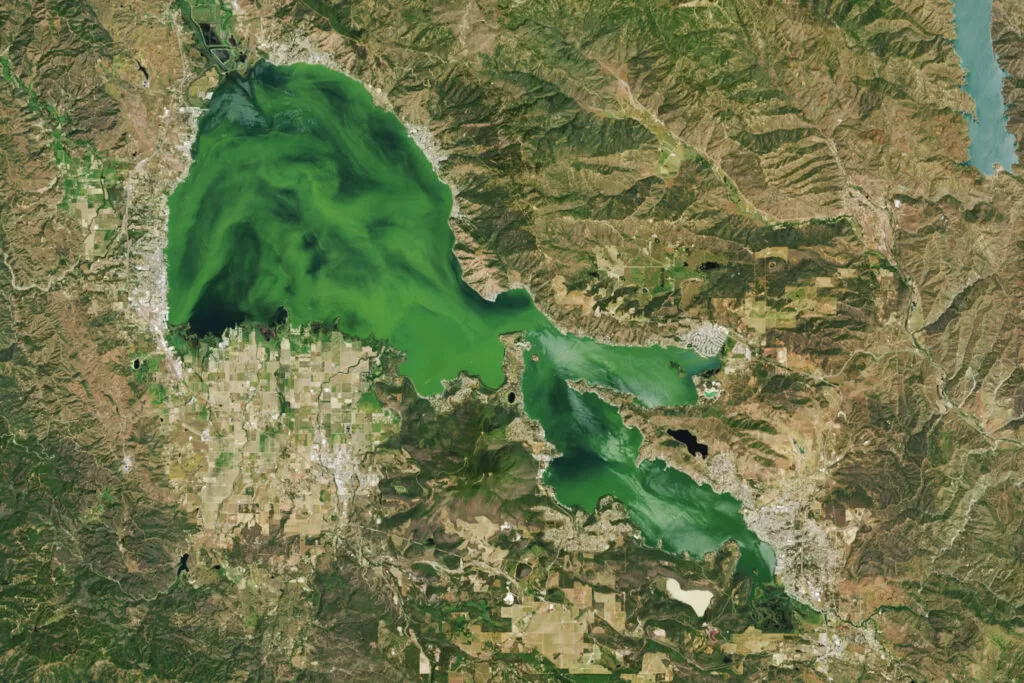 Vibrant green phytoplankton bloom visibly clouds the waters of California's Clear Lake.
Exploring Unknown Futures in a Test Tube
The second test involved data from a controlled lab experiment where scientists created simple ecosystems in test tubes with just a few microbial species. By changing conditions (like diluting the liquid), they observed how the species populations fluctuated.
The model successfully predicted these fluctuations based on the experimental data. Crucially, it could also simulate what would happen under conditions not tested in the original experiment. This ability to explore hypothetical scenarios is invaluable for scientific discovery, potentially revealing unexpected outcomes or suggesting new questions for future research. Medeiros points out that the model “was revealing things that had not yet occurred in the experiment,” potentially guiding scientists to conduct new experiments based on the model’s predictions.
Towards a Future of Proactive Conservation
This new modeling approach represents a significant step forward in our ability to understand and manage ecosystems facing environmental change and potential collapse. By providing a way to predict future states with less data and greater versatility, it equips scientists and conservationists with a powerful tool for planning interventions, mitigating damage, and potentially even reversing negative trends before it’s too late.
This research highlights the power of interdisciplinary collaboration, bringing together applied mathematics, statistics, and ecology to tackle urgent environmental problems. By understanding the potential future trajectories of ecosystems, we can move towards more proactive, rather than just reactive, conservation strategies in a world facing increasing environmental pressures.
Learn more about research in Climate & Sustainability or Earth & Space.





