
Imagine a camera so powerful it can capture light that started its journey across the universe billions of years ago, long before Earth even formed. That’s the incredible capability of the James Webb Space Telescope. Unlike telescopes that see the universe in the visible light our eyes can detect, Webb uses special “eyes” to see invisible infrared light, revealing secrets about the earliest galaxies and distant worlds.
Contents
The James Webb Space Telescope isn’t just a giant camera; it’s a marvel of engineering designed to detect the faintest heat signals from the most distant corners of the cosmos. By capturing light that has traveled for over 13 billion years, Webb acts like a time machine, showing us what the universe looked like shortly after the Big Bang.
 Diagram showing that the James Webb Space Telescope views the universe from a stable orbit far from Earth, capturing infrared light
Why Infrared Light is Key
Our eyes see visible light, the rainbow of colors from red to violet. But light comes in many forms, most of which are invisible to us. Infrared light is one such form, with wavelengths longer than visible light. Think of it like heat radiation – while you can’t see the heat coming off a warm object, special cameras can.
The universe is constantly expanding, and this expansion stretches light as it travels across vast distances. Light from the most ancient and faraway galaxies starts out as visible light but gets stretched into longer, infrared wavelengths by the time it reaches us. This phenomenon, called redshift, is why Webb needs to see in infrared – the light from the early universe has been “redshifted” out of the visible spectrum.
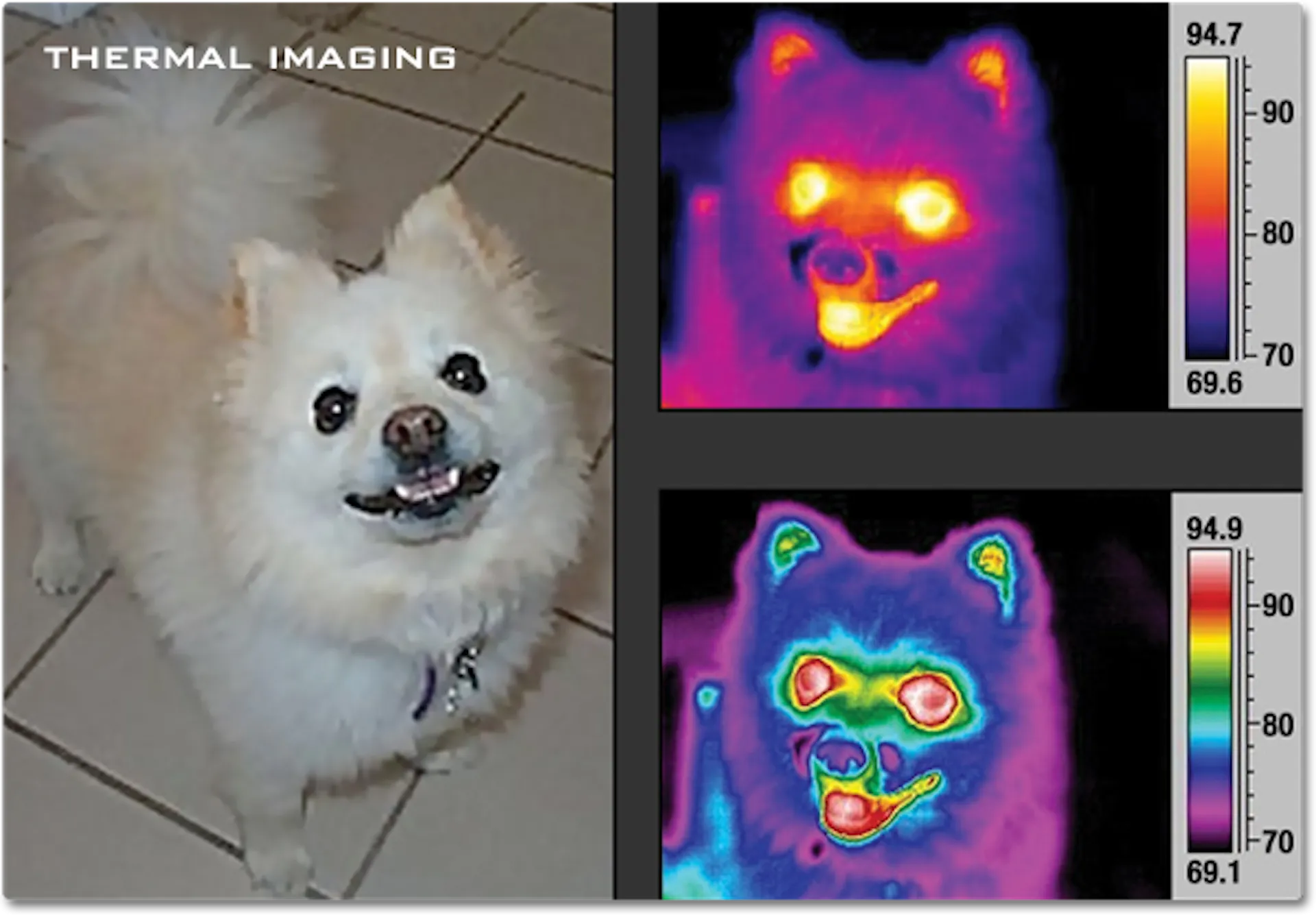 Comparative images showing a dog as seen by normal visible light and then by thermal infrared imaging, highlighting temperature differences
Infrared light is also excellent for peering through cosmic dust clouds that block visible light, allowing Webb to see stars and planets forming deep inside these celestial nurseries.
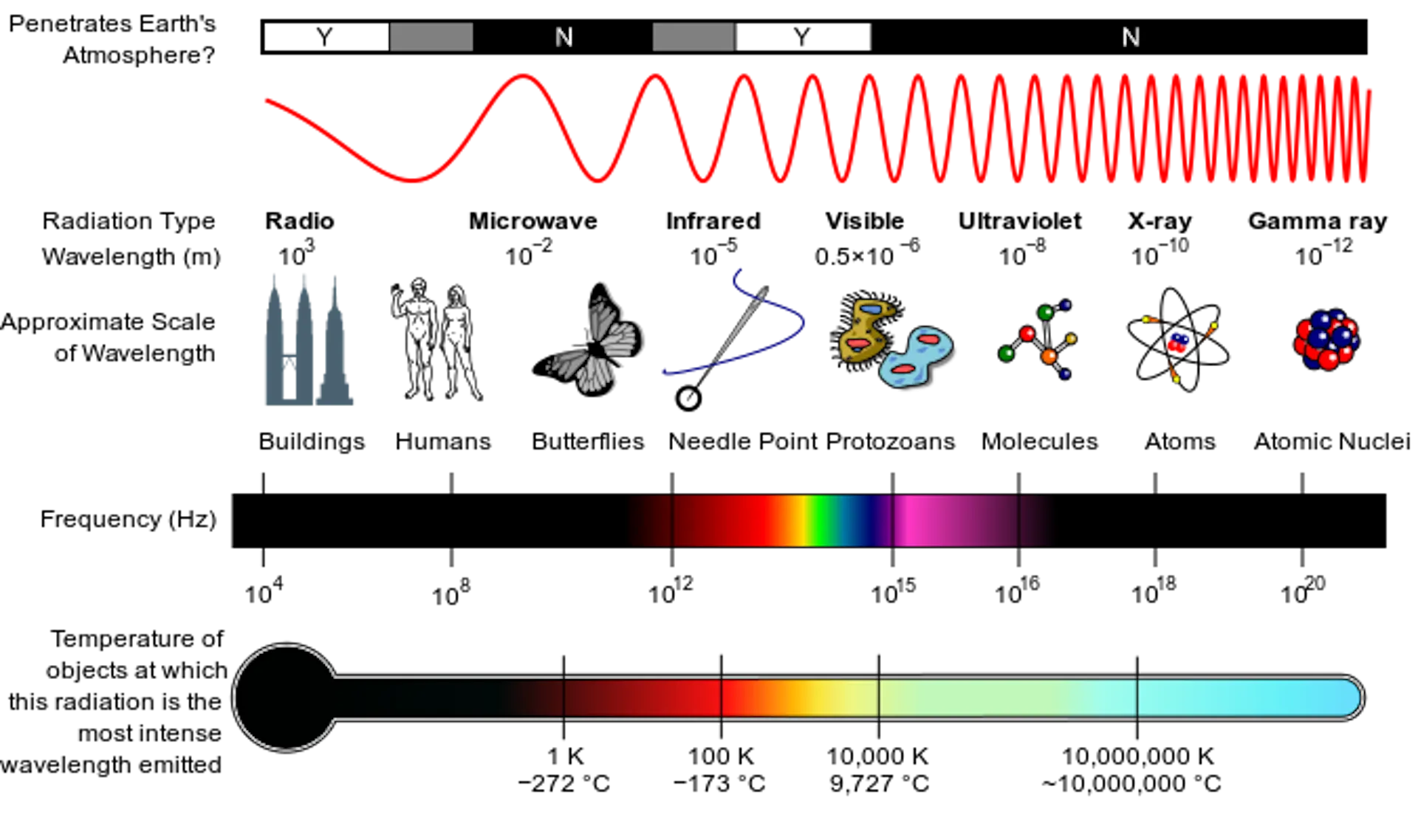 Diagram of the electromagnetic spectrum showing different types of light from radio waves to gamma rays, highlighting that visible light is just a small part of the spectrum
The Giant Golden Eye
Before light reaches Webb’s cameras, it’s collected by its massive primary mirror. At 21 feet (6.5 meters) across, it’s the largest mirror ever sent into space. It’s made of 18 hexagonal segments that unfold and work together. And yes, it’s coated in a thin layer of real gold! Gold is an excellent reflector of infrared light, making the mirror incredibly efficient at gathering faint signals from distant objects. The larger the mirror, the more light it can collect, allowing Webb to see incredibly far away and detect very dim sources.
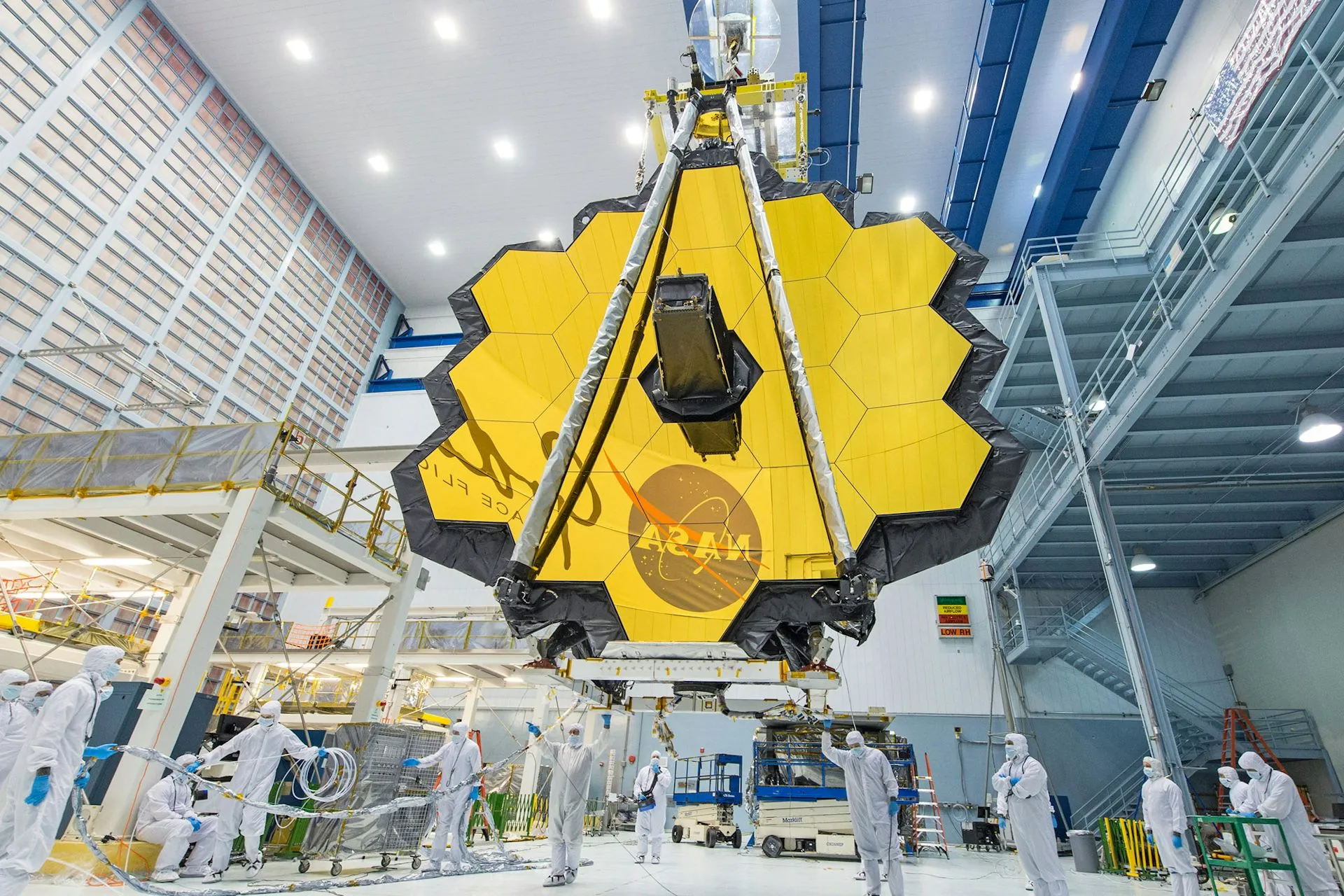 The assembled primary mirror of the James Webb Space Telescope, showing its hexagonal segments coated in gold
Webb’s Specialized Infrared Cameras
Webb’s ability to “see” infrared comes from its scientific instruments, particularly two powerful cameras: NIRCam and MIRI.
NIRCam (Near-Infrared Camera): This is Webb’s primary imager, sensitive to near-infrared light (closer to visible light). It’s responsible for many of the stunning deep-space images we’ve seen. NIRCam can also split light into different wavelengths, helping scientists identify the chemical makeup of distant stars and galaxies. By analyzing the specific wavelengths absorbed or emitted, astronomers can find “chemical fingerprints” that reveal what these cosmic objects are made of. NIRCam also features a coronagraph, a tool used to block the bright light of stars to allow observation of fainter objects, like exoplanets, orbiting them.
MIRI (Mid-Infrared Instrument): MIRI detects longer, mid-infrared wavelengths. This is crucial for seeing cooler objects, like forming stars hidden within gas clouds, or studying the composition of exoplanet atmospheres. MIRI’s sensitivity at these longer wavelengths can even help identify molecules like water or methane, which could be clues in the search for life beyond Earth.
Both NIRCam and MIRI are astonishingly sensitive. They can detect tiny amounts of heat from objects billions of miles away. Imagine being able to see the heat signature of a bumblebee on the Moon – that’s the level of sensitivity Webb’s instruments possess.
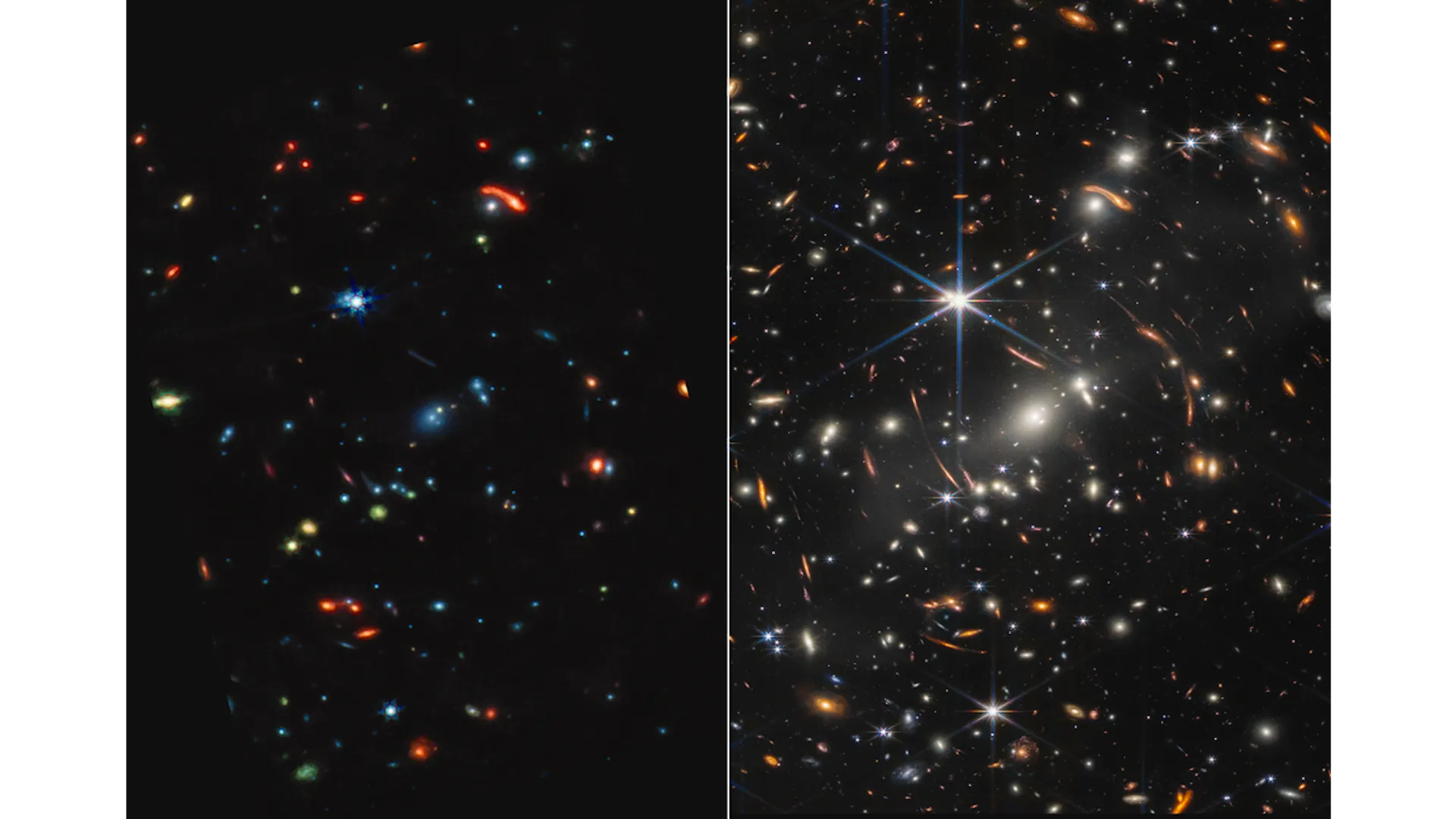 Two comparative images of a deep space view, with the MIRI image on the left showing fewer but perhaps dustier objects, and the NIRCam image on the right revealing a much greater number of stars and galaxies
Staying Super Cold
To detect such faint heat signals from space, Webb itself must be incredibly cold. If the telescope were warm, its own heat would overwhelm the faint infrared light it’s trying to capture. This is why Webb has a massive sunshield, about the size of a tennis court. This five-layer shield blocks heat from the Sun, Earth, and Moon, keeping most of the telescope at a frigid -370°F (-223°C).
MIRI, which detects even longer infrared wavelengths, needs to be colder still. It has a special refrigerator, called a cryocooler, that chills it down to an astonishing -447°F (-266°C), just a few degrees above absolute zero.
From Light to Pictures
Once the infrared light is collected by the mirror and processed by the cameras’ detectors, it’s converted into digital data. This data is sent back to Earth, where scientists use powerful computers to process it and create the stunning full-color images we see.
The colors in Webb’s images aren’t exactly what the telescope “sees,” since infrared is invisible. Scientists assign visible colors to different infrared wavelengths to represent properties like temperature, composition, or distance, making the invisible universe understandable and beautiful for us.
By combining its giant gold mirror, super-sensitive infrared cameras, and extreme cooling, the James Webb Space Telescope opens an unprecedented window into the universe’s past and reveals hidden details about planets and stars forming today. It continues to push the boundaries of our knowledge, showing us a cosmos far richer and more complex than we ever imagined.





