Imagine the universe as a vast, dynamic ocean, constantly shifting and flowing. When massive objects like black holes collide, they send out ripples across this cosmic sea – these are gravitational waves, predicted by Albert Einstein over a century ago. Scientists have already begun “listening” to these waves using ground-based detectors like LIGO and Virgo, hearing the echoes of smaller black hole mergers. But what about the truly colossal events, the mergers of black holes millions of times the mass of our Sun? That’s where the LISA mission comes in, poised to open a new window onto the most powerful events in the cosmos and fundamentally advance our understanding of the universe.
Contents
Here’s what this groundbreaking mission promises: detecting gravitational waves from giant black holes, uncovering hidden stellar systems, and testing the very limits of Einstein’s theory of gravity.
Tuning into the Low Frequencies
Ground-based detectors like LIGO and Virgo are incredible feats of engineering, capable of sensing the tiny stretches and squeezes of space-time caused by merging stellar-mass black holes. Their success marked a new era in astronomy, allowing us to observe the universe in a way never before possible. However, they are limited to detecting higher-frequency gravitational waves, much like an audio system designed only for high notes.
Many of the universe’s most massive and distant events produce gravitational waves at much lower frequencies – deep, rumbling bass notes that ground detectors cannot hear due to interference from Earth’s own vibrations and the size limitations of ground-based setups. This is the niche LISA is designed to fill.
LISA: A Cosmic Triangle of Detectors
So, how does LISA plan to catch these low-frequency rumbles? Instead of being rooted to the Earth, LISA will consist of three spacecraft forming a colossal triangle in space. These satellites will trail behind Earth in its orbit around the Sun, separated by a staggering 2.5 million kilometers (about 1.5 million miles).
Each satellite will contain a perfect, free-falling test mass. Lasers will constantly beam between the satellites, precisely measuring the distance between these test masses. When a gravitational wave passes through, it will cause these distances to minutely change – stretching and squeezing the arms of the triangle by incredibly tiny amounts, far less than the width of an atom. LISA’s sensitive instruments will detect these minuscule variations in the laser light’s phase, revealing the presence and nature of the gravitational wave.
This vast separation between the satellites is key. It allows LISA to be sensitive to gravitational waves with much longer wavelengths, corresponding to the low-frequency signals produced by massive objects and events occurring over vast cosmic timescales.
What Cosmic Events Will LISA Hear?
LISA’s unique frequency range means it will listen to a different cosmic symphony than LIGO and Virgo. Its primary targets include:
- Merging Supermassive Black Holes: At the heart of most galaxies lie supermassive black holes, millions or even billions of times the mass of our Sun. When galaxies collide, their central black holes spiral inward and merge in the most energetic events since the Big Bang. LISA will be the first observatory capable of directly detecting the gravitational waves from these titanic mergers, offering insights into galaxy evolution and the growth of these cosmic behemoths.
- Binary Systems within the Milky Way: Our own galaxy is teeming with pairs of compact objects like white dwarfs, neutron stars, and small black holes orbiting each other. Many of these produce gravitational waves at frequencies LISA can detect, providing a galactic census of these fascinating binary systems, many of which are invisible in normal light.
- Intermediate Mass Black Holes: The detection of black holes with masses between stellar-mass and supermassive black holes remains elusive. LISA could potentially detect events involving these “missing link” black holes, such as when a smaller compact object falls into a larger black hole at the center of a galaxy.
- Echoes of the Early Universe: Potentially, LISA could detect gravitational waves generated in the very first moments after the Big Bang, providing a unique probe of the universe’s earliest history, a time currently inaccessible by any other means.
Unlike light, which can be absorbed or scattered by dust and gas, gravitational waves pass through matter unimpeded. This means LISA will offer an unobstructed view of these sources, even those hidden behind thick clouds of cosmic debris, allowing us to look much further back in time and space than ever before.
The LISA Connection to Ground Observatories
While LISA targets different frequencies than LIGO and Virgo, there’s a fascinating overlap. Some binary systems that are slowly spiraling towards merger might emit gravitational waves in LISA’s band initially. As they get closer, the frequency increases, eventually moving into the range detectable by ground-based observatories.
 Conceptual illustration depicting gravitational waves rippling through space, likely originating from a powerful cosmic event like merging black holes, which the LISA mission aims to detect.
For these sources, LISA could act as a “pre-warning” system. By observing the early stages of the inspiral, LISA could predict when and where these mergers will happen, allowing ground detectors like LIGO and Virgo to be poised and ready to capture the final moments at higher frequencies. This multi-frequency approach using both space and ground detectors promises a more complete picture of gravitational wave sources.
Building the Impossible: Challenges and Progress
Creating an observatory sensitive enough to measure distance changes smaller than an atom across millions of kilometers is no small feat. One of the main challenges is precisely measuring the minuscule phase shifts in the lasers while filtering out all other noise. This requires extraordinary stability and control.
Another critical challenge is ensuring that the test masses in the satellites are truly free-falling, unaffected by external forces like solar radiation pressure or the spacecraft’s own gravity. The spacecraft must essentially shield the test masses and follow their movement perfectly. This specific technology was successfully demonstrated by the LISA Pathfinder mission between 2015 and 2017, proving that scientists can isolate these masses in space to the required precision.
LISA is a massive international collaboration, led by the European Space Agency (ESA) with significant contributions from NASA and ESA member states providing instruments and data analysis expertise.
The Road to Launch: A Look Ahead
The journey to LISA’s launch is a long and complex one. Industrial work began in early 2025, focusing initially on refining the spacecraft design. Key milestones over the next few years include crucial design reviews, thermal and mechanical testing of components, and eventually, the assembly and testing of the three flight spacecraft.
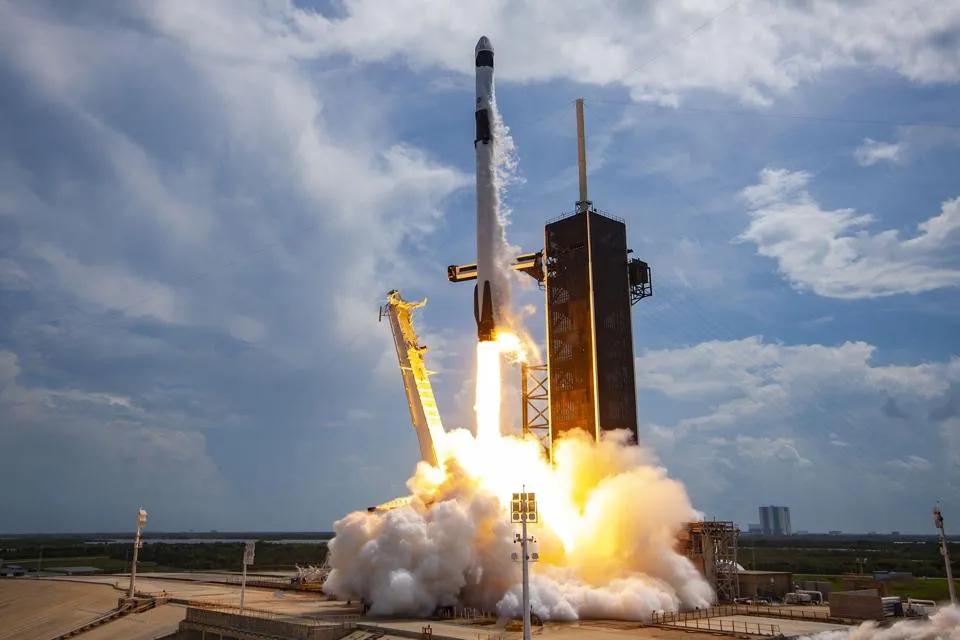
The current target timeline sees the first flight hardware being delivered in early 2031, leading to the assembly and testing of the satellites over the following years. If all goes according to plan, LISA is scheduled for launch around mid-2035.
What Will We Discover? The Potential is Limitless
The most exciting prospect of LISA, like any ambitious scientific mission, is the potential for unexpected discoveries. Beyond the anticipated observations of massive black hole mergers and galactic binaries, LISA could reveal entirely new types of gravitational wave sources or provide unprecedented tests of fundamental physics, potentially challenging Einstein’s theory of General Relativity in extreme gravitational environments.
Detecting gravitational waves from the very early universe could provide insights into inflation or phase transitions that occurred moments after the Big Bang, offering a completely new window into cosmic origins.
LISA represents a significant step forward in our ability to observe the universe. By listening to the lowest frequency gravitational waves, it will complement existing and future observatories, both gravitational wave and electromagnetic, providing a truly multi-messenger view of the cosmos. This global effort promises to rewrite textbooks and spark new questions for generations of scientists.
The LISA mission isn’t just an experiment; it’s humanity building a new sense, extending our ability to hear the deepest, most powerful echoes of the universe’s history and evolution.
To continue exploring the wonders of gravitational wave astronomy, consider delving deeper into the discoveries already made by LIGO and Virgo.