
High above Earth, a significant event unfolded as two Chinese satellites, Shijian-21 and Shijian-25, appeared to conduct a close-quarters maneuver. This celestial rendezvous is more than just a remarkable feat of orbital navigation; it’s a crucial step toward proving the technologies needed for orbital refueling and satellite servicing. Imagine giving a satellite a tune-up or refilling its gas tank millions of miles away – that’s the future this test hints at.
Contents
Key Takeaways:
- Two Chinese satellites, Shijian-21 and Shijian-25, maneuvered very close to each other in geosynchronous orbit.
- Observations suggest they performed a test of close approach, potentially including docking and undocking.
- This test is vital for developing on-orbit refueling and satellite servicing capabilities.
- Such technologies are key to extending satellite life, improving sustainability, and managing space debris.
What Happened in Orbit?
The two spacecraft were tracked moving towards each other in geosynchronous orbit, an altitude about 22,236 miles (35,786 kilometers) above the equator where satellites match Earth’s rotation. Space situational awareness company s2a systems observed a close approach between the pair on June 14, with the satellites appearing almost as a single object at times.
This observation strongly suggests that Shijian-21 and Shijian-25 executed at least a test run of a close approach. Experts believe this could have included complex maneuvers like a docking and undocking sequence, practicing the delicate art of joining two spacecraft high above our planet.
Why is This “Space Dance” Important?
This close approach is likely a demonstration of on-orbit refueling and mission extension capabilities. Think of it like a mid-air refueling for airplanes, but far more complex and much higher up. Satellites eventually run out of fuel, which limits their lifespan. Being able to refuel or repair them in space could drastically extend their operational lives, saving immense costs and reducing the need to launch replacements as frequently.
Shijian-25 was specifically launched in January to demonstrate these on-orbit refueling and satellite servicing technologies. Its partner in this test, Shijian-21, is also involved in orbital experiments, having previously towed a defunct satellite from geosynchronous orbit to a higher “graveyard” orbit to help clear congestion. These capabilities are fundamental to improving the sustainability of space operations and tackling the growing problem of space junk.
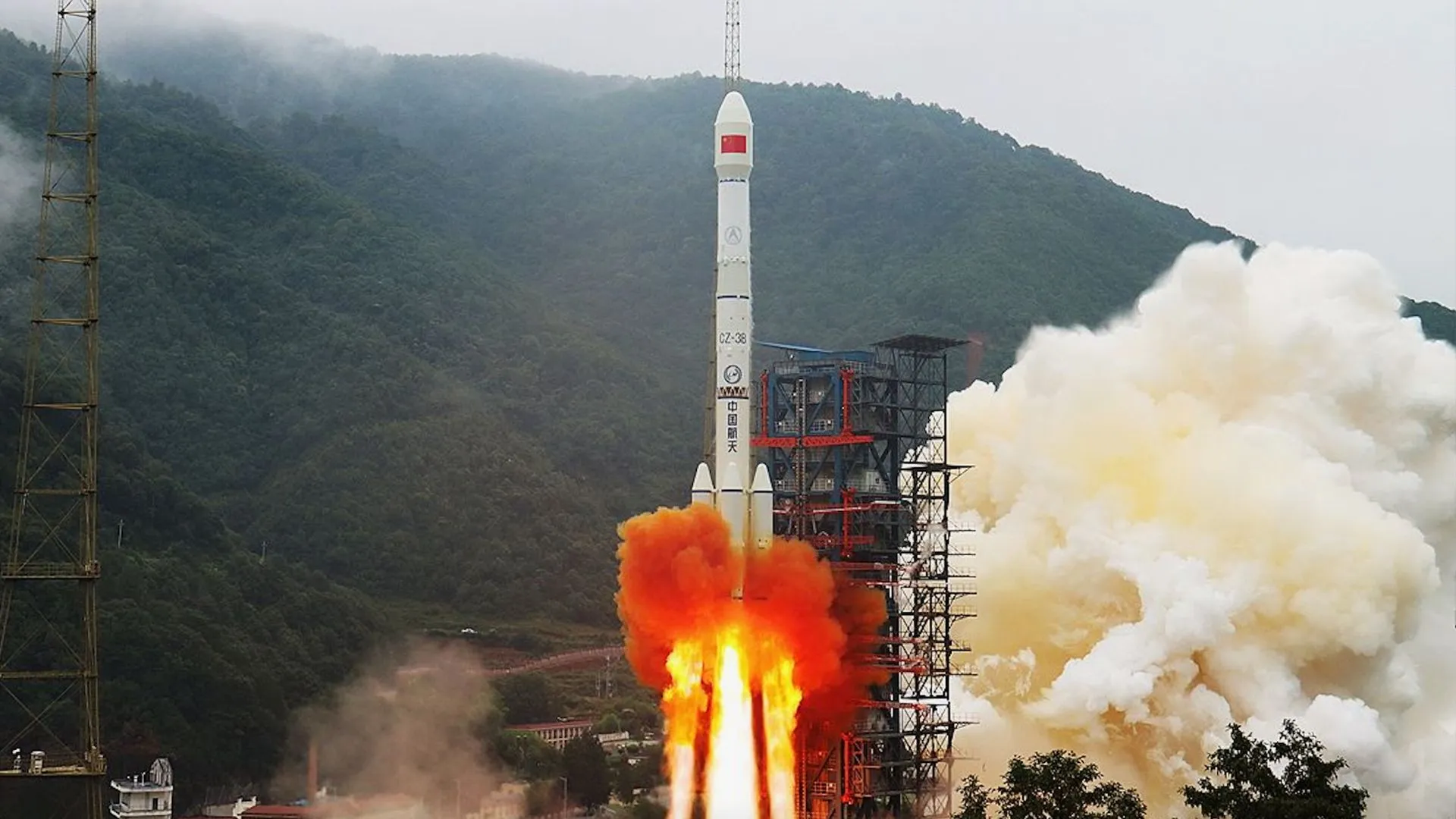 Chinese Long March rocket launching the Shijian-21 satellite for future orbital tests.
Both satellites were developed by China’s state-owned Shanghai Academy of Spaceflight Technology (SAST). Notably, U.S. surveillance spacecraft were reported to be nearby, likely observing the maneuvers.
The Global Race for Orbital Servicing
China isn’t the only nation exploring these vital orbital capabilities. The U.S., through companies like Northrop Grumman, has already demonstrated satellite life extension services in geosynchronous orbit using its Mission Extension Vehicle spacecraft. Additionally, companies like Astroscale are developing their own technologies, with complex refueling tests planned for the near future.
These developments signal a growing international effort to master the skills needed for a more sustainable and flexible presence in space, moving beyond simply launching satellites to actively maintaining and servicing them in orbit.
The Future of Satellites
The close encounter between Shijian-21 and Shijian-25 marks a significant step in the development of orbital servicing technologies. As our reliance on satellites for communication, navigation, and Earth observation grows, the ability to refuel, repair, or even repurpose them in space will become increasingly crucial.
Tests like these pave the way for a future where satellites have longer lifespans, orbits are less cluttered with debris, and space missions are more adaptable than ever before. Keep an eye on the skies; this orbital ballet is just the beginning of a new era in space operations.
Want to learn more about how companies are tackling the challenge of servicing satellites in space?
- Two private satellites just docked in space in historic first for orbital servicing
- Satellites are polluting Earth’s atmosphere with heavy metals. Could refueling them in orbit help?
- Private Astroscale probe will refuel Space Force satellites high above Earth on landmark 2026 mission





