
Science continues to unlock the universe’s secrets, from the intricate workings of our brains to the churning heart of our Sun and the restless ground beneath our feet. Recent discoveries highlight how star-shaped brain cells might hold the key to our vast memory storage, reveal hidden dangers in California’s fault lines, and offer unprecedented views of the Sun’s uncharted south pole.
Contents
Unpacking the Brain’s Memory Map
For a long time, scientists thought that only neurons were responsible for the heavy lifting of memory storage in the brain. But now, attention is turning to another crucial brain cell: the astrocyte. These star-shaped cells were primarily known for their support roles, like cleaning up cellular debris and managing blood flow.
A new study using advanced machine learning techniques suggests astrocytes are far more active in memory formation than previously understood. Think of neurons as the communication wires in your brain, forming connections to store information. Astrocytes, it turns out, aren’t just passively maintaining the network; they seem to actively participate. Researchers found that astrocytes communicate using calcium signals, and these patterns appear to help tune how neurons connect and store memories. This suggests our brain’s incredible memory capacity might be a team effort, with astrocytes playing a vital, previously overlooked role.
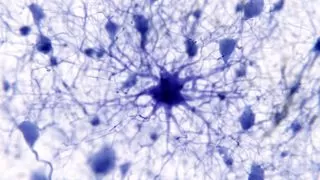 Microscope image showing a star-shaped astrocyte brain cell with extensions connecting to other cells, highlighting its complex structure and potential role in memory.
This discovery could open new avenues for understanding and treating conditions related to memory, potentially leading to better strategies for neurodegenerative diseases.
Discover more health news:
- New menstrual pad device tracks period blood for signs of disease
- There’s a new blood test for Alzheimer’s. Here’s everything you need to know about it.
- HIV/AIDS: Facts about the viral infection that attacks the immune system
California’s Restless Faults
Earthquakes remain one of nature’s most unpredictable forces, but geoscientists are constantly working to understand the risks. A recent study focused on California, a state famous for its seismic activity, including the notorious San Andreas Fault. By analyzing the history of earthquakes on various fault lines over long geological timescales, researchers can estimate the average time between quakes and identify faults that are statistically “overdue.”
The study looked at faults in five different quake-prone regions. While most regions showed only a small percentage of faults significantly overdue, California stood out. The analysis suggests that almost half of the state’s faults – around 45% – have gone longer than their historical average interval between major quakes.
 Aerial view of the San Andreas Fault line carving through a landscape, illustrating the massive geological feature responsible for California's earthquake risk.
This doesn’t mean an earthquake is imminent tomorrow, as Earth’s systems are complex. However, the findings serve as a crucial reminder of the significant seismic hazard California faces and the importance of preparedness. It underscores the ongoing need for research to better understand the pressures building beneath the surface.
Read more planet Earth news:
- Hidden layer beneath Italy’s Campi Flegrei caldera may explain why it’s so restless
- Russian scientists discover a new island in the Caspian Sea — the world’s largest inland body of water
- Earth’s oceans are a ‘ticking time bomb’ as acidity levels enter ‘danger zone,’ study suggests
Peering at the Sun’s Uncharted South Pole
Our Sun is the engine of our solar system, but large parts of it, particularly the poles, have remained hidden from direct view. Until now. The European Space Agency’s (ESA) Solar Orbiter spacecraft recently achieved a scientific first: capturing images of the Sun’s south pole from an unprecedented angle, dipping 17 degrees below the Sun’s equator.
These stunning images, captured across visible and ultraviolet wavelengths, reveal the intricate, tangled structure of the Sun’s magnetic field lines extending from the pole. They also show vast plumes of hot plasma streaming outwards – the source of the solar wind that affects planets throughout the solar system.
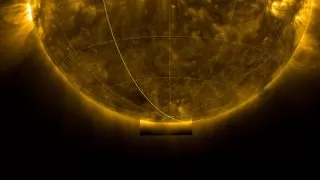 Image of the Sun's south pole captured by the Solar Orbiter, showing tangled magnetic field lines and plasma plumes in a range of wavelengths.
“Today we reveal humankind’s first-ever views of the Sun’s pole,” said ESA’s Director of Science, Carole Mundell. This historic view marks a new era in solar science, providing critical data to help scientists better understand the solar wind, predict space weather events that can impact technology on Earth, and unravel the mysterious cycle of the Sun’s constantly shifting magnetic field.
Learn more about the Sun:
- Sun facts
Beyond Weight Loss: The Mental Health Link
Bariatric surgery is known for dramatically helping people lose significant weight, but it often comes with an unexpected benefit: improved mental health. A new study dives into the reasons behind this positive shift, suggesting it’s not just the weight loss itself, but a reduction in something called “weight stigma.”
Weight stigma refers to the negative stereotypes, biases, and discrimination faced by people with overweight or obesity. This can include harmful misconceptions that blame a person’s weight purely on a lack of willpower. The study found that many patients who underwent bariatric surgery reported experiencing significantly less weight stigma after the procedure.
 Illustration of a broken bathroom scale against a red background, symbolizing challenges related to weight, mental health, and stigma often associated with weight loss journeys.
Crucially, the patients who experienced this reduction in stigma were the ones most likely to report better mental and physical health outcomes. A smaller group who continued to face stigma despite losing weight were at higher risk for poor mental health and disordered eating patterns. This research highlights that addressing societal biases and the experience of stigma is a vital, often overlooked, component in the overall health and well-being of individuals seeking weight-loss treatment.
These diverse discoveries, from the microscopic world within our brains to the vastness of space, remind us how science is continuously expanding our understanding of ourselves, our planet, and the cosmos. Each finding opens doors to new questions and potential applications, pushing the boundaries of what we know.
For more fascinating stories from the frontiers of science, continue exploring our articles.





