
A routine journey to space and back took an unexpected turn when a cutting-edge space capsule suffered a parachute failure during reentry, plummeting into the Pacific Ocean. This mission, carrying a unique payload of human remains for memorial services, highlights the inherent risks and learning opportunities in developing next-generation commercial spacecraft.
The key takeaways from this mission include:
- A test capsule, the Nyx by The Exploration Company, performed successfully in orbit.
- It completed the challenging reentry phase through Earth’s atmosphere.
- Communications were unexpectedly lost again just before splashdown.
- The investigation revealed the parachute system failed, causing the capsule to impact the ocean.
- Despite the final failure, the mission is considered a “partial success” providing valuable data for future designs.
A Mission of Ambition
The journey began successfully aboard a SpaceX Falcon 9 rocket as part of the recent Transporter-14 rideshare flight. These missions carry multiple small satellites and payloads for various customers into orbit simultaneously.
Among the dozens of payloads was the Nyx capsule from European manufacturer The Exploration Company (TEC). This capsule is designed as a testbed for future missions, with ambitious goals to transport crew and cargo to and from LEO and beyond (Low-Earth Orbit).
One of Nyx’s special passengers on this flight was a payload for Celestis Memorial Spaceflights. Celestis offers unique services, including launching loved ones’ DNA or remains into space. Their ‘Earth Rise’ package specifically sends remains into orbit and aims for their return to Earth.
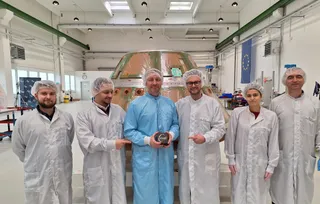 Scientists in a clean room at The Exploration Company facility handling the Celestis human remains payload capsule before the Transporter-14 launch.
The Critical Reentry
Dubbed ‘Mission Possible’ by TEC and ‘The Perseverance Flight’ by Celestis, the journey started smoothly. The Nyx capsule performed perfectly in orbit, powering its payloads and stabilizing itself after separating from the rocket.
Then came the fiery return. As the capsule plunged through Earth’s atmosphere, intense friction with the air creates a superheated shield of plasma around the craft – a phenomenon that causes a temporary communication blackout, much like driving through a long tunnel.
Communications were re-established after the blackout phase, as expected. But just minutes before the planned splashdown in the Pacific Ocean, something went wrong. The Exploration Company reported losing communication shortly after reconnecting, stating an anomaly occurred.
According to a later statement from Celestis, the critical failure was the parachute system. It simply didn’t deploy as intended. Without a parachute to slow its descent, the Nyx capsule impacted the Pacific Ocean at high speed, resulting in the loss and dispersal of its contents at sea.
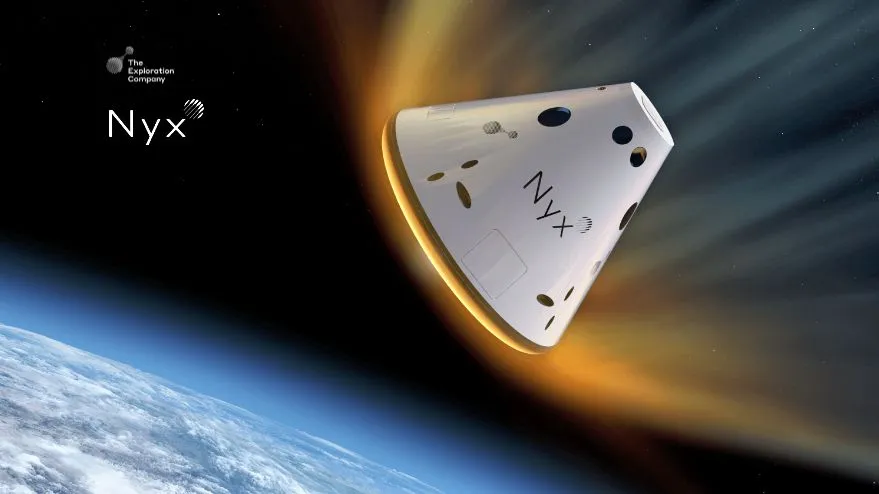 Illustration of a white space capsule falling towards Earth's atmosphere, representing the failed reentry attempt of the Nyx capsule.
Learning from Failure
Both TEC and Celestis acknowledged the unfortunate outcome. Celestis offered a poignant reflection, hoping families find solace knowing their loved ones’ remains, after orbiting Earth, are now “resting in the vastness of the Pacific, akin to a traditional and honored sea scattering.”
The Exploration Company described the mission as a “partial success,” highlighting the ambition and inherent risks of their rapid development process. They apologized to their clients while emphasizing the valuable technical milestones achieved during the flight and the critical lessons that will be extracted from the ongoing investigation. This data will directly inform the design and testing of future Nyx capsules.
While this particular landing didn’t go as planned, the mission provided crucial data for The Exploration Company as they push the boundaries of reusable spacecraft development. Failures are often difficult but essential steps in the challenging journey of innovation. The insights gained from the Nyx capsule’s reentry, even its final moments, will directly contribute to building more reliable space systems for the future.
Want to dive deeper into the world of space missions and exploration? Join our Space Forums to keep talking space!





