
The vastness of space just got a bit busier as SpaceX successfully launched a new satellite for SiriusXM radio, adding another piece to their cosmic broadcast network. This latest SpaceX launch also featured the impressive return of the Falcon 9 rocket’s first stage, demonstrating the power of reusable technology in reaching orbit.
Contents
This launch puts a critical new satellite into its orbital path, brings a veteran rocket booster safely back to Earth, and highlights the rapid pace of modern space operations.
Sending Signals Skyward
Early on Saturday morning, June 7, a Falcon 9 rocket roared to life from Florida’s Cape Canaveral Space Force Station at 12:54 a.m. EDT (0454 GMT). Its mission: to carry the SXM-10 satellite, built by Maxar Technologies, high above our planet.
The SXM-10 satellite, weighing in at a substantial 14,100 pounds (6,400 kilograms), is destined to join SiriusXM’s constellation, expanding and enhancing the satellite radio service available to listeners.
The Rocket’s Return
Part of the marvel of modern spaceflight is the increasing ability to reuse rockets. Just 8.5 minutes after blasting off, the first stage of the Falcon 9 rocket, having done its job pushing the satellite towards space, guided itself back down to Earth.
It executed a perfect landing on the deck of the SpaceX drone ship “A Shortfall of Gravitas,” positioned out in the Atlantic Ocean. This recovery is key to reducing the cost and increasing the frequency of space launches.
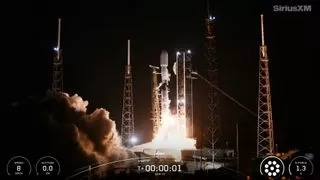 SpaceX Falcon 9 rocket lifting off from Florida launchpad against dark sky
A Veteran Booster’s Journey
This particular Falcon 9 booster is becoming quite the space traveler. According to a SpaceX mission description, this was its eighth trip to space and back.
Its impressive flight history includes carrying astronauts on both the Crew-9 and Fram2 missions. It also powered the liftoff on Jan. 15 that sent two private landers, Firefly Aerospace’s Blue Ghost and ispace’s Resilience, towards the Moon. While Blue Ghost later aced its lunar touchdown, Resilience unfortunately crashed during its attempt just a couple of days before this SXM-10 launch.
Satellite Reaches Its Destination Orbit
After the first stage landed, the Falcon 9’s upper stage continued its journey, carrying the SXM-10 satellite to a high path known as geosynchronous transfer orbit.
About 33 minutes after launch, the satellite was successfully deployed into this orbit as planned. From here, the SXM-10 satellite will maneuver to its final operating position, ready to broadcast down to Earth.
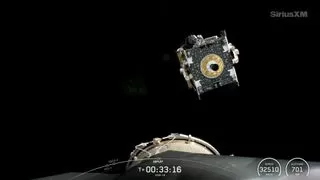 Sirius XM SXM-10 satellite separating from the top of a Falcon 9 rocket in space
A Busy Year in Orbit
This mission marks the second time in just six months that SpaceX has launched a satellite for SiriusXM, following the SXM-9 satellite launch in December 2024.
It’s been a remarkably busy year for SpaceX overall, with the SXM-10 launch being the 69th Falcon 9 mission of 2025 so far. A significant portion of these launches – 51 of them – have been dedicated to building out the company’s massive Starlink broadband internet constellation in lower Earth orbit. This constant activity highlights the rapid pace of development in private spaceflight and its growing impact on our daily lives, from communication to entertainment.
To see another recent SpaceX satellite launch, check out this article on a Starlink direct-to-cell mission.
What’s Next
With SXM-10 now beginning its operational life high above us, SiriusXM’s satellite fleet is stronger, promising continued radio service. For SpaceX, it’s just another successful step in their ambitious schedule of launches, reusing rockets and building orbital infrastructure. Expect to see many more rockets lifting off and returning as they continue to push the boundaries of space access.





