
Scientists have pinpointed a specific region where early Homo sapiens and Neanderthals likely first met and interbred thousands of years ago. This pivotal location, the Zagros Mountains, is revealed through a deep dive into ancient geography and genetics, offering crucial insights into our shared human story and why some of our genes come from our ancient cousins. The key takeaway is that the rugged landscape of the Zagros region wasn’t just a backdrop but a key player in shaping human evolution as we know it today.
Contents
Tracing the Steps of Ancient Cousins
For years, we’ve known that our ancient human ancestors, Homo sapiens, didn’t just replace Neanderthals; they mixed with them. Back in 2010, the first full Neanderthal genome sequencing confirmed this incredible discovery. Today, most people of non-African descent carry about 1 to 4 percent of Neanderthal DNA. But where exactly did this crucial interbreeding happen?
Scientists looked closely at where both groups lived across Southwest Asia and Southeast Europe around the Late Pleistocene period – a time when we know this intermixing occurred. By mapping out their likely territories and movements, a specific region emerged as a potential hotspot for interaction.
The Zagros Mountains: A Crossroads of Ancient Life
The research points to the Zagros Mountains. This vast mountain range stretches across modern-day Iran, northern Iraq, and southeastern Turkey, forming a natural border on the Persian Plateau. Why this location? The environment itself provides compelling clues.
The Zagros region offered a rich and varied landscape with plenty of biodiversity. This made it a prime spot for large, stable populations of early humans to thrive. Think of it as an ancient melting pot or a grand crossroads. It wasn’t just a home but potentially acted as a crucial corridor, connecting ancient humans moving between the cooler regions of Eurasia and the warmer parts of Africa during fluctuating ice ages.
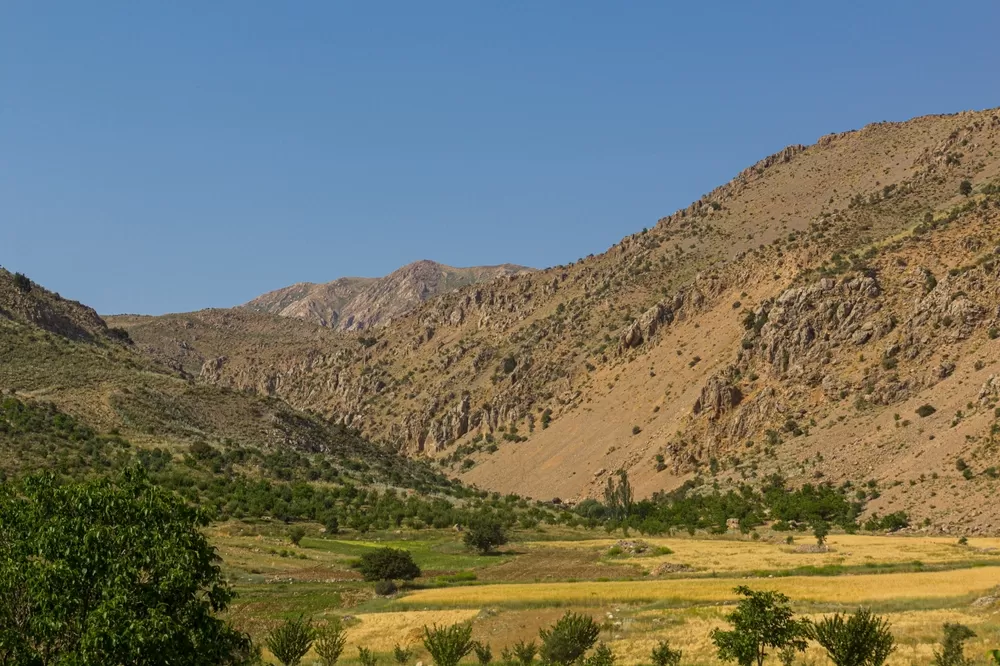 Rugged landscape of the Zagros Mountains, identified as the key location where early humans and Neanderthals interbred.
Echoes in the Earth and Our DNA
This geographical evidence aligns beautifully with findings from other fields. Archaeologists have discovered numerous sites in the Zagros Mountains that contain remains and artifacts from both Neanderthals and Homo sapiens. These discoveries provide tangible proof that both groups were present in the region, possibly at the same times.
Beyond ancient tools and bones, the genetic evidence we carry today further supports this idea. Our Neanderthal DNA isn’t random; it’s the lasting fingerprint of these ancient encounters.
The Lasting Impact on Modern Humans
The legacy of this interspecies mingling in places like the Zagros Mountains is still very much alive in us today. The genes we inherited from Neanderthals influence a surprisingly wide range of our traits, from physical characteristics to how our bodies respond to diseases.
For example, studies suggest that Neanderthal DNA contributes to features like bigger noses and even affects our threshold for pain. More recent research has even linked Neanderthal ancestry to varying susceptibility to illnesses like COVID-19 and conditions such as depression. It’s a powerful reminder that our family tree is more complex and interconnected than we once thought.
Unlocking More Chapters of Human History
Pinpointing the Zagros Mountains as a primary location for human-Neanderthal interbreeding adds a vital piece to the puzzle of our origins. This study, published in Scientific Reports, highlights how combining geographical analysis with archaeological and genetic data can reveal surprising details about our deep past.
Understanding where and how our ancestors interacted helps us build a more complete picture of human migration, adaptation, and evolution. As researchers continue to explore ancient landscapes and analyze ancient DNA, we’re sure to uncover even more fascinating details about the encounters that shaped who we are today. To learn more about our ancient relatives and their impact, explore additional articles on the timing of human-Neanderthal interactions or how many human species have walked the Earth.





